

The LMS RFP: Necessary Evil? Nice-to-Have? Or Something More?
A Request for Proposal (RFP) is one of the most widely used yet controversial tools for learning systems buyers. Some people hate them. Others love them. Either way, it’s usually foolish to buy an LMS without one.
That’s why I’m sharing my top LMS RFP tips to help you get better results, the next time you’re choosing a learning system.
Don’t miss what’s happening at the leading edge of enterprise learning technology! Get our weekly email brief. SUBSCRIBE HERE →
Why Are RFPs so controversial?
The RFP has developed a bad reputation because it’s so easily misunderstood. It’s often viewed as irrelevant, overly complex or just plain overkill. But there’s another side to the story.
RFPs help buyers get organized, formalize requirements, evaluate vendors logically, create a historical record, and show vendors you are serious. Shopping without an RFP may seem faster, easier, and less complex. But it means your selection process will be subjective and loaded with assumptions that increase risk.
I’ve been involved with buying and selling learning technology for more than two decades, and I know how valuable RFPs can be.
Over the past 12 years as an independent LMS selection consultant, I’ve helped more than 100 business buyers use RFPs to find the best solution for their organization’s needs. With so much at stake, clients expect me to help them avoid costly RFP missteps.
And previously, for nearly 15 years as a software sales professional, I reviewed over 1000 RFPs, answered hundreds of requests, won more than 100 contracts, and generated more than $50 million in revenue.
Actually, my history with the purchasing process extends all the way back to college, when I took a course on how to respond to learning tech RFPs. So, I’ve had plenty of time and experience to rejoice, reflect, and lament over what works and what doesn’t.
I could probably write an entire book on this subject, but let’s start with basic LMS RFP tips. Below are answers to 11 of the most popular questions I receive…
2026 OFFICE HOURS: If you’re buying a learning system, why not choose with confidence? Join analyst John Leh for this free webinar series just for LMS buyers. SAVE YOUR SEAT →
Top LMS RFP Tips:
1. What is an LMS RFP?
Think of an RFP (Request for Proposal) as an invitation to participate in an organization’s purchasing process for any type of software, goods or services. Buyers send targeted suppliers this document, which outlines the business need, buying parameters, and relevant requirements. It also includes instructions on how and when vendors should submit a response.
An LMS RFP focuses specifically on learning management systems.
2. Why should we take time to create an RFP?
More than 1000 companies offer learning-related solutions designed for corporate, academic, association and continuing education needs. These systems range in price from free to astronomical.
An RFP makes it possible for you to structure the evaluation process, so you can compare vendors on an “apples-to-apples” basis. This makes it much easier to determine how well each solution fits your business needs, functional requirements, and budget. This document especially important in LMS selection because there is no universally accepted definition of the term “LMS.” Likewise, there is no standard LMS licensing model or approach to calculating system usage.
Therefore, it’s important to establish a relevant decision metric, so you can compare vendors on your terms and choose the best solution at the most competitive price. Your LMS RFP should be that metric.
Want a better way to manage the business of learning? Find and compare vendors side-by-side. Get full profiles, reviews, case studies and more in our free Learning System Directory. START HERE →
3. What happens if we don’t use an LMS RFP?
Without an RFP, you’ll need to search vendor by vendor on an ad hoc basis — reviewing each LMS, discussing your needs, asking for a proposal and then accepting whatever response you receive.
The contents of the response — needs analysis, solution description, and requirements, as well as proposal structure, format, level of detail, and submission date — are typically at the vendor’s discretion.
This purchasing approach is much less consistent or precise. It often leads to missed requirements, unforeseen roadblocks, and costly pitfalls as you move forward with LMS selection, implementation, and deployment.
4. When is an LMS RFP most helpful?
If your organization is making a substantial investment in an LMS, the downside consequences of failure are likely to be significant. In that case, it’s wise to rely on an RFP.
And how do I define a “substantial” investment? I’m frugal. I think if you anticipate a variance in vendor pricing of thousands of dollars (or more), organizing your process upfront with an RFP can only help.
5. Is it ever smart to move forward without an RFP?
At a low LMS price point, there may be no practical reason to issue a formal RFP. And when low-cost scenarios are not mission critical, an RFP can be overkill. In that case, it makes sense to conduct your own research and leverage free online trials available from entry-level cloud LMS vendors.
However, it’s important to understand that the backbone of every RFP is a formal definition of the buyer’s requirements. And I believe any learning technology purchase should begin by articulating a clear business need and rationale.
So, whether or not you choose to issue an RFP, it’s always worthwhile to define your requirements upfront and use the same metric and methodology to compare options.
Are you prepared to move successfully through an LMS renewal decision? Our Replacement Readiness Review can help. SEE DETAILS →
6. What’s the best format for an LMS RFP?
There is no standard RFP tool or format. It’s common to use Microsoft Word, Excel, or both. Some organizations create online RFPs, but this is much less common.
When I was an LMS sales professional, I saw hundreds and hundreds of different RFP formats. I prefer Word-based documents because this encourages more thoughtful responses, including graphics, diagrams, and deeper answers than Excel spreadsheets.
Excel is good at capturing binary answers, and it makes vendor comparison easy. However, it leaves lots of room for vendors to interpret requirements to their advantage. Also, it typically doesn’t help illustrate how features work together in use-case scenarios. This incomplete picture makes vendor qualification more challenging.
7. Where can I get an RFP template as a baseline?
The internet is full of LMS RFP templates from consultants and analysts, as well as vendors themselves. However, I caution buyers who want to go in this direction, because the process looks like this:
- Download a free RFP template with 1000+ possible requirements
- Check 997 of the items as critical “must-haves”
- Distribute this massive checklist to too many vendors of various types
- Receive an assortment of apples-to-oranges responses
- Become overwhelmed by the chaos
In this situation, organizations often “solve” the problem by choosing none of the options, or falling back on a well-known generic learning management system. These systems can do it all. But unfortunately, they’re relatively expensive and often don’t do anything remarkably well.
You’ll get a much better result by developing your own use cases and requirements, and using freely available templates only as a reference when documenting scenarios and specifications that map to your unique learning audiences.
Also note: If a vendor provides an LMS RFP template, you can assume they have the capabilities listed in their template, but nothing more.
Although a template may help reveal that vendor’s particular functionality footprint, it’s unwise to rely upon it as an objective tool to evaluate other vendors’ ability to meet your needs.
Are your LMS renewal assumptions on point? Find out now, with our free 10-question checklist. GET YOUR SCORECARD RESULTS →
8. What should we include in our LMS RFP?
By definition, every RFP should be unique. However, I typically build these documents around two key sections:
1. BACKGROUND & LOGISTICS
This explains relevant context, business drivers and logistics. It is better to give vendors more context than you think they need, because you want them to fully understand your current situation, your primary challenges, and your objectives. Start with subsections like these:
- About the Buyer Organization
- Current State of Learning
- Purpose and Scope of RFP
- Project Goals
- Success Criteria
- RFP Assumptions, Terms, and Conditions
- Timeframe and Critical RFP Dates
2. CORE ELEMENTS
This section outlines details you expect to see in every response:
- Executive Summary – Highlights you expect to see about the vendor mission, vision, solution, and approach
- Vendor Profile – Questions about the vendor, contact info, history, business structure, locations, company size, clients, experience, and key differentiators
- Critical Use Case Functionality Requirements – Who are the main types of users and what do you want them to accomplish? What do those users do now? How and when do they find the LMS, log in, access content, interact socially, or run reports? In the future, what do you want users to do differently or additionally?
- Professional Service Requirements – What type and scope of implementation services do you require? Integration support, historical data migration, content creation, business strategy, or no services at all?
- Technical Requirements – Scalability, uptime, bandwidth, security, certifications, disaster recovery, globalization and deployment model questions.
- Business Requirements – Accurate past usage statistics and future usage predictions, license model preferences and pricing parameters.
- References – Request three client references that use the vendor for a project of similar type and size.
- Appendix – Any additional information vendors choose to illustrate their qualifications and the value of their solution.
2026 OFFICE HOURS: If you’re buying a learning system, why not choose with confidence? Join analyst John Leh for this free webinar series just for LMS buyers. SAVE YOUR SEAT →
9. How many vendors should we involve in the LMS RFP process?
No less than 2, but no more than 4 or 5. Sending an RFP to a dozen or more vendors means you’ll receive thousands of pages to review and understand. This kind of information overload only obscures your ability to distinguish between solutions, complicates your selection process, and delays your final decision.
An RFP should be one of the last steps in your vendor qualification process, not the first. Your goal is to send the RFP to a targeted group of vendors who appear qualified to meet your needs because they offer appropriate functional and technical capabilities, professional services, licensing model, and cost structure.
By conducting preliminary research, screening vendors verbally/informally, or investing in an LMS consultant to manage this process, you can effectively narrow your options to a short list of vendors who should receive an RFP.
10. How much time should we give vendors to respond?
A minimum lead time of 3-4 weeks is reasonable. A proper RFP response requires at least 40-60 hours of input from multiple people in a vendor organization. This team must develop this response while continuing to participate in existing client meetings, industry conferences, and other business trips and activities.
If you choose a shorter timeline, be prepared to deal with multiple requests for extensions, or be willing to accept shorter, more generic responses.
11. How should we handle vendor questions during the RFP process?
If you ask only 4 qualified vendors for proposals, answering their questions shouldn’t be overly time consuming. Actually, follow-up questions are a good sign. It shows that someone is paying attention to your needs. Many vendors actually ask too few questions.
Smart solution providers ask penetrating questions that make buyers think more deeply. This builds credibility and trust, even before proposals are submitted.
It’s common to identify a 1-2 week window when you’ll accept questions to clarify the RFP scope and your intentions behind various elements. With public sector RFPs, sharing information in a fair and open manner is essential, so questions and answers are typically shared with all participants. Private sector buyers typically provide an updated Q&A document.
I recommend transparency whenever possible, to set the stage for better, more accurate proposals from all. It’s logistically efficient, levels the playing field, and it strengthens your relationship with vendors right from the start.
NEW FOR 2026
Which Learning Systems Are Best For You?
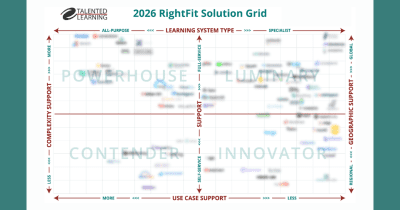
Use our FREE RightFit Grid to build a shortlist based on our independent research. Compare 80+ top learning systems, mapped to common buyer requirements…
Conclusion
RFPs may sound tedious and even a bit scary, but they really aren’t. Defining your requirements, finding qualified vendors, and comparing them against relevant criteria saves you time, money, effort, and frustration throughout the buying process. In the long run, it will save your organization the aggravation and expense of living with a solution that doesn’t fit your needs (or worse, having to replace it too soon).
RFPs show vendors (as well as your stakeholders) that you are serious, you are organized, and you have budget. It also ensures them that you’ll identify an appropriate licensing model and pricing.
And perhaps most importantly, it is a lasting reminder of your mission, objectives and requirements. This can be a valuable reference tool after you select a vendor and implementation begins, when memories may begin to fade.
Thanks for reading!
Want More Expert LMS RFP Tips? Let’s Talk!
Get independent guidance you can trust. For a free consultation with me, John Leh, submit the form below…
Share This Post
About the Author: John Leh

Related Posts

How Can Associations Improve Member Education?
Most associations are naturally positioned to succeed with reinvented member education programs because they're already widely known and respected in their industry.

Data and Dashboards and Decisions – Oh My!
The most effective dashboards focus on highly relevant information that demonstrates business impact and facilitates strategic decision-making.

Enterprise LMS Buyers Companion: 2019 Edition
As fiercely independent consultants, we focus on one goal – to help enterprise LMS buyers find the best solution for their needs. Here's our best advice...

Marketing Never Ends – How Does Product Education Help?
Converting leads to customers is only part of modern marketing. Product education is also key. A customer success expert explains why, and retraces his own scrappy path

Got LMS Implementation Questions? Ask a Learning Tech Analyst
LMS implementation is generally much faster, cheaper and easier than it was a decade ago, thanks largely to the massive shift toward cloud-based applications.

How Practice and Feedback Drive Deeper Learning
Unless we know how people want to use knowledge and skills, we're unlikely to develop deep learning experiences that help them apply what they learn.

What to Expect in a Channel Partner LMS
One of the best ways to improve usability is through automation that personalizes the learning experience; everything should be tailored precisely to the visitor's persona.

Software Demo Tips: What Works? Ask an LMS Selection Consultant
We obsess about every facet of the LMS market so our clients can more effectively attract, engage and educate learning audiences of all types – B2B and B2C customers, channel partners and contractors, employees, association members, continuing education students and the public-at-large.

Association LMS Buyers Companion – 2019 Edition
ASAE is also the place to be if you're interested in new association learning technology; each year, the variety of tools displayed in the vendor expo grows deeper and more expansive.





CASE STUDY DIRECTORY


FOLLOW US ON SOCIAL