

How Does a Shortlist Give LMS Buyers an Advantage?
You may know me as a learning tech analyst, but that hasn’t always been the case. From 2000 to 2014, I was a quota-carrying sales rep for two leading LMS companies. Over the years, I participated in hundreds and hundreds of sales opportunities. It wasn’t always easy. In fact, my early selling performance was average, at best.
Then things started to change. I began to realize that inexperienced LMS buying teams tend to make the same unforced errors. Once I recognized those mistakes and learned to take advantage of them, I shot to the top of the revenue leaderboard — and never looked back.
What I discovered years ago is still true today: One of the costliest oversights LMS buyers make is failing to build a shortlist of qualified vendors early in the software selection process. This lack of preparation gives experienced salespeople the upper hand. As a result, these buyers make suboptimal choices.
If you’re purchasing an LMS, you don’t want to be caught in that position. How can you shift the advantage in your favor? First, recognize that preparation is power. Then, embrace shortlisting as the best way to prepare. For details, read on…
Don’t miss what’s happening at the leading edge of enterprise learning technology! Get our weekly email brief. SUBSCRIBE HERE →
The Value of Building an LMS Shortlist
Software vendors are not your adversaries. They simply want to sell as much software as possible. But that’s no reason to let them convince you to buy the wrong LMS.
Your mission is to find the best solution for your specific needs. You know your organization better than any salesperson. That is why a well-crafted shortlist makes a tremendous difference.
What is a Software Shortlist, Anyway?
Nearly 1000 learning solutions are available today. It’s impossible for anyone to evaluate them all — especially busy learning organizations. As a buyer, shortlisting focuses your attention on the most viable options, so you can make a decision faster and with greater confidence.
To create an effective software shortlist, you’ll want to identify a limited set of candidates that meet or exceed your specific requirements. This frees you to be selective, subjective and strategic in choosing the solution that fits you best holistically, not just in terms of functionality.
Which Learning Systems Are Best For You?
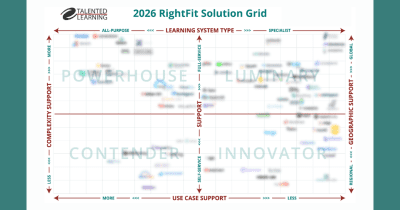
Use our FREE RightFit Grid to build a shortlist based on our independent research. Compare 80+ top learning systems, mapped to common buyer requirements…
How a Shortlist Shapes Competitive Dynamics
A strong shortlist naturally increases competition among the limited set of vendors you target. This, in turn, increases your negotiating power as a buyer.
In contrast, an unbalanced shortlist leaves you vulnerable. If you don’t remove poorly suited vendors from consideration early in the process, you’re likely to be left with too few appropriate vendors at decision time. And if that happens, you’ll hand sellers an easy win. Here’s why:
When I was in LMS sales, nothing pleased me more than discovering our system was on a mismatched shortlist of vendors that were clearly not a strong fit. Our system didn’t need to outperform highly qualified solutions. We only needed to beat vendors on a list someone developed hastily or without serious thought. As a result, our odds of winning the deal jumped from 20-30% to 50% or higher.
Finding myself in those scenarios always felt like I had discovered buried treasure. That’s why I delightfully researched competitors for every sales opportunity. It uncovered the data I needed to help buyers dismiss unqualified competitors. And it kickstarted my daily habit of researching LMS vendors, which continues to this day.
In my selling days, I wasn’t responsible for developing shortlists. My only job was to win. But now, it’s my job to construct a perfect shortlist every time, so my clients always win.
LMS Selection Is Complicated
In most enterprise software markets, a handful of vendors dominate the space. For instance, think about CRM players. If Salesforce, HubSpot and Microsoft Dynamics are on your shortlist, you can feel confident one of them will meet your needs.
LMS selection is different. Although you’ll find market leaders, they don’t command a veto-proof majority. That’s because the learning systems market is fractured and diverse. Each of the many available solutions specializes in a particular combination of use cases, industries, geographic regions, scalability levels, price points and more.
Because learning requires a customized approach, LMS buyers tend to avoid one-size-fits-all solutions. Instead, many prefer lower-cost, higher-touch “specialist” solutions that closely align with their organization’s needs – when they can find them.
Soliciting Proposals Isn’t Free
When a buyer uses an RFP or the proposal phase of the buying process to qualify vendors, it’s a tragic waste of everyone’s time. How so?
For buyers, generic proposals are worthless as comparative tools. And for vendors, formal RFP responses require a serious commitment of time and resources. As compensation, vendors expect sales contact, discovery and demo calls and regular status updates. This time investment becomes extremely costly, especially when buyers engage 5-10 vendors or more in the process.
For instance, imagine your new LMS needs to manage complex employee compliance and sell certifications to customers. Plus, it must be hosted in Canada and cost less than $50K a year.
With these requirements, why would you invest time and effort to solicit and review proposals from vendors that lack ecommerce capabilities, don’t offer Canadian servers and charge $150K a year? You can eliminate them from consideration before the process even begins.
Find out how real-world companies are achieving more with learning systems that create business value. Get inspiration from dozens of success stories in our free LMS Case Study Directory…
A Proven Selection Process: Qualify First. Then Evaluate.
Many organizations still follow conventional wisdom, relying on the RFP process to separate fact from marketing spin across a broad group of vendors. I don’t recommend this approach. Why?
With so many vendor options available, RFPs should confirm solution fit, rather than discover it. This is why I suggest buyers split the process into two steps:
- Qualify – Research vendors to identify a shortlist of 4-5 solutions that meet every show-stopping requirement. Much of this information is publicly available and easy to find.
- Evaluate – Rely on RFPs, use-case demos, reference calls and product trials to determine the best match from a target list of 4-5 prequalified solutions.
Too many buyers waste precious time upfront, doing the sales dance and reviewing proposals from vendors that don’t meet fundamental requirements.
The solution? Start shortlisting early by leveraging independent research, professional networks and expert insights. Then conduct a vendor qualifying call (not multiple calls) to narrow your options before inviting the top 4-5 vendors to submit a proposal.
You can drive this process yourself, or work with a trusted partner:
1. DIY Vendor Research and Qualification
Disqualifying vendors before the proposal phase is faster, less painful and relatively easy to do. First, identify your show-stopping, must-have, critical requirements. Then, use those requirements as your first-round qualification litmus test.
Be ruthless. If vendors don’t meet 100% of your critical requirements, they’re out. If a vendor claims it can easily customize to meet your requirements, cut them loose. There are just too many fish in the sea.
Ready to get going? We’re here to help. Talented Learning has been researching the LMS market for over 10 years. We have developed numerous resources to help buyers define requirements, research vendors and streamline the shortlisting process. Start here:
• Adaptive LMS Requirements Survey – Specify your critical business, functional, tech and service requirements
• Learning Systems RightFit Grid – Identify potential vendors based on their primary buyer characteristics (updated each spring)
• Talented Learning Annual Awards – Discover top solutions by use case and LMS type
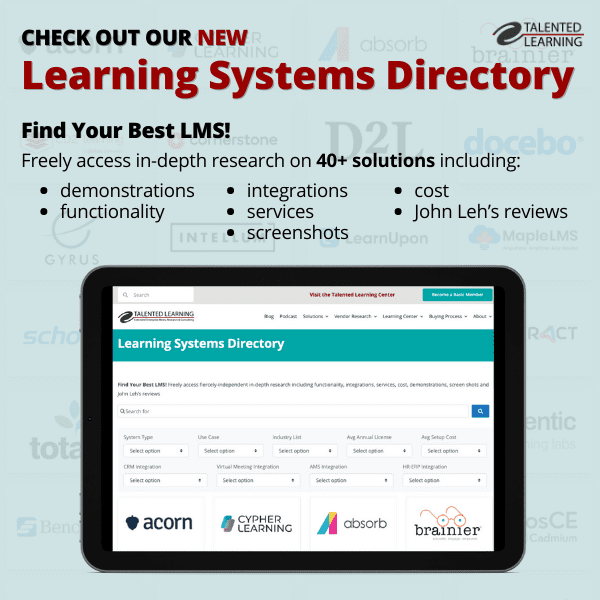
• LMS Directory — Research vendor capabilities, watch demo videos, see product reviews and read thought leadership content
• Case Study Directory – Find vendors with proven success in your industry or region
• LMS Hot Take Reviews – Check my video analysis of top learning systems, after they complete a demo with me
• Premium Research – Explore deep-dive reports that compare leading vendors across multiple dimensions
2. A Guided Approach: LMS Shortlisting Services
If you’re unable to conduct research on your own, there is an easier way. I can do it for you — accurately, independently and wisely — in less than two weeks.
My new streamlined LMS Recommendation Service combines your team’s collective requirements and personalized consulting with me. I’ll recommend 4 highly qualified solutions for your precise needs. And to fast-track the hand-off, I’ll even identify the right sales contact for each vendor and provide a personalized introduction.
Want to learn more about it? Schedule a free LMS consult now.
Closing Notes
With so many learning solutions you can consider, it’s imperative to do your shortlisting homework. The process begins when you build a business case. Next, define your requirements. This will prepare you to develop a list of qualified options at the right price point.
The shortlist you create is golden. Why? When you control the shortlist, you control the buying process. Rather than struggling to find a vendor that truly meets your needs, you can quickly and confidently disqualify inappropriate vendors, even for minor subjective reasons.
LMS vendors have one goal. They want to win your business. And they thrive on weak shortlists. In my LMS selling days, a mismatched shortlist with weaker competitors was a gift because it made my job easy.
If you’re buying an LMS, the lesson is clear: A strong shortlist is not just an advantage — it is your greatest advantage.
Fortunately, that advantage isn’t as difficult to achieve as you may think.
Thanks for reading!
Which Learning Systems Are Best For You?
Use our FREE RightFit Grid to build a shortlist based on our independent research. Compare 80+ top learning systems, mapped to common buyer requirements…
Need Help to Choose an LMS? Let’s Talk
What’s the best way to find the right solution for your needs without becoming overwhelmed or sidetracked? Start your shortlist with independent, expert advice. Schedule a free 30-minute call with me, John Leh…
*NOTE TO SALESPEOPLE: Want to sell us something? Please contact us through standard channels. Thanks.
Share This Post
About the Author: John Leh

Related Posts

Training Orchestra Review
In this Training Orchestra review, see how a training resource management system solves complex challenges around balancing live and VILT training logistics.
Authentic Learning Labs Review
In this Authentic Learning Labs review, learn how the company makes your existing LMS work better for learners, instructors, administrators and business owners.
Learn Amp Review
Learn Amp is driven by its goal to help make work life better for everyone involved. From the newest person joining the business, to the employee who has been there the longest, they want to improve the work experience...
Growth Engineering Review
Growth Engineering wants to make the learning experience better and more engaging in a way that proactively and measurably shows a return on investment.

Learning Systems and Services: Insider Tips
You can distinguish between learning platforms by focusing on use case specialization and the various services each vendor provides.

Your Competition Is Gaining Market Share. Are You?
Long-term success depends on how well you can get ahead of the pack and stay there. One way to determine how you compare is to measure your market share.

Training Business Success: Best Advice From Experts
If you're a forward-thinking training provider, you'll want to pay attention to the following advice from top digital training providers and technology innovators.

Top Learning Systems: 40 Vendors to Know in 2021
The learning system landscape has changed dramatically in a short time. Here are the top 40 learning technology vendors you should know about in 2021.

Training Business Transformation: One Strategy, Two Scenarios
Smart training business leaders know that speed and agility are the key, and trying to do everything all at once will probably only cause the effort to implode from its own weight.




CASE STUDY DIRECTORY


FOLLOW US ON SOCIAL