

LMS sales pros – are you in a rut? As a recovering LMS sales guy, I know just how easy it is to slip into that ditch without even knowing it. Unsure about where you stand? For a quick reality check, answer these questions:
- Does each new sales opportunity seem like a slight variation on a previous opportunity?
- Do you know the answer to every client question before they finish?
- Is your response time with prospects starting to lag?
- Do you hesitate to push for extra discovery calls?
- Are more dumb errors showing up in your proposals and decks?
- Do you tell the same jokes and stick to the same script for every demo presentation?
If you answered “yes” to any of the above, this post is for you. And if you answered “no” to all, you should also keep reading. Your no’s may really be denial. Are you really as hungry as you were 5 years ago? Denial is the worst symptom of all.
What’s at Stake For LMS Sales Pros?
It’s hard to see a rut building over time. It’s a dangerous affliction that sneaks up on you and hides from introspection. But eventually, you’ll know it’s there when your win rate declines. That’s something no one can ignore.
So are you in danger of falling into the abyss? Does it even matter? Maybe not. But if you’re interested in a strong win rate and maximum commissions, it’s a massive issue.
Each of us has only so many sales opportunities or “at-bats.” And there’s nothing worse than losing a valuable opportunity you could have (or should have) nailed.
I get it. And that’s why I want to share some advice with LMS sales pros who want to dig out of a rut.
Lessons From a Recent LMS Buying Opportunity
I spent almost 14 years selling enterprise learning solutions before founding Talented Learning 8 years ago to help buyers make better LMS choices. In all, I’ve spent more than 25 years on the front lines of buying and selling in the learning technology industry.
Recently, I helped a prominent global software company purchase a new customer-focused LMS. Multiple mature customer education programs were operating in silos, after a long series of corporate acquisitions. Not surprisingly, this client wanted to modernize and consolidate programs on a single platform.
The project requirements were among the most ambitious I’ve seen, in terms of functional use cases, B2C, B2B and B2B2B e-commerce, globalization, deep integration, massive data and content migration, standardization challenges, intense support needs and overall mile-high client expectations. That meant we needed the best-of-the-best vendors to compete for this opportunity.
I recommended four qualified, heavy-hitters in the extended enterprise LMS space.
Who Won the Contract?
The winning vendor received a 3-year contract worth at least $1.8 million. But what set the winner apart from the rest?
The successful vendor’s sales strategy and key salesperson were clear differentiators – as is often the case.
Meanwhile, the other vendors walked away in frustration, agonizing over their loss. If only those vendors were represented by people who didn’t act like they were in a sales rut, the decision might have turned in their favor!
That’s the lesson. If you’re in a rut, don’t let yourself remain on the losing side of buying decisions like this. Instead, improve the odds of converting your at-bats to home runs with these 13 “Dos and Don’ts” for LMS sales reps:
“Dos” for LMS Sales Pros
1) Do Be Clear About Your Solution – The mission of your RFP response and presentation to a buyer is to help decision-makers understand how your LMS solves their particular business problem. No doubt your system addresses more than one learning challenge. But don’t expect a buyer to care about that. Connect the dots for them, specifically, and approach everything with their unique needs in mind.
2) Do Ask for More Information – Don’t be shy. If the buyer hasn’t shared enough of the right information to help you craft a compelling, coherent, complete – and differentiating – proposal, it’s your responsibility to ask for more input. But be prepared to explain why this is critical and why they should care. For example, you may need additional discovery, historical documents, content examples, or access to existing systems and demos of those systems.
3) Do Customize Everything – To excel at clarifying your solution (see item 1 above), you need to bring the solution to life for a prospect. The best way to do this is by tailoring everything to the prospective client. I mean everything. Your emails, discovery, RFP, demo environment, proof-of-concept and case studies should all reflect the buyer’s situation, business challenge, industry, jargon, product names, locations and workflows. When prospects envision how your product fits into their world, you’ll have a tremendous advantage.
4) Do Spell Client Names Correctly – Correct spelling seems obvious, right? But too many times I’ve seen basic errors in company or contact names. And believe me, this tiny misstep leaves a lasting impression. Also, don’t forget to pay attention to details like capitalization, spacing, hyphens and accent marks. Hire a proofreader if you must. But don’t let yourself lose a great opportunity on such a minor technicality.
5) Do Refresh Your Boilerplate Regularly – Every organized, mature software vendor has a boilerplate proposal and demo content they reuse and leverage from proposal-to-proposal and from client-to-client. This saves time and hopefully presents your solution in its best light. However, it’s important to schedule regular updates. Look for factual errors, dropped sentences, awkward wording, old screenshots and product names, as well as outdated facts (customer names, dates, financial data and business statistics) and even slides with past potential buyer names unchanged.
6) Do Involve Your Executives in the Sales Process – Assign an executive sponsor to the top 50% sales opportunities. Buyers appreciate having exposure to your executive team because it indicates how important they are to your organization and helps them feel confident that they’re receiving your best solution. This also assures buyers that they’ll have a voice in future product development and gives them a legitimate point-of-contact if things go sideways.
“Don’ts” For LMS Sales Pros
1) Don’t Executive Sell – Your executives should be involved in the sales process, but not the primary point of contact. It’s essential to assign a dedicated salesperson who acts as a quarterback for each opportunity. Executives don’t have enough time to walk prospects through every detail of the buying journey. On the other hand, a dedicated salesperson who is compensated with a healthy commission for winning new business will find the extra 20-30 hours to follow-through on the 6 “Dos” I outlined above.
2) Don’t Conduct Sales Discovery at Final Demos – A live final presentation isn’t the time to ask for information that can fundamentally alter the components of your proposed solution, let alone what you demo and how. If you are asking key questions at this stage, you have already lost.
3) Don’t Assume the Demo Technical Path Will Be Easy – GoToMeeting recently updated its software. This required virtual meeting presenters to download and install the update, exit GTM and then reenter the meeting. For several vendor finalists, this blew-up the first 15 minutes of demo time and put presenters on the heels from the very start. It also forced everyone on the buyer side to fritter away valuable time. Every virtual tool invitation (from GTM, Zoom and others) includes a system requirement test. Don’t forget to complete that test in advance to ensure that all systems will be ready at showtime.
4) Don’t Hoard References – Do you want to earn extra credit, especially when being considered for complex, high-risk projects? Get relevant clients to proactively help in the sales process. Nothing is more persuasive than a proactive reference offer. Of course, to make this work, you need enthusiastic customers.
5) Don’t “DemoAnswer” – If you’ve participated in as many demos as I have, you know the drill. The “DemoAnswer” is a reflexive tick that makes presenters physically unable to answer questions with a direct “Yes” or “No.” Instead, they launch into a generic, pre-fab narrative that is supposed to address any question about that topic. Understand the question, answer succinctly and offer to show if required.
6) Don’t Let the Pizza Cool – Pizza is best served hot, so establish a standard personal and organizational warp-speed response timeframe for all customer interactions. When prospects are in the heat of the buying process, answering their questions in real-time is an easy and proven way to establish value and differentiation.
7) Don’t Forget to Close – Has any episode of Law and Order or Perry Mason ever ended without the lawyers delivering a closing argument to the jury? Of course not. But LMS vendors walk out of buying “court” all the time without bothering to summarize their case. That’s a huge missed opportunity. Your closing argument should be exactly that. Remind prospects what you bring to the table, how you will solve their problem and why they should buy. Don’t leave until you connect the dots one last time!
Conclusion
8 years after my last LMS sale, I still wake up at night in a cold sweat, lamenting missed opportunities, preventable mistakes, stupid losses and unspent commissions.
As an LMS selection consultant, I write posts like this to help others who are currently in the sales trenches to avoid the same kind of trauma. This simple list of 13 “Dos and Don’ts” should go a long way to help you get out of an LMS sales rut, and keep you ahead of the pack. I hope it helps.
Thanks for reading!
EDITOR’S NOTE: This post is part of a special series “For LMS Vendor Eyes Only,” focused on learning systems developers and their sales teams.
Share This Post
About the Author: John Leh

Related Posts

Top LMS Selection Speed Bumps: Customer Ed Nugget 18
If you're a customer education leader, sooner or later you'll need to choose a learning system. How can you avoid LMS selection speed bumps? Find out in this Customer Ed Nuggets podcast

CEdMA Conference Takeaways: Customer Ed Nugget 17
What's top-of-mind among customer education professionals these days? Join Analyst John Leh and industry leader Kristine Kukich as they compare notes from the recent CEdMA Conference

Why So Many LMS Vendors?
People ask us all the time, "Why are there so many learning systems?" Here, our Lead Analyst, John Leh, explains the factors that have led to an industry with so many LMS vendors...

The Future of Customer Education: Customer Ed Nugget 16
Customer education is rapidly evolving as organizations embrace new strategies and tech. What does this mean for the future of customer education? See what experts say on this Customer Ed Nuggets episode

Education Strategy Mistakes to Avoid: Customer Ed Nugget 15
What does it take to deliver a successful customer education program? It starts with a solid education strategy. Learn how to avoid common pitfalls on this Customer Ed Nuggets episode
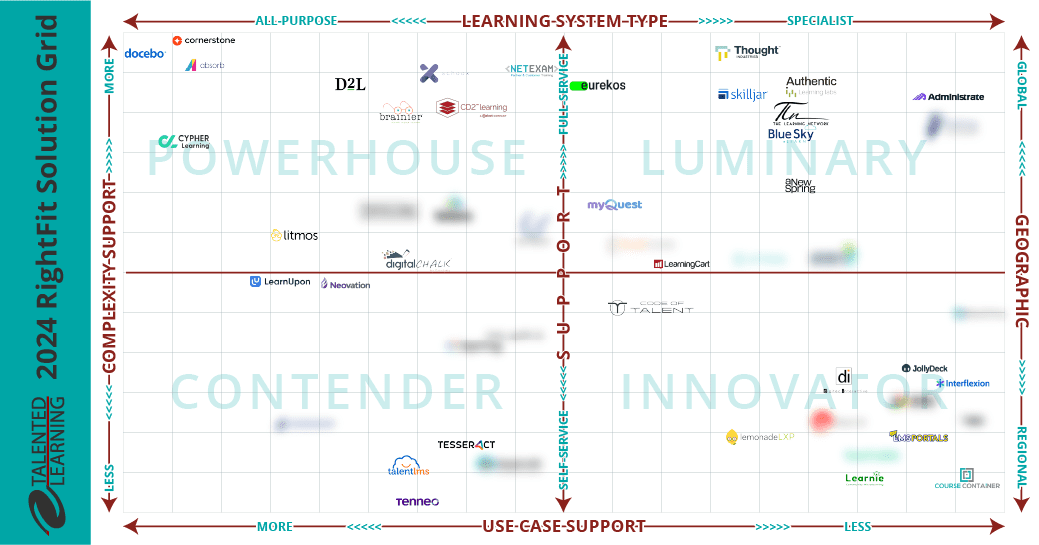
Which LMS is Best for You? New Shortlisting Tool for 2024
How can you find the best learning system for your business? Our LMS shortlisting tool can help. Learn about the 2024 RightFit Solution Grid. Free, reliable guidance based on our independent research

How to Build a Learning-Based Business: Executive Q&A Notes
Building and selling online courses may seem easy, but building a profitable learning-based business is far more complex. Find out what successful leaders say about running this kind of business

The Rewards of Community Building: Customer Ed Nugget 14
What role does community play in your customer relationships? Find out why community building is such a powerful force in customer education on this Customer Ed Nuggets episode

Benefits of Training Content Syndication: Customer Ed Nugget 13
If you educate customers online, why should you consider content syndication? Discover 10 compelling business benefits in this Customer Ed Nuggets episode





CASE STUDY DIRECTORY


FOLLOW US ON SOCIAL