

EDITOR’S NOTE: Because enterprise learning involves multiple disciplines and perspectives, we regularly invite experts from other organizations to share their insights. Today, Ann Torry, VP of Marketing at DigitalChalk, discusses how to allocate resources for internal vs. external training.
As organizations grow, so does the need to educate two critical groups: employees and customers. Training these constituents can significantly improve business performance. But resources aren’t infinite. So, which should you prioritize — internal or external training?
Choosing where to allocate time and budget isn’t always clear. That’s because both types of training can be highly beneficial. For example:
Internal training
The 2024 LinkedIn Workplace Learning Report says strong learning cultures achieve 57% higher employee retention, 23% more internal mobility and a 7% healthier management pipeline, on average.
External training
Effective customer education increases product adoption and engagement by 30-40%, with mature programs improving brand loyalty and customer satisfaction by at least 200%, according to the Technology & Services Industry Association (TSIA).
Knowing this, where would you focus — on internal or external training? Before deciding how to allocate training resources, consider the following tradeoffs…
Don’t miss what’s happening at the leading edge of enterprise learning technology! Get our weekly email brief. SUBSCRIBE HERE →
Internal or External Training? Key Differences
Both forms of training may be based on similar formats, such as videos, live sessions, online courses and assessments. However, they serve distinctly different purposes.
Historically, most companies focused on internal training. Their goal was to ensure employees met compliance standards, followed organizational processes and were prepared to perform their jobs effectively.
However, as businesses began to focus on customer experience and retention, external training emerged as a strategic investment. This has become especially critical in industries with complex products or partner networks.
Primary Purpose of Internal Training
- Onboarding: Get new hires up to speed quickly, across roles and work locations.
- Compliance: Meet ongoing regulatory and safety requirements — essential in healthcare, finance, manufacturing and high-consequence environments.
- Upskilling: Build role-specific knowledge, competence and soft skills to improve job performance.
- Career development: Prepare employees for advancement and leadership through structured development paths.
Primary Purpose of External Training
- Product adoption: Help consumers or business users understand how to use products correctly and apply them successfully in their environment. This is particularly important for companies that sell complex technology, software and heavy equipment.
- Certification training: In real estate, medicine, insurance, cosmetology and other fields requiring a professional license, provide test preparation and continuing education that helps individuals obtain and maintain their credentials.
- Compliance training: Help professionals meet ongoing regulatory standards and manage certifications in fields like healthcare, finance and education.
- Monetized education programs: Training often generates revenue streams. Businesses, professional associations and commercial continuing education providers sell certification courses, bundles and renewals through ecommerce-enabled learning platforms.
When a Combination Makes Sense
In some situations, internal and external education work well together. For instance, franchise networks, healthcare providers and many B2B organizations benefit from educating employees, as well as customers and partners.
2026 OFFICE HOURS: If you’re buying a learning system, why not choose with confidence? Join analyst John Leh for this free 6-part webinar series just for LMS buyers. SAVE YOUR SEAT →
The Role of Video in All Types of Training
Digital video is one of the most effective, efficient ways to deliver engaging, repeatable, scalable training. This kind of instruction works, whether you integrate it into internal or external training — or both.
For internal training: Video delivers consistent messaging across teams, makes complex processes easier to understand and strengthens soft skills through real-life scenarios.
For external training: Video simplifies technical content, helps customers get up to speed faster and reduces strain on support teams.
For both use cases, video enables…
- Engagement at scale: Reach across departments and customer segments with consistent, high-quality training.
- On-demand access: Improve engagement, retention and satisfaction with content available anytime.
- Visual clarity: This is highly effective for product training, process walkthroughs and soft skills development.
- Cost-effectiveness: Once video content is created, it’s easy to reuse, update and localize.
From explainer videos and screen recordings to animations and scenario-based demos, video helps organizations deliver rich learning experiences in less time. And the format works.
As a 2023 study found, instructional video positively influences consumer behavior by increasing trust, product confidence and purchase intent. But, to make the most of instructional video, teams need a learning platform that helps them upload, organize and deliver this content at scale.
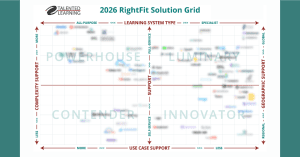
Whether you offer internal or external training, which learning systems are best for your needs? Check our latest RightFit Solution Grid, based on our rigorous independent research. Get the grid for free!
Internal or External Training? How Companies Find Balance
Some organizations depend solely on one type of training. But those cases are rare.
Most organizations don’t see a need to choose between internal or external training. They know success depends on serving both audiences well. So, the real goal is to strike the right balance without doubling the workload. These strategies help:
1. Define core materials
Internal training often focuses on operational efficiency, compliance and team development, while external training improves customer success, retention and revenue. But usually, there is core product or service information that can serve both purposes. Identifying this common ground is key.
2. Adapt and repurpose content
In many ways, core messages and information are the same or similar for all audiences. Adapting existing content can be faster and more efficient than creating content from scratch. For instance, with product training, everyone needs to know how to use important features. With a careful approach, you can repurpose large content segments for training new employees and onboarding new customers.
3. Serve multiple audiences with one LMS
Hosting both internal and external training content on one platform saves time and resources. Look for a solution that lets you assign users to different roles and approve or restrict access to various types of content. It should also be easy to adapt and repurpose content.
For example, a nationwide logistics company trains warehouse employees in safety and equipment handling. At the same time, their LMS repurposes that content to educate contract delivery partners. With smart role-setting and access management, different audiences simultaneously receive training specific to their needs, without requiring the company to recreate it.
Buying or selling a customer-focused learning system? Get independent insights you can trust, with our in-depth analysis of 16 top solutions. Learn about our Customer LMS Buyer’s Guide
Internal or External Training? Focus by Industry
While most organizations train both employees and customers, some industries naturally focus on one or the other. The difference often stems from the nature of their industry, compliance requirements and more.
Internal training:
- Healthcare: Constant certifications and recertifications are necessary in this field, as well as detailed compliance education. Hospitals are more likely to invest in staff continuing education than in external training.
- Manufacturing and construction: For these occupations, safety and equipment training are legally required and necessary to reduce risk and ensure operational efficiency.
- Finance and insurance: Internal teams face an ongoing stream of changes in rules, regulations and legislation. This requires timely training and frequent updates.
- Public sector: Distributed agencies rely on internal training for consistent onboarding, ethics instruction and procedural alignment.
External training:
- Heavy equipment and industrial sales: Customer training helps prevent improper machine use and supports long-term service relationships.
- Franchise networks: Standardized training ensures every location meets brand standards and maintains a high level of service quality.
- Technology companies: From enterprise software to hardware solutions, success hinges on clear, context-specific customer education throughout the relationship lifecycle.
- Certification and training providers: Scalable training delivery supports growth, compliance and learner engagement.
In every industry, successful training isn’t just about what you deliver — but also how easily and effectively you can adapt it to the needs of various audiences.
Celebrate the best in learning tech innovation! See our latest annual LMS Award recpients, featuring the top 10 solutions in 6 categories. See all the winners…
How a Flexible LMS Supports Internal or External Training
Managing multiple training audiences doesn’t mean you have to manage multiple systems. The solution is a flexible platform that simplifies delivery across departments, customers and partners, without requiring you to duplicate effort or sacrifice consistency.
To support internal or external training — or both — choose an LMS with these capabilities:
- Video-first design: A platform designed with video at its core equals dynamic, high-quality training that scales easily.
- Training customization: Teams can personalize learning experiences by managing training access and content delivery based on an individual’s role, department, product tiers, or organization type.
- Role-based access and branded portals: Learners only see relevant content. This ensures a focused, meaningful experience.
- Built-in assessments and certifications: With so much at stake, you’ll want to track progress, validate learning and automate recertification or license renewals.
- Real-time reporting and dashboards: By dynamically capturing learning metrics across audiences, you can stay ahead of usage, engagement and outcome trends. You’ll also spot skill gaps, compliance risks and other issues.
- Hybrid delivery: The most powerful systems make it easy to combine on-demand videos with live webinars or instructor-led sessions — all from the same platform.
Whether you’re training employees, channel partners, or a rapidly growing customer base, the flexibility of a solution like DigitalChalk helps you segment, scale and streamline learning without adding complexity.
Find out how companies are achieving more with learning systems that create business value. Get inspiration from dozens of success stories in our free LMS Case Study Directory…
Conclusion: Invest Where Training Meets Strategy
As organizations grow, the pressure to upskill teams, improve compliance and engage customers continues to increase. That’s why successful organizations treat training not just as a requirement, but as a strategic investment.
By aligning training with business goals and relying on tools that support both internal and external training, you can drive performance, loyalty and long-term growth. This approach helps drive measurable impact across the entire business.
To help scale internal or external training without sacrificing quality or letting your team burn out, select an LMS that adapts to your needs. When evaluating platforms that fit your goals, focus on platforms designed for flexibility, video delivery and audience segmentation.
From employee onboarding and compliance training to partner enablement and customer education, the right kind of solution supports it all efficiently and consistently. Because, as your organization expands and evolves, you’ll discover the challenge isn’t about choosing between internal or external training. It’s about balancing both.
 Which Learning Systems Are Best For You?
Use our FREE RightFit Grid to build a shortlist based on our independent research. Compare 80+ top learning systems, mapped to common buyer requirements…
Need Guidance to Find the Right LMS for Internal or External Training?
For independent advice you can trust, schedule a free 30-minute phone consult with our Lead Analyst, John Leh…
*NOTE TO SALESPEOPLE: Want to sell us something? Please contact us through standard channels. Thanks.
Share This Post
About the Author: Ann Torry

Related Posts

Learning The Language of Customer Education: A Pocket Guide
Customer education (aka customer learning or customer training) is more than just teaching people about how to use features of a product or service they’ve purchased, it’s also about helping them understand related best practices, demonstrating the product’s value-add, and communicating about why and how it helps them achieve their specific objectives.

Talented Learning’s Greatest Hits: 2017 Edition
Digital innovation is making it easier than ever to support commercial training strategies, so companies of every size and industry segment are discovering how learning programs can fuel growth and profitability.

18 Top Learning Systems Trends to Watch in 2018
Despite competitive pressure to keep price points lower, we expect licensing levels to continue drifting upwards, as vendors attempt to demonstrate value-add that differentiates their offerings.
2017 Talented Learning LMS Awards: Best of the Best
Customer activity such as a course purchase, renewal, webinar participation, or whitepaper download should trigger relevant content recommendations or delivery. Therefore, these systems must be tightly integrated with CRM software, marketing automation and survey platforms, social media, ecommerce tools, accounting, finance, customer support and other systems.

Continuing Education Providers: What’s Your Recipe for LMS Success?
Continuing education providers offer a broad spectrum of learning experiences -- from in-person classroom sessions, mentoring and on-the-job training to self-paced study in virtual and blended formats.

Salesforce Learning Solutions: AppExchange Buyers Guide
Nearly 12 years ago, the company launched the Salesforce AppExchange as a one-stop-shop for third-party solutions that extend and enhance the platform's core functionality.

Digital Video: 10 Ways to Experience Modern Learning Live and On-Demand
Nearly all vendors rely on integration with one or more third-party virtual online event applications such as GoToMeeting, Adobe Connect or Cisco WebEx.

How to Attract a Loyal Learning Audience, Even on a Tight Budget
Many low-cost marketing automation tools and marketing-savvy learning platforms now support specialized packaging, pre-scheduled content subscriptions, coupons, discounts, bundles, branded promotions and more.

The New Corporate Learning Ecosystem: Coexistence at Work
Recognizing the futility of direct competition, specialty LMS vendors learned to focus on a particular audience, industry or other factors where they now claim competence and fight for customers in that niche.




CASE STUDY DIRECTORY


FOLLOW US ON SOCIAL