

Once upon a time, HR and learning organizations focused exclusively on training and development of corporate employees. Those days are long gone.
Everything changed with the dawn of modern learning technology and other digital enterprise innovation. Now, businesses large and small are expanding their internal training programs to serve the needs of learning audiences outside of organizational walls. This includes customers, channel partners, contract workers and others who need product knowledge and skills.
In the corporate world, this is called extended enterprise learning. And it requires a whole new mindset and methodology.
Find out how real-world companies are achieving more with learning systems that create business value. Get inspiration from dozens of success stories in our free LMS Case Study Directory…
External Learning Audiences Require Broader Strategy
Some HR and learning organizations are eager to move this extended enterprise agenda forward, but it’s not easy for those who have always operated inside the employee training “box.”
Their education and experience are focused on instructional design, learning theory, content quality, and training efficiency. Their functional priorities are compliance management, performance support, and basic talent management.
Success depends upon finding or developing the right content for employee training – and continuously achieving more with less budget and staff.
In this environment, it’s tempting to delay extended enterprise learning requests until time and funding permit. But extended enterprise business decision-makers can’t afford to wait.
If training departments don’t step up, extended enterprise learning sponsors move forward on their own — often duplicating technology, content and effort.
Meanwhile, for the brave souls who do respond, extended enterprise learning programs can be an eye-opening experience. There are fundamental differences – not just in language, but also in philosophy and in the tools needed to succeed. Understanding these differences at the outset can make or break your learning initiatives.
As an independent LMS consultant who has focused on extended enterprise learning for more than 20 years, here’s my quick take on differences that can make a big impact on your results.
Internal vs. External Learning Audiences: 8 Critical Differences
1) Mandatory vs. Voluntary Learner Motivation
Employee compliance training is mandatory. Employees are forced to participate and successfully complete training – or be fired. Under those conditions, it’s easy to tolerate poor communications and a weak user experience.
In contrast, customers and channel partners voluntarily participate in training. They must be persuaded to visit a learning portal/LMS, find relevant content, consume it and complete it – again and again. This demands sophisticated marketing, sales psychology and user experience design on the part of training providers.
2) Assigned Content vs. Discovered Content
When entering an LMS, employees are typically “assigned” content automatically (based on their title, role, or other criteria) and the interface reflects their content status. On the other hand, extended enterprise learning audiences typically use search, navigational functions, and other features to find content of interest.
This means it’s important to invest time and effort in creating searchable catalogs, filters, tags, categories, authors, ratings, reviews, and social recommendations to help extended enterprise visitors find relevant content as quickly and easily as they would when visiting popular online retailers like Best Buy or Amazon.
Buying or selling a customer-focused learning system? Get independent insights you can trust, with our in-depth analysis of 20 top solutions. Learn about our 2024 Customer LMS Capabilities Report
3) Roles vs. Domains
An employee LMS typically manages one or a handful of very similar employee learner groups. In this case, it’s sufficient to manage access to content and functionality via “roles.”
However managing external learning audiences is more complex, because each organization may want access to its own unique area or “domain” within the LMS. Domains go much further than “roles.”
You can create distinct experiences for each domain by configuring branding, language localizations, content libraries, integrations, personalized learner home pages, notifications, features, and business process workflow.
4) Third-Party vs. Proprietary Content
Online content for employees can be aggregated from third-party providers such as OpenSesame, Skillsoft, Lynda, or Harvard Mentor. Content is available at every quality and skill level for nearly any business, industry, and technical topic you can imagine.
In contrast, content for extended enterprise learning audiences is almost always proprietary and needs to be custom developed. Why?
Let’s briefly consider channel partners. They need content and performance support for one reason – to help them sell your products or services. One way you can start adding value immediately for channel business owners is by developing solid content quickly and at a reasonable price.
5) HR ERP Integration vs. CRM Integration
In employee LMS deployments, user accounts, profile information, and organizational hierarchy are typically synced through integration with an HR or enterprise resource planning application such as Oracle or SAP. The amount of information shared to make the LMS work is usually limited to basic profile, manager and organizational information.
For extended enterprise implementations, customer, and partner demographic information is stored in a customer relationship management system (CRM) such as Salesforce.com or Microsoft Dynamics. However, CRMs offer much more customer and demographic information that you can leverage to drive learning programs and measure their success.
6) Paper Certificates vs. Digital Badges
Employee LMSs provide printable certificates of completion, which learners generally ignore, file away, or sometimes frame and display, unnoticed, on office walls.
In contrast, extended enterprise learning programs increasingly award digital badges that are embedded with relevant metadata (such as the badge title, description, date earned, issuer, recipient, expiration date, and even specific details about the work submitted by the recipient).
These digital credentials follow learners throughout their career because they can easily be displayed on websites, social media profiles, and email signatures to demonstrate competence and help land a job, a promotion or a new client.
7) Free vs. Paid eCommerce Models
Sometimes free is hard to give away. Organizations rarely sell learning content to employees. Convincing individuals or organizations to buy content is tough and different, but it’s common to sell certifications and premium training to channel partners and customers.
That means you need to understand the world of extended enterprise ecommerce – packaging for organizational purchases, volume pricing, bundling, subscriptions, cross-selling, upselling, discounts, promotions, digital advertising, landing pages, conversion funnels, shopping carts, checkout processes, payment gateways, taxation, accounting integrations, and more.
The list seems intimidating, but these tools and techniques are essential for anyone who wants to generate revenue from online content.
8) LMS Notifications vs. Email Marketing Systems
Most LMSs include automated notifications via email (and sometimes text) to let employees or managers know when content is assigned, completed or not completed. They may also include reminder notifications about upcoming training sessions.
Extended enterprise notifications go much further, and are typically not provided directly by the LMS but rather through integrations with email marketing systems such as MailChimp or Drip. For example, an LMS can track when a user logs in, visits x times in a week, opens x pieces of content, finishes a course, asks a question, buys a product, doesn’t log in for 30 days, and countless other events.
Any of these potential triggers can be configured to kick-off specific email marketing campaigns that send learners additional training recommendations, discounts, special offers and much more.
Extended Enterprise Learning at the Crossroads
Although I’ve specialized in extended enterprise learning technology for decades, it feels as if the learning community is just beginning to see its potential. I have never seen more enthusiasm about this topic from both LMS buyers and sellers. This means HR and learning professionals are at a crossroads.
You can choose to embrace all that is unique and challenging about extended enterprise learning technology and practices. You can close your own skills gap, take a seat at the business table, and lead the organization through this profit-driven opportunity. Or you can sit it out and continue to focus on the “safe” internal world of limited budgets and cost counting.
The choice is yours. Good luck — and thanks for reading!
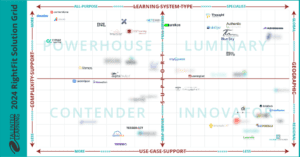
Which Learning Systems Are Your Best Fit?
Use our FREE RightFit Grid tool to build a shortlist based on our independent research. 50 leading learning systems mapped to common buyer requirements!
LEARN MORE AND GET YOUR FREE COPY…
Need Help Finding the Best LMS for Your Audiences?
Take the next step toward a learning system that fits your unique needs. Schedule a free 30-minute consult with me, John Leh, Lead Analyst at Talented Learning…
*NOTE TO SALESPEOPLE: If you want to sell us something, please DO NOT book a call. You’ll be wasting a free spot others need, so I won’t stay on the call. Instead, contact us through normal channels. Thanks.
Share This Post
About the Author: John Leh

Related Posts
2026 LMS Awards: Best Enterprise Learning Systems
Which enterprise learning systems are best? Find out about top solutions as our Lead Analyst, John Leh, reveals winners of our 2026 LMS Awards!

Your LMS is Not Your Learning Ecosystem: Why Infrastructure Maturity Matters
Does your organization rely on multiple learning systems and tools? That doesn't mean it's a coherent learning ecosystem. Find out how to assess the maturity of your tech stack...

Breaking Down Learning Silos: 4 Extended Enterprise Strategies
Want stronger results from your enterprise learning initiatives? Be sure to remove common learning silos. These strategies will help...

Want to Replace Your LMS? Start With a Reality Check
Should you replace your LMS? Before moving forward, it's smart to weigh the pros and cons. This case study illustrates how the process works...
5 Essentials for a Great LMS RFP | Customer Ed Nugget 35
Finding the right customer education platform often starts with a request for proposal. But what does it take to write a great LMS RFP? John Leh explains on this mini-podcast...

Learning as a Revenue Growth Engine: 5 Strategies for Associations
Associations often depend on member dues for revenue growth. But these days, non-dues education programs are more effective. What strategies work best?

How to Measure the Business Impact of Professional Education Programs
Are your professional education programs as successful as they could be? To improve their business impact, try this measurement framework...

Don’t Cut Training Content. How to Reuse, Refresh, or Rebuild Instead
In a world where learning organizations must do more with less, how can you make the most of training content? These strategies can help...
Learning System Vendors: Enter the Talented Learning Awards 2027
Awards season is under way! Find out how to enter the 2026 Talented Learning Awards to showcase your learning solution, gain industry recognition, and increase visibility in the marketplace...




CASE STUDY DIRECTORY


FOLLOW US ON SOCIAL