

Is your organization looking for a learning management system that will serve your learning audiences well, and won’t cause you unnecessary frustration or expense? Then here’s some advice you’ll want to keep in mind: It is surprisingly easy to buy an LMS you will hate.
In learning industry circles, it’s almost fashionable for people to talk about how much they hate their learning system. Some people even think customer dissatisfaction is the reason why there are nearly 1000 LMS vendors. But I don’t think that’s the case.
Over the years, I’ve spoken with hundreds of vendor references, and plenty of them say they love their LMS. However, I’ve also met many more buyers who are somewhere in the neutral zone—neither thrilled nor dissatisfied. So as I see it, LMS customer satisfaction is actually more of a bell curve, ranging from intense hate to true love. And those extremes tend to be outliers.
Knowing this bell curve exists, how can buyers avoid disastrous outcomes? That’s a question I’m on a mission to answer, so I’m continually evaluating the love/hate relationships we see in the LMS world. This quest raises numerous questions. For example:
- Where do relationships run off the rails?
- When there’s a mismatch, who is at fault? Do vendors or customers deserve the blame?
- Is LMS love or hate predestined, or can vendors and customers influence the outcome?
- What, if anything, can a buyer do to ensure a good (or bad) match?
Based on my 13-year career in LMS sales, and nearly 9 more years helping buyers choose learning systems, here is my conclusion. When issues arise, the first instinct is to blame vendors. And of course, they carry the blame if they misrepresent themselves, exaggerate their capabilities in the sales process, or don’t live up to their commitments.
But there’s another side to the purchasing coin. It’s all about the buyer’s responsibility. Failure to buy wisely is not a vendor’s fault. So in LMS purchasing, as in any transaction, the smartest advice is caveat emptor (buyer beware).
Dissatisfied LMS buyers don’t like to hear they may have caused their own problems. However, I often find it’s true. Fortunately, poor buying decisions are usually preventable with preparation and proactive effort by purchasers. But if you insist you’d rather not fall madly in love with your next LMS, here are the top 5 ways to make sure you buy an LMS that will seriously disappoint you.
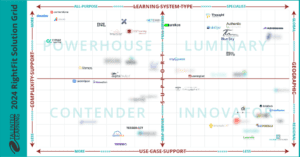
Which learning system is best for you? Check the 2024 RightFit Solution Grid, based on our team’s independent research! Learn more and get your free copy!
5 Ways to Buy an LMS You Will Hate
1) Assume You Already Know It All
By far, the number one way to buy an LMS you will hate is a lack of preparation. The most successful LMS buyers often invest 2-6 months to study the market before actively engaging vendors. And keep in mind that the LMS market changes rapidly. So, if you were up-to-speed 2 years ago, you are now behind.
Honestly answer these questions:
Do you know which vendors are leading the way in today’s LMS market? Key LMS trends? The type of solution that’s best for you? Relevant feature sets?
Have you read the industry’s most reliable blogs, independent software reviews, or case studies? Have you attended an industry trade show lately? Have you talked with colleagues about their recent LMS evaluation experiences?
If you like to shoot from the hip and get whatever you get, then skip the research and assume you already know it all. It’s highly likely you’ll walk away with an LMS that costs too much and delivers too little. And that platform will be all too easy to hate.
2) Define Requirements Like an Amateur
If you really want to hate your LMS, focus solely on defining your functional requirements. Download one of the many free LMS RFP templates available online, and you’ll quickly create a list of 1000 “must have” requirements you will never use—along with a couple of “nice to have” future requirements.
Buyers who love their LMS don’t focus on individual features. Instead, they identify their unique audiences and the behaviors they want to change. Also, they script realistic use cases that profile learners in moments when they need to find and use an LMS to connect with relevant content. This process reduces hundreds of fake “must-have” features to a few dozen truly essential requirements.
Another note: Haters also forget to specify their implementation and ongoing support needs, or their technical and business requirements. Instead, they screen LMS vendors based solely on an inflated functional requirements list.
Want a better way to manage the business of learning? Find vendor profiles, reviews, case studies and more in our free Learning Systems Directory…
3) Evaluate Unqualified Vendors
Usually, an LMS purchase takes a couple of years. The first year is all about developing the business case, obtaining political alignment, and getting project funding approved. Purchasing occurs when funds are available in the next fiscal year. During the purchase year, buyers inevitably start to run out of time because they invest too much time and effort evaluating unqualified vendors at the outset. This leads to hasty short-list decisions as budget deadlines loom. But it doesn’t need to be this way.
An organization can easily spend $1500 or more to determine if a vendor should be seriously evaluated. Visiting websites, talking with salespeople, seeing demonstrations, and organizing this process with your team takes time and effort.
Buyers often dig into this qualification process with the best of intentions but don’t know where to start or stop. Among hundreds of potential vendors, how many contenders are enough? 5? 25? 100?
Buyers quickly get to the point where they must send out an RFP or risk running out of time to select and implement an LMS within the budget year. As a result, they send an RFP to too few or too many vendors. Either way, when vendors aren’t pre-qualified buyers must evaluate and choose the best LMS from a field of options that may not be best for their needs.
4) Misalign the License Model
This one is really simple, yet it’s often overlooked—and it leads to way too much bad blood. LMS vendors license their products in various ways, and they charge for usage based on a variety of metrics. They may charge by named user, active users, per registration, per course purchase, or even per user log-in.
You may find an LMS that can perfectly do everything you want, but be a terrible choice because its pricing structure doesn’t fit your needs. For example, it’s fine if internal employee LMS solutions charge by the number of named users. If you have 10,000 employees, you will need a 10,000-user license. But with external, unknown, infrequent learners using an extended enterprise LMS, it makes more sense to choose a model that charges per registration, or for total active users within a prescribed timeframe.
As you can imagine, a misaligned license model leads to strife because buyers feel they’re overpaying for non-use, or they get into the self-defeating game of activating and deactivating learners to manage their license level when additional funds aren’t available.
Neither of these scenarios is necessary. With so many LMS vendors in every solution category—and so many ways to license an LMS—why not look within your target category to find a license model that aligns with your business model?
Find out how real-world companies are achieving more with learning systems that create business value. Get inspiration from dozens of success stories in our free LMS Case Study Directory…
5) Open the Door to “Over Buying”
Because an LMS can be costly, and selecting the right one can be such a complex and time-consuming process, many decision-makers over-buy out of caution or ignorance.
For example, a buyer might actually be happier as the valued customer of a smaller, more specialized, business-focused LMS vendor. Instead, this buyer may become the forgotten customer of some gigantic, faceless HRIS/TM/LMS provider. In this scenario, significant financial investment, overly complex implementation, limited customer service, and lack of tangible return on investment can cause deep customer dissatisfaction.
But wait, there’s more. This kind of mismatch goes hand-in-hand with another huge hidden problem. There’s a steep ongoing price of choosing a too-big-for-your-needs LMS. It limits your ability to invest in critical learning content and marketing activities. This can seriously jeopardize the success of programs your LMS is intended to support.
This issue is similar to being “house poor” in your personal life. Everyone’s income is limited. If you allocate the lion’s share of your wages to your house mortgage, funds never become available for improvements, vacations, dining out, or discretionary purchases. As a result, your quality of life suffers, and only the house wins.
Who would like that situation?
Conclusion
If you’re buying a learning system, you don’t really want to hate your LMS. Although it may feel satisfying to give your vendor a good bashing at ATD ICE or DevLearn, success feels much better.
The good news is that if you start looking now for an LMS replacement cycle in 2023 or 2024, you’ll have plenty of time to educate yourself on the market, define what you really need, and qualify relevant vendors. If you do, you’re much more likely to find targeted solutions with better customer service and lower costs. And I predict you’ll love the results. So, please, don’t be an LMS hater.
Thanks for reading!
NEW FOR 2024
Which Learning Systems Are Your Best Fit?
Use our FREE RightFit Grid tool to build a shortlist based on our independent research. 50 leading learning systems mapped to common buyer requirements!
LEARN MORE AND GET YOUR FREE COPY…
Need Help Finding The Best Future-Friendly LMS For Your Organization?
Want expert assistance to find a specialized learning platform that truly fits your organization’s needs? We’re here to help! Submit the form below to schedule a free preliminary consultation at your convenience.
Share This Post
About the Author: John Leh

Related Posts

Distance Learning and the LMS: Advice From a Higher Ed Expert
EDITOR'S NOTE: As the non-traditional student segment of the higher education market continues to grow, demand for greater program flexibility is following suit. Many colleges and universities have launched distance learning programs, but student success rates remain [...]

Does Your Business Really Need an LMS? Straight Talk with “The eLearning Coach”
When businesses want to train customers and prospects, they focus on very specific user scenarios, core functionality, third-party integrations, implementation needs and types of content.

Best Customer Education Blogs: 25 Must-Reads for Learning Professionals
The sheer volume of solutions that define the broader marketing technology landscape has ballooned from only 150 in 2011 to nearly 7000 this year, according to Scott Brinker at ChiefMartec.com.

What Factors Are Shaping the LMS Market? 2018 Learning Systems FAQ
Now that volume-based SaaS licensing has energized the extended enterprise LMS market, employee training solutions are following suit.

Which Learning Content Trends Matter Most to You?
Working hand-in-hand with machine learning (ML) algorithms, AI is an enabling technology that simulates human intelligence and to enhance learning, problem-solving, pattern recognition and predictive modeling.

LMS Trends: 2018 Mid-Year Learning Systems Market Update
With learning technology innovation, there's never a dull moment. That's why we're sharing a mid-year learning systems market update...

Extended Enterprise Compliance: Mapping the Ecosystem
To verify that their certifications are up-to-date, rig workers typically carry tools that are tied to one or more compliance databases – either an ID card that can be swiped for status checks or a mobile learning and tracking app.

Online Customer Training: Behind the Surge in Specialized Learning Systems
Customers became conditioned to the idea of purchasing training directly from product and service providers.

Attraction Marketing Tips For Enterprise Learning Success
Defining the "what, when, where, how and why" of key user scenarios will inform the learning experiences you develop, then you can craft appropriate communications to drive the right audience to the right content at the right time.





CASE STUDY DIRECTORY


FOLLOW US ON SOCIAL