

I’m an instructional technologist who sold learning management systems, focusing on the extended enterprise, for over 13 years. I worked for two major LMS companies and both had LMS systems primarily designed for internal employee training with some extended enterprise features. I always enjoyed and chased the extended enterprise audiences of the solution because of the measureable tie to the business and the relative lack of competition. Over time, through winning new clients, promising new features and building new customizations, both solutions developed into leading external user LMS solutions.
I developed a personal specialty and sold customer, sales channel, public sector, ecommerce and association learning technology solutions better than just about anyone in the LMS industry. In all, I sold approximately 100 LMS solutions and generated over $50,000,000 of LMS license and service revenue. I learned how to “translate” fluently between LMS, eLearning, IT and business languages. Seems simple, but so many LMS sales people just can’t shut up about integrated performance management or using APIs to facilitate SSO via SAML2 while speaking to business owners. I needed this fluency to get my team to understand the business and get the business to understand the solution. If there was a breakdown in communication, the end result was always the client buying some other LMS or nothing.
The sales cycle for a LMS system is 6-24 months in my experience. No matter how long, it always starts the same way with a phone discovery call to learn about the project and for the vendor to screen you in or out based on high level parameters. I found that I could jump out in the lead right from day one by doing something almost no other salesperson did – listen and keep my mouth shut.
I found in a lot of instances over the years, that the people I was selling to in extended enterprise solutions were from a non-HR or learning background. These people needed a training or LMS solution to support their business, but didn’t really know the language or how to ask their questions. As a result, they endured many tortured sessions with my competitors learning about all sorts of internal employee HCM stuff.
In my discovery calls, I spent a lot of time asking questions, listening and not talking which led amazingly to me knowing about their business, goals and objectives in great detail. I spent an hour before every first discovery call reviewing the publically available information about the organization so that I could ask intelligent questions about the connection between their LMS project and their business, customers, channel, countries and products.
In addition to the business, I learned the language they used to describe the LMS and learning technology. Since there are so many synonyms in the industry (take eLearning, online learning, web-based learning, virtual learning for example) it is best to use the terms your prospective client uses. It builds rapport and clues you in to where they are at on the “understanding” scale and allows you to adjust accordingly. If a client is throwing around the term computer based training (cbt) for example, it’s best not to hit them with the “adaptive learning being driven from a real-time LCMS integration” solution. Conversely, if someone is asking about Tin Can support for user actions taken on their AMS (Association Management System) member portal, you better not say you are not experienced with it.
My goal was never to talk about our company, solution or myself on my first discovery call with a client until the final 5 minutes of the call. And then, I only very briefly summarized their main goals and how we aligned (if we did) and planned for next steps. Until you understand the company, the business, what they are trying to accomplish, speaking about yourself or your company is somewhat foolish. By aligning from minute one to their business you can assume the role of trusted adviser through the long sales cycle vs. pain in the butt salesperson. Don’t worry, there will be plenty of opportunities to talk about yourself.
There are 500+ LMS solutions in the world. You need to stick out of the sales crowd if you want to get to first base and eventually win. As a vendor, you have done this a hundred times. As a buyer, this is their first or second time and most likely their biggest purchase ever. You need to get in sync with the customer and not the other way around.
Vendors, here are 5 tips on how to get past 1st base in an extended enterprise LMS opportunity:
- If you haven’t read the publicly available information about the organization you are selling to, don’t bother calling. You may win a deal without doing this from time to time but you won’t win many.
- Although it seems crazy, not every customer needs every feature you may have as a vendor — even the really cool features. So if you just talk about those features and solutions that are relevant to the problem they are trying to solve, they actually listen. No kidding.
- Gauge the level of LMS, eLearning, business and IT understanding of your prospect and tailor your speak accordingly. Just like a teacher, you have to sell at the level of your class and do it without being demeaning.
- Don’t use LMS, IT or eLearning jargon first. All too often, people are ashamed to admit they don’t know the term and they immediately dislike you as a result.
- Listen, ask questions and try to shut up 200% more than you think you should. Kind of like drivers, most salespeople think they are good and interesting. Trust me, you need to shut up a lot more.
Thanks for reading!
Does Your Sales Team Need Some Help?
Check out our vendor services or schedule a free consultation with Talented Learning’s CEO and Lead Analyst John Leh by filling out the form below:
Share This Post
About the Author: John Leh

Related Posts

Docebo CEO Alessio Artuffo Talks LMS Trends
What LMS trends are top-of-mind among learning tech innovators? Docebo CEO, Alessio Artuffo, talks with our Lead Analyst, John Leh

ATD24 Expo: Join Our LMS AI Innovation Tour
What's special about ATD24, the annual ATD International Conference and Expo? Find out why Lead Analyst John Leh is closely watching all the learning systems action!

Top LMS Selection Speed Bumps: Customer Ed Nugget 18
If you're a customer education leader, sooner or later you'll need to choose a learning system. How can you avoid LMS selection speed bumps? Find out in this Customer Ed Nuggets podcast

CEdMA Conference Takeaways: Customer Ed Nugget 17
What's top-of-mind among customer education professionals these days? Join Analyst John Leh and industry leader Kristine Kukich as they compare notes from the recent CEdMA Conference

Why So Many LMS Vendors?
People ask us all the time, "Why are there so many learning systems?" Here, our Lead Analyst, John Leh, explains the factors that have led to an industry with so many LMS vendors...

The Future of Customer Education: Customer Ed Nugget 16
Customer education is rapidly evolving as organizations embrace new strategies and tech. What does this mean for the future of customer education? See what experts say on this Customer Ed Nuggets episode

Education Strategy Mistakes to Avoid: Customer Ed Nugget 15
What does it take to deliver a successful customer education program? It starts with a solid education strategy. Learn how to avoid common pitfalls on this Customer Ed Nuggets episode
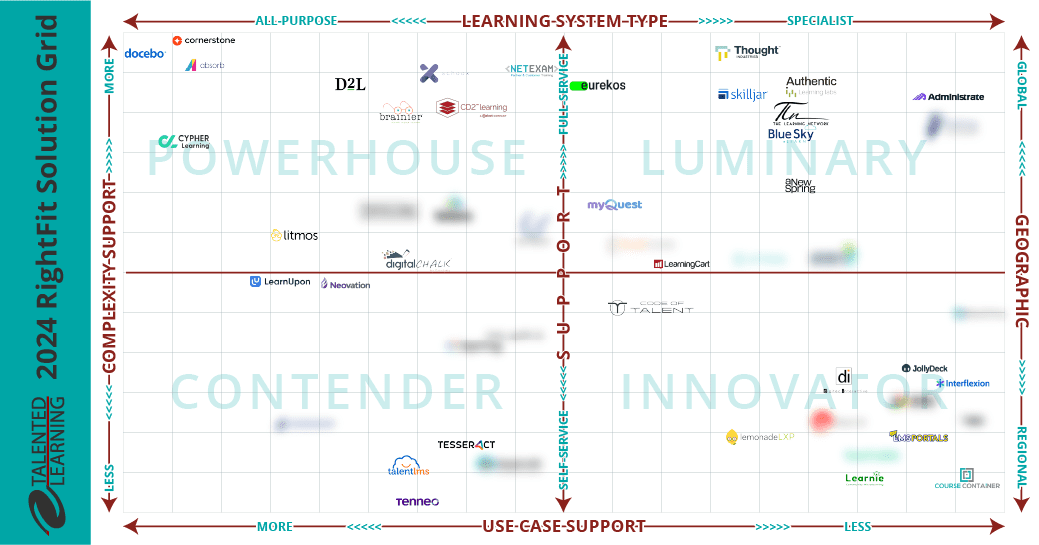
Which LMS is Best for You? New Shortlisting Tool for 2024
How can you find the best learning system for your business? Our LMS shortlisting tool can help. Learn about the 2024 RightFit Solution Grid. Free, reliable guidance based on our independent research

How to Build a Learning-Based Business: Executive Q&A Notes
Building and selling online courses may seem easy, but building a profitable learning-based business is far more complex. Find out what successful leaders say about running this kind of business





CASE STUDY DIRECTORY


FOLLOW US ON SOCIAL