

By Guest Contributor: Michael Crawford, Principal Consultant, StOp Consulting
Last month, Talented Learning’s blog post “LinkedIn Outfoxes Many with Linda.com Acquisition” detailed how LinkedIn has disrupted the eLearning, higher education and workforce development industries in one strategic move. I’ve worked for years in elearning programs for workforce development and wanted to look at digging deeper into the analysis.
Workforce development programs (WDP) have been around in various flavors for years. However, recently they are more and more moving to online or blended programs in order to reach the scale they need to be successful. This has created opportunities for success but also a whole host of new challenges.
Generally, workforce development programs have 3 key components:
- Training for job skills and soft skills
- Job matching/internships
- Management and reporting
In an online version, 2 out of 3 is pretty good. Usually, they have training and reporting but fall a little short on the job matching. Until now that’s been fine because the scope of most online workforce development programs is the envy of other providers. Imagine providing technical and soft skills training to tens of thousands of potential clients in your area for just a few dollars per person! That’s a message everyone loves to promote.
However, fundamentally there are still major gaps in these programs when offered online:
1. They simply don’t have the end game
Getting people to take training in a WFD program is, comparatively, fairly easy. The “Skills Gap” has been widely publicised at all levels and people understand that they need to have more skills to get a better job. So a lot of that work is already done. What they don’t have is the jobs (partly because these programs are done using LMS platforms, that don’t have job boards). After someone takes training, there’s no real way to match them to employment at the same scale. And those that do find work are often not reporting back to the program.
In a world where Metrics drive funding, that creates a huge problem. How do you measure how many people have joined the workforce or gotten a better job as a result of your program? A.K.A How do you get funded the second time?
2. From an adult learning perspective, the process is backwards
Training program design says you start with the outcomes you want to get from a program, then assess the gaps against your current people and develop training accordingly. (Okay, that’s a pretty rudimentary description, but you get my meaning.) But it starts with matching the people to the job, then outlining the gaps.
Most online WFD programs simply don’t do this well, if at all. These programs take in learners, often put them through a generic survey to spit out “recommendations” of training they need to take. This is usually soft skills like Resume Writing or tech skills like MS Office or Project Management training. But there’s no individual needs analysis that helps clients compare themselves to the jobs they want and see where the real gaps are. Let’s face it; these generic assessments are no more accurate than the computer-based career matching you did in high school in 1990.
What does this have to do with LinkedIn and Lynda.com?
As mentioned in the previous article, LinkedIn features 45,000 skills in its database. On top of that, it has developed a huge list of clients that post jobs and conduct recruiting functions solely on LinkedIn. That creates a massive pool of requirements for almost any job you could imagine—anywhere in the world.
How does that help?
Simple. Now, instead of being dragged through a generic assessment, learners entering a WFD program can start by building their LinkedIn Profile (which most programs recommend anyway). From there they can start looking at jobs that are open to see what might interest them. LinkedIn’s job engine will show them the skills they need and where they rank against other applicants.
And if there’s nothing in their area, LinkedIn can show them jobs anywhere in the world so they can still be training for the job they want.
By starting with the jobs, and having the LinkedIn engine compare the skills and requirements of the job to the learner’s profile, you can now get customized learning recommendations from Lynda.com aimed specifically at helping each learner bridge the gap to the jobs they want! In essence, LinkedIn and Lynda.com can provide individualized needs analysis for everyone in the program!
Not only is this better for the learner, it increases the effectiveness of the program at the same time.
But what about the metrics?
LinkedIn and Lynda.com should have this covered too. When learners use LinkedIn to apply for jobs, they can now be tracked and measured. WFD programs using this platform will be able to report not only on how many people they trained, but also how many people applied for jobs and were successful. Instantly data is available on the full circle from program entry to employment. All in one powerful platform. By leveraging data in LinkedIn, it would also be possible to provide 1-, 2-, 3-year follow-up reports (or more if you wanted)
Conclusion
The emphasis on the bridging “Skills Gap” has put new life into workforce development programs globally. And no matter what size of a population you’re targeting, in a modern world, an online platform and delivery option has to be considered – gone are the days of just meeting with a counselor to develop a plan and then sit in a classroom. The problem is just too large (that works for some cases for sure, but on its own is not enough). A number of vendors are trying to break into this market, but until now there’s never been a single provider with all the pieces.
Want to learn more? Replay this on-demand webinar:
How to Build Successful Learning Experiences: Lessons From Non-Profits and Associations
Every association and non-profit organization is unique. Yet all share common goals – to engage, retain, inform and influence constituents. What exactly does it take to engage learners, support your brand and advance your mission?
Join John Leh, CEO and Lead Analyst at Talented Learning as he hosts a panel discussion with experts who have developed successful online education programs based on highly customized learning platforms:
- Stephen Flatman, VP Examinations, AICPA
- Seewan Eng, Sr. Director of Technology, New Teacher Center
- Edward Daciuk, Principal Learning Strategist, ExtensionEngine
You’ll learn:
- How to build a business case for moving in-person education online
- What it takes to engage learners in an online environment
- How to differentiate your organization through online learning
- When to consider a custom platform that supports high-end learning experiences
- Lessons learned in achieving internal buy-in, project momentum and organizational alignment.
Need Proven LMS Selection Guidance?
Looking for a learning platform that truly fits your organization’s needs? We’re here to help! Submit the form below to schedule a free preliminary consultation at your convenience.
Share This Post
About the Author: Michael Crawford

Related Posts

Docebo CEO Alessio Artuffo Talks LMS Trends
What LMS trends are top-of-mind among learning tech innovators? Docebo CEO, Alessio Artuffo, talks with our Lead Analyst, John Leh

ATD24 Expo: Join Our LMS AI Innovation Tour
What's special about ATD24, the annual ATD International Conference and Expo? Find out why Lead Analyst John Leh is closely watching all the learning systems action!

Top LMS Selection Speed Bumps: Customer Ed Nugget 18
If you're a customer education leader, sooner or later you'll need to choose a learning system. How can you avoid LMS selection speed bumps? Find out in this Customer Ed Nuggets podcast

CEdMA Conference Takeaways: Customer Ed Nugget 17
What's top-of-mind among customer education professionals these days? Join Analyst John Leh and industry leader Kristine Kukich as they compare notes from the recent CEdMA Conference

Why So Many LMS Vendors?
People ask us all the time, "Why are there so many learning systems?" Here, our Lead Analyst, John Leh, explains the factors that have led to an industry with so many LMS vendors...
The Future of Customer Education: Customer Ed Nugget 16
Customer education is rapidly evolving as organizations embrace new strategies and tech. What does this mean for the future of customer education? See what experts say on this Customer Ed Nuggets episode

Education Strategy Mistakes to Avoid: Customer Ed Nugget 15
What does it take to deliver a successful customer education program? It starts with a solid education strategy. Learn how to avoid common pitfalls on this Customer Ed Nuggets episode
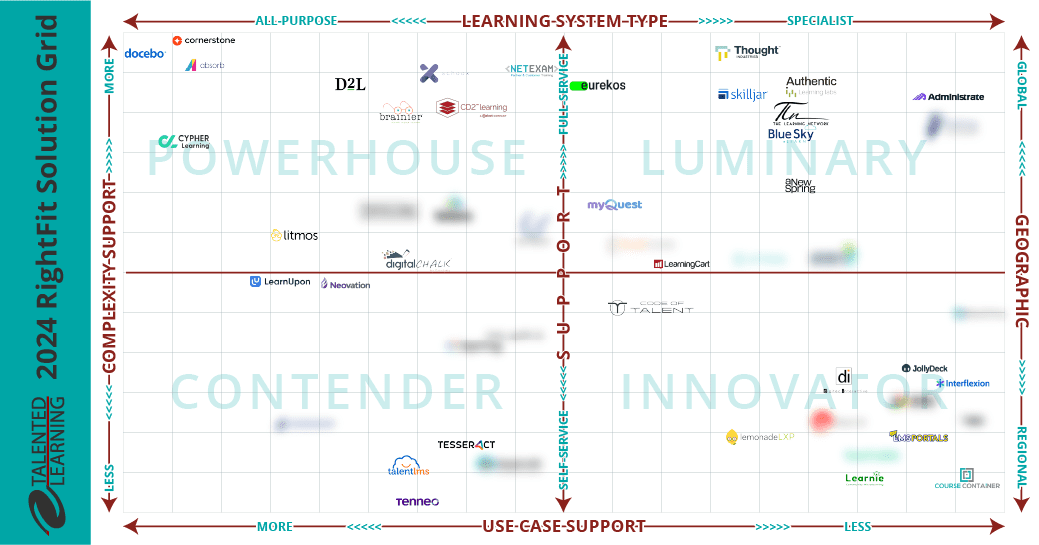
Which LMS is Best for You? New Shortlisting Tool for 2024
How can you find the best learning system for your business? Our LMS shortlisting tool can help. Learn about the 2024 RightFit Solution Grid. Free, reliable guidance based on our independent research

How to Build a Learning-Based Business: Executive Q&A Notes
Building and selling online courses may seem easy, but building a profitable learning-based business is far more complex. Find out what successful leaders say about running this kind of business




CASE STUDY DIRECTORY


FOLLOW US ON SOCIAL