

One thing you can count on from learning systems – there’s never a lack of new LMS features to grab your attention.
Have you checked out any trade show demos or marketing materials lately? Artificial intelligence, machine learning, content curation, interactive learning experiences, analytics dashboards, mobile-first design, digital badges, credentialing, virtual reality, augmented reality, in-app guidance… Gulp. The list of mind-blowing capabilities seems endless.
Feeling LMS Feature FOMO?
With so many cool new advances, you may wonder if your organization lags others on the adoption curve. I call it Feature FOMO (fear of missing out). It’s actually a false comparison. But it’s easy to fall into this trap, especially if you’re improving a basic online learning presence one step at a time.
For example, one organization I know recently launched on-demand access to recorded live event video. Another converted a popular, live classroom certification program to an online format.
Both invested heavily to succeed with these advances. Should they have done it sooner? Done what, exactly? Could they have gained even more from implementing all this other cool stuff? How would they know?
As I’ve said before, innovation for innovation’s sake doesn’t add value. Every organization has its own unique requirements.
The important thing is to evaluate new functionality through the lens of your specific business priorities and your ability to measure the payback on your investment.
So with that in mind, let’s define some of the most buzzworthy new features available in extended enterprise learning systems. Then let’s look at how those features are being applied in the real world, and whether they’re worth it.
LMS Features: Hype Factor Reality Check
1) Artificial Intelligence (AI) and Machine Learning (ML)
Hype Factor: High
Mainstream Usage: Medium
These companion terms are clearly stealing most of the LMS innovation thunder these days. Many vendors tell me their system already incorporates artificial intelligence and machine learning. Many others say it is under development.
In a nutshell, AI and ML work together to create smart software that uses data and program parameters to make decisions or drive workflow dynamically in a learning or collaboration environment.
Currently, the AI/ML combination typically manifests itself in two ways:
- Automatically delivering content recommendations and content streams to learners;
- Driving backend analytics for surveys, test items, content usage and advanced learning/business data analysis.
It’s important to keep in mind that AI and ML are hard to demonstrate and easy to exaggerate. In any case, just by having an LMS and keeping it updated, AI will come your way sooner or later as a new feature commonly covered by your license cost. You’ll see it first in the learner UI and eventually in analytics.
2) Virtual Reality (VR)
Hype Factor: High
Mainstream Usage: Low
Virtual reality technology makes it possible to create an immersive digital environment that simulates the real world. To interact with VR training, participants often wear special visual and audio gear.
Designing and developing this type of training isn’t cheap or easy. Because it requires so much time and expertise, VR is primarily used in training for situations with significant safety implications like medical procedures, aircraft navigation, military and police maneuvers and high-risk equipment repairs.
Training data from simulations is often tracked using xAPI, and is stored in an LRS that is self-contained or integrated with an LMS. Although VR is making inroads, it’s still on the bleeding edge.
So until development costs decline and delivery mechanisms are widely available, most organizations are keeping it on the backburner as a future possibility. If you’re thinking of VR for sales or leadership training, save your money for now.
3) Mobile Responsive Design
Hype Factor: High
Mainstream Usage: High
In today’s on-the-go world of work, mobile responsive LMS design is essential for learners, instructors and administrators, alike.
With a mobile responsive system and content, learners can use a smartphone, tablet, laptop, desktop or any modern web browser to access learning content that works in that environment. No zooming, pinching or panning is necessary because navigation menus and content blocks typically are restacked and resized on the fly.
Many extended enterprise and association learning platforms also include authoring tools that produce fully mobile responsive content. Vendors with systems that aren’t mobile responsive may tell you they have a mobile app that accommodates mobile responsive design. However, that kind of solution delivers a subpar learning experience. For that reason, I would avoid any system that isn’t fully mobile responsive.
4) Mobile Apps
Hype Factor: High
Mainstream Usage: Low
When smartphone and tablet use exploded earlier in this decade, many LMS vendors were caught flat-footed. It’s impossible to reverse-engineer an existing system for mobile responsiveness, so it was necessary to rebuild platforms from the ground up.
Many vendors still haven’t completed this process. As a temporary workaround, LMS vendors developed basic first-generation mobile apps that replicated a small subset of features for learners and sometimes managers and instructors.
Second-generation mobile apps are much more useful and effective. They’re typically available from fully mobile-responsive platform vendors who want to provide incremental capabilities that aren’t supported by mobile web browsers. For example, specialized mobile apps can support activity notifications, content downloads and online/offline consumption, video and photo uploads, QR codes for live event registration and geolocation for participant tracking.
Mobile apps are worth the investment when used for strategically important audiences and measurable purposes. Otherwise, it’s just an incremental cost and a maintenance headache.
5) Microlearning
Hype Factor: High
Mainstream Usage: Low
In its purest form, microlearning is exactly what it says – small chunks of learning. And because most learning platforms accept and manage content of any length, size is not an issue.
However, to be effective as a learning strategy, microlearning must deliver precisely the right content chunk at the moment it’s needed. (Think of the precision and power Google and YouTube require to deliver highly relevant real-time search results.) This means systems that support microlearning must make it possible to create, curate, tag, catalog and maintain content chunks so learners can quickly find them individually or in related clusters.
The taxonomy creation and chunking process can be time consuming and expensive. As a result, many organizations limit their microlearning scope to the classification of discrete digital assets, such as video clips, Microsoft Office documents and PDF files.
If your organization wants to initiate a microlearning strategy, don’t start by looking for a new LMS. That’s putting the cart before the horse. Instead, begin with a content audit and needs analysis. This can guide your technology decisions.
6) Learning Paths
Hype Factor: High
Mainstream Usage: High
Learning paths (or pathways) have been around a long time. But in the past, they were known by another name – curriculums. The concept is simple. It involves a series of activities that individuals complete as they progressively develop specific knowledge, skills and competencies.
Effective learning paths focus on well-defined audience personas and are structured to include relevant goals and rewards.
They also tend to mix multiple content resources, for example self-paced online courses, videos, digital documents, assessments, surveys, polls, articles, games and social interactions. Of course, these learning path components can also be deployed as standalone microlearning elements that learners can find and use as needed.
Learning paths are used extensively by associations and other continuing education providers. For example, when professionals complete certification training paths, they often receive digital designations that they can display on LinkedIn profiles, email signatures and job applications. When used thoughtfully, intentional learning paths are a smart, low-cost, high-impact strategy.
7) Learning Experience
Hype Factor: High
Mainstream Usage: High
This one is a bit tricky. I’m a fan of learning experience. But I see it as a strategy that builds on innovative feature sets, rather than a point solution.
For example, in extended enterprise settings where learning is a voluntary act, it’s essential to attract and engage learners so they keep coming back for more. This is where an AL-powered learning experience recommendation engine can be a powerful LMS enhancement.
Learning systems have always been able to assign or suggest content based on profile criteria like job title, role, organization and perhaps custom fields. But with AI-driven learning experience personalization, this concept goes much further.
Now many more criteria can be combined to shape content recommendations. For example, systems can consider learner profile data, membership or customer relationship history, search keywords and behaviors, time on site, content viewed, download behavior, media format preferences, content purchase history, course registrations, courses started and completed, percent of completions, time to complete, and tags or channels that learners choose.
Systems can also factor-in social behaviors such as topics and frequency of learner posts, likes, comments or shares. In addition, they can consider the nature of content posts, likes, comments or shares by peers or relevant subject matter experts. The options seem limitless.
Every vendor that says AI and ML are built into its system also says that content recommendations are supported at some level. But although this functionality is useful and innovative, it doesn’t guarantee a fully personalized learning experience. Proceed with cautious optimism. And be prepared to trust but verify.
Conclusion
Advances in learning technology always bring both good and bad news along for the ride.
In this case, the bad news is that LMS Feature FOMO is real. It’s easy to be convinced that you’re missing out on the latest hot tools of the training trade. But before FOMO leads you in a new direction, we encourage you to revisit your existing learning systems strategy.
Now, here’s the good news: You have plenty of time and choices. The seven highly hyped features outlined here are already built into most systems designed for continuing education or corporate extended enterprise learning. And vendors that don’t yet offer these features are giving them top priority on their product roadmap.
But it’s important to remember that every vendor approaches innovative features differently. That’s why we recommend that before you move forward, conduct a thoughtful audience analysis, audit your learning content and specify your use case requirements. This process will help you focus your investment on new functionality that will make the biggest impact.
Thanks for reading!
Want to Learn More? Replay our webinar:
Bridging the Learning Analytics Gap: How Guided Insights Lead to Better Results
Even with cutting-edge measurement tools, many struggle to find enough time and expertise to generate useful learning insights. How can you bridge this critical analytics gap?
Join John Leh, CEO and Lead Analyst at Talented Learning, and Tamer Ali, Co-Founder and Director at Authentic Learning Labs. You’ll discover:
- Top learning analytics challenges
- How AI-driven data visualization tools are transforming learning insights
- How to define and interpret relevant metrics
- Practical examples of AI-based analytics in action
- How to build a convincing case for guided analytics
REPLAY THE WEBINAR NOW!
Need Proven LMS Selection Guidance?
Looking for a learning platform that truly fits your organization’s needs? We’re here to help! Submit the form below to schedule a free preliminary consultation at your convenience.
Share This Post
About the Author: John Leh

Related Posts
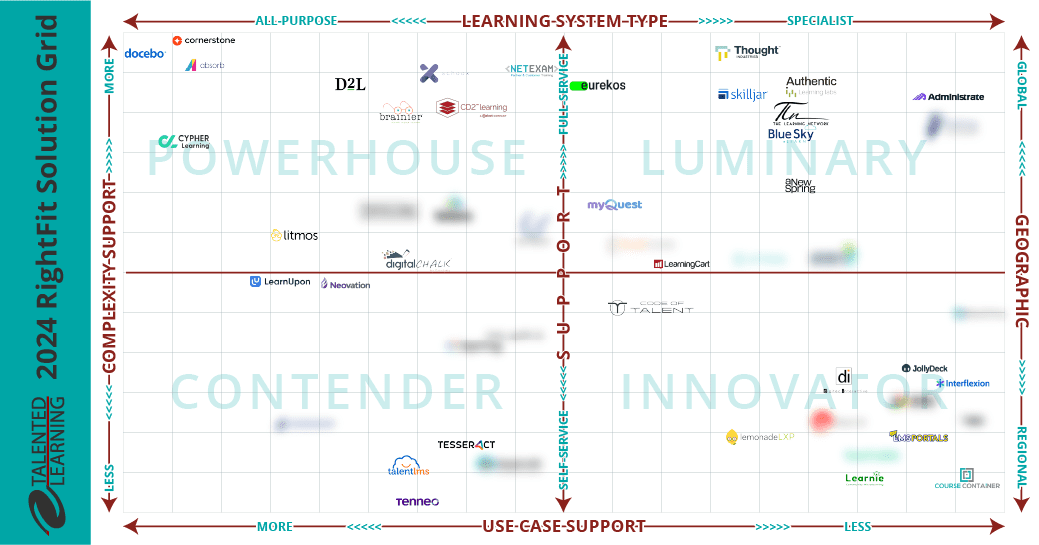
Which LMS is Best for You? New Shortlisting Tool for 2024
How can you find the best learning system for your business? Our LMS shortlisting tool can help. Learn about the 2024 RightFit Solution Grid. Free, reliable guidance based on our independent research

How to Build a Learning-Based Business: Executive Q&A Notes
Building and selling online courses may seem easy, but building a profitable learning-based business is far more complex. Find out what successful leaders say about running this kind of business

The Rewards of Community Building: Customer Ed Nugget 14
What role does community play in your customer relationships? Find out why community building is such a powerful force in customer education on this Customer Ed Nuggets episode

Benefits of Training Content Syndication: Customer Ed Nugget 13
If you educate customers online, why should you consider content syndication? Discover 10 compelling business benefits in this Customer Ed Nuggets episode

Top Marketing Skills to Master: Customer Ed Nugget 12
Successful customer education programs depend on professionals with expertise in multiple disciplines. Which marketing skills lead to the best results?

How to Measure and Improve Partner Training ROI
An educated channel is a successful channel. But how do you know if your educational programs are effective? Learn from an expert how to evaluate partner training ROI

Mistakes in Ongoing Customer Training: Customer Ed Nugget 11
Customer education doesn't stop with onboarding. It pays to invest in ongoing customer training. Learn which mistakes to avoid in this Customer Ed Nuggets episode

2024 Learning Systems Predictions: Top 15 LMS Trends
Which learning solutions trends will define the year ahead? Check these top 15 learning systems predictions from industry analyst and consultant, John Leh

9 Reasons to Replace Your LMS: Customer Ed Nugget 10
Want to improve the impact of your customer education programs? Find out reasons why it may be time to invest in a new learning system. Learn mor on this Customer Ed Nuggets podcast




CASE STUDY DIRECTORY


FOLLOW US ON SOCIAL