

Over the past 10 years as an LMS selection consultant, I’ve seen several key shifts in buyer demographics. What exactly is changing? To answer this question for our new 2023 Commercial Learning Systems Market Report, we developed profiles of modern LMS buyers through the lens of the world’s top 40 learning platform vendors. As part of the research process, we surveyed leaders from the top 20 all-purpose LMS companies and the top 20 specialty learning systems providers about their clients.
What did we discover? For details about relevant buyer characteristics, points of purchase, critical buying criteria, business drivers, buying “hot spot” industries, and geographic locations, read on…
Target Use Cases Among Today’s LMS Buyers
Extended enterprise solutions are driving the next wave of learning systems market expansion. No longer considered a cutting-edge business practice, educating external audiences (customers, prospects and partners) is a proven way for organizations to create business value and establish a measurable competitive advantage.
For years, employee learning was the most popular and most important use case. Now, extended enterprise needs have taken the lead. However, widespread use is still limited to North America. This means there’s a tremendous untapped global market opportunity for extended enterprise learning. Regardless, as online learning becomes a strategic priority for many commercial organizations, more use case variations are emerging:

LMS Buyers: Common Points of Purchase
Which departments typically lead the learning system purchase process? Training and human resources departments are still the most common purchase points, according to our Top 20 All-Purpose and Top 20 Specialist Learning Systems vendors. But increasingly, the point of purchase for customer education, channel/partner and content-as-a-business use cases is outside of training or HR.
Specialist vendors rely less on traditional buying points, and they are branching out to uncover fruitful prospecting targets within program management, sales teams and executive ranks. We asked the Top 40 learning systems vendors to name the top three departmental points of purchase for their solutions. Interestingly, only three of the Top 40 vendors listed IT as a purchase point, and they are specialist providers. The graph below highlights the most popular responses:

What Are the Most Important Business Goals for LMS Buyers?
When it’s time to buy a new or replacement learning system, every organization wants to solve one or more challenges. These issues are the business drivers behind a purchase, and the expected measurable benefit of solving the challenges should far outweigh the cost.
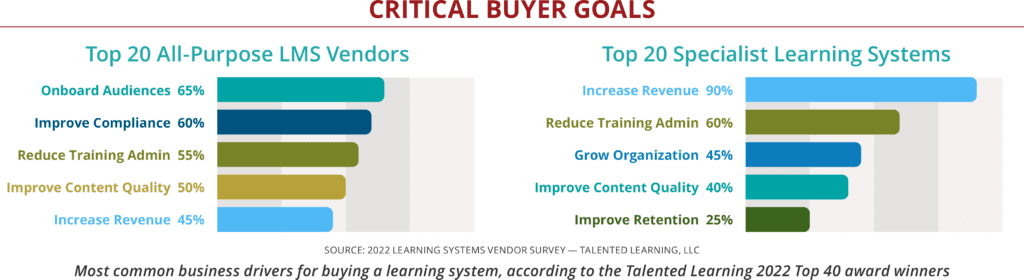
What problems do buyers want to solve? What are the key business drivers? Not surprisingly, for all-purpose LMS vendors, onboarding new employees, customers and partners is the primary goal. And as expected for business-minded specialist learning systems, revenue generation is first on clients’ minds:
What Are Key Buying Criteria For LMS Buyers?
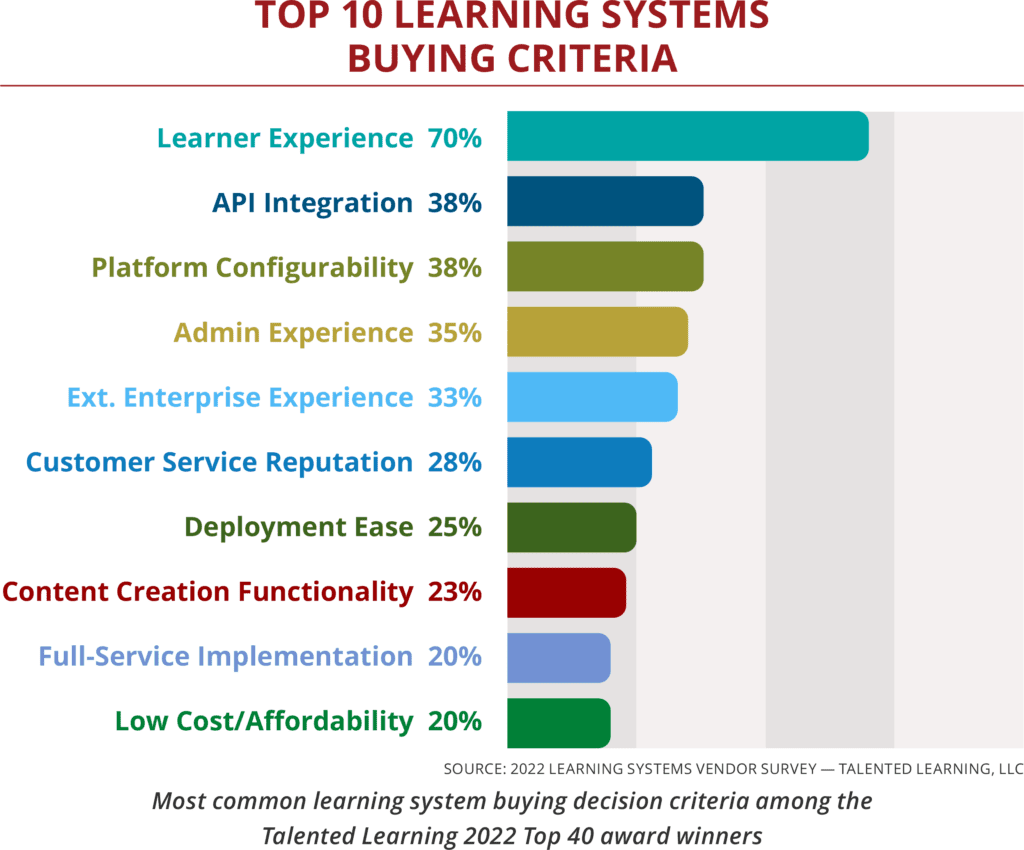
What aspects of a learning system are most important to LMS buyers? How do buyers prioritize must-have criteria and how do they differentiate between vendor solutions? The answers may surprise you. When we asked the Top 40 learning systems vendors to tell us what matters to their clients, 70% said the learner experience is the most important by far.
Next on the list of priorities are integration capabilities and system configurability, which is not surprising in a world where systems must fit into an organization’s broader technology ecosystem. But we were somewhat surprised to find that cost is at the bottom of the top 10 list. Apparently (at least among those who choose to work with top 40 vendors), price isn’t as important as overall value.
Which Industries Have the Most LMS Buyers?
It’s possible for organizations in every industry to find value in a system that supports learning among employees, as well as customers and partners. However, demand for these solutions is significantly greater in some industries.
Among all-purpose and specialist vendors alike, healthcare has historically been where most of the action is. This is still the case. But other industries with large external audiences have significantly narrowed the gap. For instance, manufacturing, software, financial services and non-profit organizations are not far behind:

LMS Buyers: Top Geographies
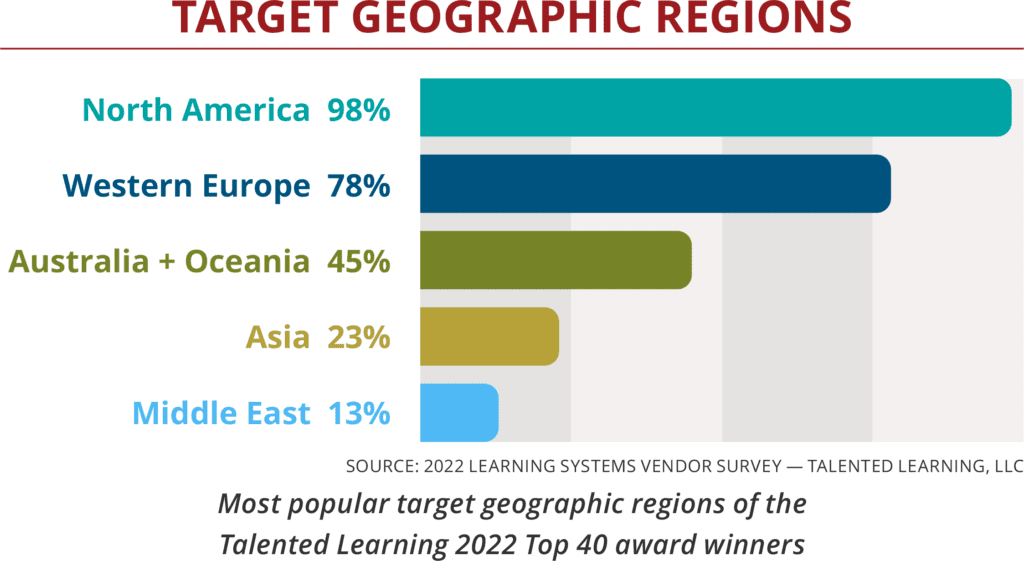
Continuing a decades-long trend, North America remains the leading region for LMS and learning systems market activity. When we asked the Top 40 learning systems vendors to identify the three most important geographic regions for their business, they responded as follows:
Conclusion
Modern LMS buyers are a complex and diverse group. The core takeaway of our research is that everything in our industry is expanding including points of purchase, geographies, industries, use cases, critical features and more. It’s this explosive expansion in buyers that is driving the need for almost 1000 different learning systems in the world. Each vendor specializes in various types of buying scenarios, which leads to ever-expanding areas of specialization and innovation. Welcome to the modern LMS world!
Is This Information Helpful For You?
This analysis is extracted from our 2023 Commercial LMS and Learning Systems Market Guide. In the report, we cover another 45 key trends. We also provide in-depth profiles of the top 40 solutions, including functionality, integration and service ratings. If you’re modern LMS buyer, seller or investor, this report is an essential tool for success.
NOW AVAILABLE AT A 50% DISCOUNT!

Not quite ready to buy? Enter our weekly contest for a chance to win a free copy!
Need Help Buying Your Best LMS?
Talented Learning is now in its 10th year of researching the LMS market and helping modern LMS buyers find the best LMS based on their unique needs. From hourly help to full-service solutions, Talented Learning helps modern LMS buyers jumpstart their selection process, reduce time and minimize risk. Fill out the form below for a complimentary discussion with lead analyst John Leh.
Share This Post
About the Author: John Leh

Related Posts

2026 LMS Awards: Best Enterprise Learning Systems
Which enterprise learning systems are best? Find out about top solutions as our Lead Analyst, John Leh, reveals winners of our 2026 LMS Awards!

Your LMS is Not Your Learning Ecosystem: Why Infrastructure Maturity Matters
Does your organization rely on multiple learning systems and tools? That doesn't mean it's a coherent learning ecosystem. Find out how to assess the maturity of your tech stack...

Breaking Down Learning Silos: 4 Extended Enterprise Strategies
Want stronger results from your enterprise learning initiatives? Be sure to remove common learning silos. These strategies will help...

Want to Replace Your LMS? Start With a Reality Check
Should you replace your LMS? Before moving forward, it's smart to weigh the pros and cons. This case study illustrates how the process works...

5 Essentials for a Great LMS RFP | Customer Ed Nugget 35
Finding the right customer education platform often starts with a request for proposal. But what does it take to write a great LMS RFP? John Leh explains on this mini-podcast...

Learning as a Revenue Growth Engine: 5 Strategies for Associations
Associations often depend on member dues for revenue growth. But these days, non-dues education programs are more effective. What strategies work best?

How to Measure the Business Impact of Professional Education Programs
Are your professional education programs as successful as they could be? To improve their business impact, try this measurement framework...

Don’t Cut Training Content. How to Reuse, Refresh, or Rebuild Instead
In a world where learning organizations must do more with less, how can you make the most of training content? These strategies can help...

Learning System Vendors: Enter the Talented Learning Awards 2027
Awards season is under way! Find out how to enter the 2026 Talented Learning Awards to showcase your learning solution, gain industry recognition, and increase visibility in the marketplace...





CASE STUDY DIRECTORY


FOLLOW US ON SOCIAL