
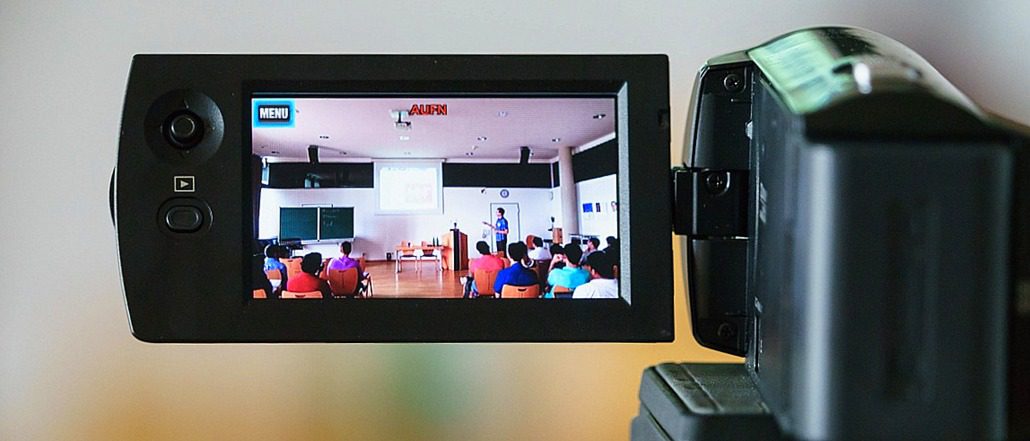
Until recently, digital video was underutilized by technology-enabled learning solutions. Even though people often prefer video over text-based content, high-quality instructional video has historically been too time-consuming and expensive for many organizations to produce, store and deliver.
But now video-centered training is going mainstream, thanks to the rise of modern cloud-based learning platforms, high-speed wireless networks, connected mobile devices, social media channels and live video streaming standards like WebRTC.
In recent years, the surge in digital video demand has been phenomenal and it doesn’t show signs of slowing anytime soon. According to a MarketsandMarkets 5-year forecast published earlier this year, enterprise video investment is expected to continue growing at a compound average growth rate of 20.1% (from $16.34 billion in 2017 to $40.84 billion by 2022). Not surprisingly, all of this video adoption is rapidly changing business applications – including training.
10 Ways Digital Video Is Redefining Learning
Here are some of the most popular ways organizations are improving learning experiences with live video streaming and on-demand content:
1) Virtual Online Meeting Tools
Although virtual learning is a popular instructional delivery method, approximately 78% of the learning platforms we track do not include a native virtual meeting tool. Instead, nearly all vendors rely on integration with one or more third-party virtual online event applications such as GoToMeeting, Adobe Connect or Cisco WebEx. The most popular features include live session streaming and recording capabilities for on-demand content delivery.
2) Peer-to-Peer Collaboration
Also in demand today are communication tools that facilitate collaborative learning — particularly peer-to-peer student interactions and student/instructor communication. The functionality can be built into a virtual meeting solution or provided as a standalone feature set to enhance any live online or blended course. These tools can facilitate dynamic, real-time synchronous interactions and live video communication within the context of a class or asynchronously through discussion boards and email pathways.
3) Support for “Paid” Online Learning Customers
Many learning platforms are designed specifically to support commercial training companies and extended enterprise audiences (consumers and business customers, channel partners and other non-employee learners). Participants in these settings typically pay for education by choice, so they expect high-quality, highly responsive support. Incorporating live video into these learning solutions streamlines communication while simultaneously improving the customer experience.
4) Coaching, Mentoring and On-Demand “Expert” Forums
Communication tools that facilitate coaching, mentoring and “find-an-expert” scenarios are increasingly popular in learning platforms. Typically, communication with experts occurs via text messaging and offline channels but innovative vendors are adding live video to this mix. This kind of functionality is most prevalent in modern corporate learning platforms and to some degree, in solutions designed for associations and commercial training providers.
5) On-The-Job Training and Offline Assignments
In environments focused on skills development, video can be a powerful way to complement the learning and evaluation process. For example, if an employee must learn a series of physical steps to repair an appliance, a video clip can effectively and efficiently demonstrate the process. After reviewing the video and practicing the steps, learners can use a mobile device to record themselves while they complete the repair. Then they can upload the video to the LMS, so the instructor can easily review it and offer feedback – including real-time communication through a live video session.
6) Live Classroom Training Broadcasts, On-Demand Recording and Distribution
Classic instructor-led training has long played a central role in learning strategies. Demand for in-person training continues but live video can significantly enhance the learning experience while reducing overall delivery costs. In the healthcare industry, for example, live streaming broadcasts of surgical procedures and patient consultations are making medical expertise and education much more compelling, accessible and efficient.
7) Live Proctoring
Exam proctoring is essential in multiple environments. For example, associations and commercial training providers must validate test completions for professional certifications, licensing and other business requirements. Live in-person proctoring at a brick-and-mortar institution or neutral location is a secure solution but it is an expensive process. Live video proctoring – sometimes streamed from multiple camera angles — is increasingly being deployed as a viable, cost-effective alternative.
8) Tradeshow and Virtual Event Broadcasting
Many professional associations, publishers, software companies and other businesses rely on live tradeshows and conferences to bring constituents together for in-person networking and education. Live and on-demand video broadcasts extend the conference experience to a much larger global audience. In 2016, more than 170,000 people traveled to San Francisco to attend Dreamforce – the annual conference devoted to engaging and educating the Salesforce.com community. However, more than 15 million people worldwide attended Dreamforce sessions through live streaming and recorded on-demand video.
9) Translation Services
For organizations with a global footprint – including employees, partners and customers – live language translation is often available as a premium learning service. Live translation can be incorporated into customer support communications or directly within learning content and consulting services. Live streaming and recorded video translations can make a tremendous difference in the learning and support experience for customers in various locations around the world.
10) Mobile Apps
Mobile apps that leverage the power and immediacy of video are in a category of their own. Theoretically, “mobile first” learning apps can deliver many or all of the capabilities outlined above but in a more streamlined, coherent and memorable fashion for users who are on-the-go. Not surprisingly, in a world where nearly 60% of video is consumed on mobile platforms, many learning technology buyers consider fully integrated mobile functionality a priority.
Conclusion
Digital video is the great equalizer in the long-running debate about “live vs. online” learning strategies. Video bridges this gap by enabling dynamic, real-time interactions, while providing access to compelling, durable content that can easily be integrated with traditional classroom and elearning activities. Modern communications platforms have conquered key technical and financial hurdles, allowing much faster adoption within web and mobile learning applications. This means digital video technology now has the potential to transform instructional content in fundamental and far-reaching ways.
Thanks for reading!
Want to learn more? Replay this on-demand webinar:
How to Build Successful Learning Experiences: Lessons From Non-Profits and Associations
Every association and non-profit organization is unique. Yet all share common goals – to engage, retain, inform and influence constituents. What exactly does it take to engage learners, support your brand and advance your mission?
Join John Leh, CEO and Lead Analyst at Talented Learning as he hosts a panel discussion with experts who have developed successful online education programs based on highly customized learning platforms:
- Stephen Flatman, VP Examinations, AICPA
- Seewan Eng, Sr. Director of Technology, New Teacher Center
- Edward Daciuk, Principal Learning Strategist, ExtensionEngine
You’ll learn:
- How to build a business case for moving in-person education online
- What it takes to engage learners in an online environment
- How to differentiate your organization through online learning
- When to consider a custom platform that supports high-end learning experiences
- Lessons learned in achieving internal buy-in, project momentum and organizational alignment.
Need Proven LMS Selection Guidance?
Looking for a learning platform that truly fits your organization’s needs? We’re here to help! Submit the form below to schedule a free preliminary consultation at your convenience.
Share This Post
About the Author: John Leh

Related Posts

How Smart Organizations Measure Learning: A Strategic Approach
During the pandemic, the learning function took on a more strategic business role. What did this teach L&D leaders about how to measure learning more successfully?

Docebo CEO Alessio Artuffo Talks LMS Trends
What LMS trends are top-of-mind among learning tech innovators? Docebo CEO, Alessio Artuffo, talks with our Lead Analyst, John Leh

ATD24 Expo: Join Our LMS AI Innovation Tour
What's special about ATD24, the annual ATD International Conference and Expo? Find out why Lead Analyst John Leh is closely watching all the learning systems action!

Top LMS Selection Speed Bumps: Customer Ed Nugget 18
If you're a customer education leader, sooner or later you'll need to choose a learning system. How can you avoid LMS selection speed bumps? Find out in this Customer Ed Nuggets podcast

CEdMA Conference Takeaways: Customer Ed Nugget 17
What's top-of-mind among customer education professionals these days? Join Analyst John Leh and industry leader Kristine Kukich as they compare notes from the recent CEdMA Conference

Why So Many LMS Vendors?
People ask us all the time, "Why are there so many learning systems?" Here, our Lead Analyst, John Leh, explains the factors that have led to an industry with so many LMS vendors...
The Future of Customer Education: Customer Ed Nugget 16
Customer education is rapidly evolving as organizations embrace new strategies and tech. What does this mean for the future of customer education? See what experts say on this Customer Ed Nuggets episode

Education Strategy Mistakes to Avoid: Customer Ed Nugget 15
What does it take to deliver a successful customer education program? It starts with a solid education strategy. Learn how to avoid common pitfalls on this Customer Ed Nuggets episode
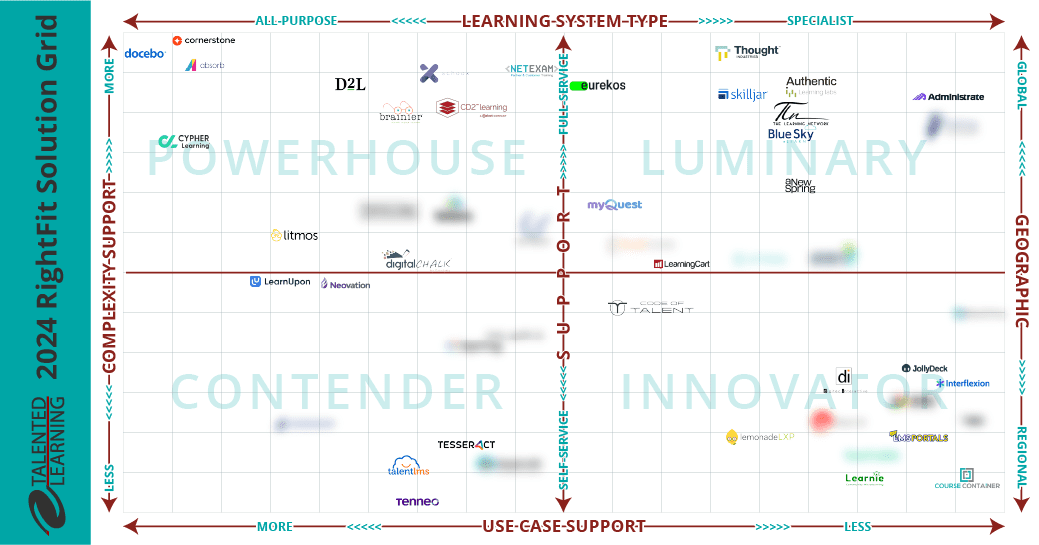
Which LMS is Best for You? New Shortlisting Tool for 2024
How can you find the best learning system for your business? Our LMS shortlisting tool can help. Learn about the 2024 RightFit Solution Grid. Free, reliable guidance based on our independent research




CASE STUDY DIRECTORY


FOLLOW US ON SOCIAL