

It’s easy to forget that time is a relative concept. But once in a while, history reminds us we can’t escape the truth. Case in point: Last week’s news that HCM giant, Workday, intends to acquire AI-native learning platform, Sana.
Workday says Sana will make it possible to offer “a new experience, where knowledge, data, actions, and learning converge and create the new front door for work.” Powerful stuff. Yet, Workday spoke in similar terms way back in September 2015, when it revealed plans to build a new homegrown LMS.
A Reality Check From the Past
That original Workday Learning announcement was 10 years ago, but it seems like only yesterday to me. At that time, I wrote about it optimistically:
Workday wants to change the game by building its own LMS, targeting an increasingly younger, more digitally savvy workforce. The vision is a fully integrated LMS, capable of managing any type of learning — from formal to informal — with a modern mobile, social, continuous, contextual experience.
The bar is low in the HR/Talent LMS space. This means Workday can knock it out of the park, just by following the blueprint of standalone LMS specialists, with an engaging platform that looks and acts more like Facebook and less like a database.
If Workday succeeds, this will be one of the only HR/Talent learning systems that can also compete in standalone platform opportunities. This will cause heartburn among current tier 1 standalone LMSs, as well as HR/Talent LMS providers.
Why was I so hopeful a decade ago? By deciding to build rather than buy, Workday was being true to its enterprise cloud DNA. The idea was simple: Create a learning platform that would fully integrate with its HCM suite and sell it into its enormous installed base.
Find out how real-world companies are achieving more with learning systems that create business value. Get inspiration from dozens of success stories in our free LMS Case Study Directory →
What Was Missing?
Despite the huge potential upside, I saw a glaring gap in Workday’s roadmap. The company offered no support for corporations seeking a more modern, effective way to educate customers, partners, or resellers. The focus was squarely on employee learning.
Still, the extended enterprise opportunity was there, and the industry was watching. Here’s how I put it at the time:
Employee LMSs are about cost savings, compliance, efficiency, and automation. In contrast, learning systems that enable customers, channel partners, and other allies to succeed are about making money.
Of course, Workday’s strength is in HR and Finance. It has precious little experience in non-employee learning. But why overlook a huge opportunity to turn an employee-facing LMS into a solution that serves the needs of external audiences? By leveraging its massive client base, Workday could triple down on the size and value of its LMS sales.
Fast-Forward 10 Years
So, where is Workday Learning today? By and large, this LMS still hasn’t lived up to its promise. Capabilities lagged. Clients haven’t been impressed. Market momentum has never materialized. And the extended enterprise gap? Never closed.
Don’t miss what’s happening at the leading edge of enterprise learning technology! Get our weekly email brief. SUBSCRIBE HERE →
Why Is Sana Important?
Last week, Workday changed course by announcing its plans to pay $1.1 billion for Sana Labs. What does this move really mean?
In a world where AI buzz is deafening, this Swedish startup has been receiving attention for all the right reasons. For instance, Sana is the genius behind breakthrough learning applications such as Galileo Agent and Galileo Learn, from The Josh Bersin Company. (For more information about how these AI-powered HR solutions work, check my recent interview with Josh on the Talented Learning Show podcast.)
Clearly, this Workday investment is much more than an LMS product update. It’s a strategic pivot. After a decade of organic effort that underwhelmed, Workday is now betting big on acquisition to reinvent its corporate learning story.
Why Does Sana Matter Now?
Founded in 2016, Sana has built a reputation as a highly innovative AI-first learning platform. The brand rapidly became known for its intuitive design, conversational interfaces, and ability to personalize learning at scale, among other things.
Because Sana has been way ahead of the pack in bringing generative AI, agentic workflows, and knowledge automation to market, it has gained a strong competitive advantage. That’s especially true when you compare Sana with traditional LMS platforms — many of which are frantically playing catch-up. That is precisely the kind of technology leadership Workday Learning needs.
Although vendors like Absorb, CYPHER, Cornerstone, Docebo, and Schoox are racing to release AI copilots and assistants, Sana brings instant credibility and product depth to Workday in this fast-moving space.
Buying or selling a customer-focused learning system? Get independent insights you can trust, with our in-depth analysis of 16 top solutions. Learn about our Customer LMS Buyer’s Guide →
With Sana, Will Workday Make the Same Mistake Twice?
If you think the biggest growth segment in learning today is employee skilling, think bigger. Think about go-to-market education — where business success depends on educated customers, partners, resellers, and frontline sales and support.
These external-facing programs drive revenue, retention, and competitive differentiation. They demonstrate measurable business impact. That’s why the learning industry has been shifting its energy in this direction. And it’s where LMS vendors are winning deals every day.
Workday’s track record focuses solely on employee training and development. If this pattern continues, the company will never conquer the broader learning market. So, with or without Sana, it leaves the door wide open for a mosaic of LMS vendors like Eurekos, LearnUpon, Litmos, NetExam, and Skilljar, who will continue to thrive by claiming their fair share of the lucrative extended enterprise space.
The Road Ahead: My Fresh Take for 2025
A decade ago, Workday had the right idea but the wrong scope. Now, 10 years later with Sana, Workday has another chance — this time powered by AI. The Sana acquisition gives Workday a strategic reset in learning, at a huge premium. But the fundamental question remains:
Will Workday finally learn to look outward, beyond employees?
If so, look out.
Looking for an AI-Based Learning Platform Like Sana?
Not sure if an AI-first solution is right for you? Get advice you can trust from an independent enterprise learning systems expert. Schedule a free 30-minute consult with me, Talented Learning Lead Analyst, John Leh…
*NOTE TO SALESPEOPLE: Want to sell us something? Please contact us via standard channels. Thanks!
Share This Post
About the Author: John Leh

Related Posts

Top LMS Selection Speed Bumps: Customer Ed Nugget 18
If you're a customer education leader, sooner or later you'll need to choose a learning system. How can you avoid LMS selection speed bumps? Find out in this Customer Ed Nuggets podcast

CEdMA Conference Takeaways: Customer Ed Nugget 17
What's top-of-mind among customer education professionals these days? Join Analyst John Leh and industry leader Kristine Kukich as they compare notes from the recent CEdMA Conference

Why So Many LMS Vendors?
People ask us all the time, "Why are there so many learning systems?" Here, our Lead Analyst, John Leh, explains the factors that have led to an industry with so many LMS vendors...
The Future of Customer Education: Customer Ed Nugget 16
Customer education is rapidly evolving as organizations embrace new strategies and tech. What does this mean for the future of customer education? See what experts say on this Customer Ed Nuggets episode

Education Strategy Mistakes to Avoid: Customer Ed Nugget 15
What does it take to deliver a successful customer education program? It starts with a solid education strategy. Learn how to avoid common pitfalls on this Customer Ed Nuggets episode
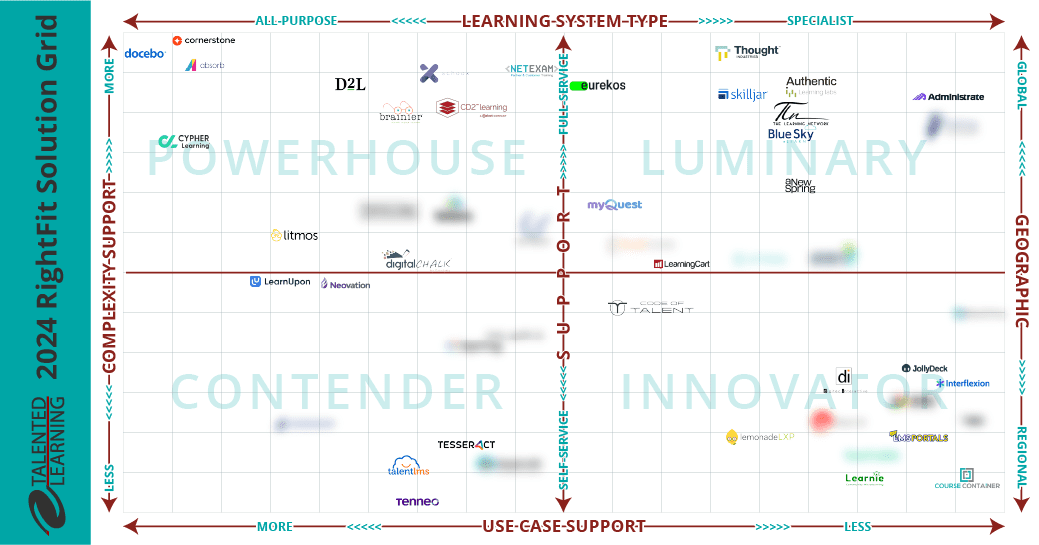
Which LMS is Best for You? New Shortlisting Tool for 2024
How can you find the best learning system for your business? Our LMS shortlisting tool can help. Learn about the 2024 RightFit Solution Grid. Free, reliable guidance based on our independent research

How to Build a Learning-Based Business: Executive Q&A Notes
Building and selling online courses may seem easy, but building a profitable learning-based business is far more complex. Find out what successful leaders say about running this kind of business

The Rewards of Community Building: Customer Ed Nugget 14
What role does community play in your customer relationships? Find out why community building is such a powerful force in customer education on this Customer Ed Nuggets episode
Benefits of Training Content Syndication: Customer Ed Nugget 13
If you educate customers online, why should you consider content syndication? Discover 10 compelling business benefits in this Customer Ed Nuggets episode





CASE STUDY DIRECTORY


FOLLOW US ON SOCIAL