

EDITOR’S NOTE: Because extended enterprise learning involves multiple disciplines and perspectives, we often invite experts from other organizations to share their insights. Today, Litmos Chief Learning Officer, Jill Stefaniak, discusses why and how to apply microlearning to customer education for better business outcomes.
The Case for Microlearning in Customer Education
In today’s fast-moving business world, it’s difficult to engage customers. They’re often busy and distracted. For them, training is an optional choice, rather than a necessary priority.
However, successful customer education leaders understand these challenges. That’s why many have added microlearning to their instructional repertoire. Here’s their rationale:
The faster you can help customers understand and adopt products and services, the better. But the nonstop pace of technology and workplace change makes traditional, lengthy training a burden. Instead, customers want training that is highly convenient, accessible and actionable. This is why microlearning is so attractive.
What is Microlearning?

In recent years, all of us have grown accustomed to short-form content on social and streaming media platforms. So naturally, customers prefer the same approach to learning. They want to develop relevant knowledge and skills as quickly and easily as possible, without disrupting their daily routine.
Microlearning addresses this need by packaging instructional content as a series of brief modules that focus on specific concepts and learning objectives. Learning designers generally recommend that modules be no more than 10 minutes long, while many say 2-5 minutes is ideal. However, size isn’t the only factor to consider.
Microlearning content should also be easy to access and consume on various types of digital devices — smartphones, tablets or computers. This gives learners control over where, when and how they engage.
This approach is especially effective for customer education because people can learn about new or updated product features and troubleshoot issues in real time, whenever training fits into their schedule.
By delivering educational information and activities in bite-sized digital chunks, companies can create a customer education process that is more streamlined and useful. As a result, people are more likely to absorb and apply what they learn. Ultimately, this translates into faster onboarding, better retention and increased customer satisfaction.
Buying or selling a customer-focused learning system? Get independent insights you can trust, with our in-depth analysis of 16 top solutions. Learn about our Customer LMS Buyer’s Guide
How Microlearning Enhances Customer-Facing Roles
Two customer-oriented functions find microlearning particularly valuable:
1. Customer Service
Support teams can rely on microlearning to stay up-to-date with the latest product information and service protocols. This ensures they’ll be able to assist customers efficiently and effectively whenever the need arises.
For instance, before launching updated product features, you could share a series of short “what’s new” videos and interactive quizzes with staff members. This prepares support agents to answer questions and troubleshoot issues more quickly, accurately and confidently.
2. Customer Education
Customers become self-sufficient much faster with access to bite-sized, on-demand training resources.
For instance, instead of offering lengthy manuals or asking customers to wait for online support, you can create a collection of quick “getting started” and “how to” guides. These could include video tutorials, infographics, or reference tools that explain specific functions and resolve common issues you’ve identified among existing customers.
By carefully categorizing these resources and offering searchable pathways to information, you can empower customers to gain know-how and solve problems independently. This accelerates product adoption while reducing the number of support requests you’ll receive.
With regular updates to these microlearning modules, you can build a culture of continuous learning and improvement that helps both internal and external audiences stay informed, engaged and successful.
Which learning system is best for you? Check the 2025 RightFit Solution Grid, based on our team’s independent research. Learn more and get your free copy!
Why Bite-Sized Customer Education Works
Several characteristics of microlearning are particularly powerful when educating customers:
1. Focus
Whether explaining a particular product feature or troubleshooting a common issue, microlearning is designed to focus attention on one concept at a time. This helps customers concentrate, so they’re more likely to understand the content and apply it appropriately.
In addition, the targeted nature of microlearning lends itself to situations where customers need just-in-time information to address specific needs. For instance, when customers aren’t sure how to use a specific feature. access to a quick video tutorial, step-by-step guide, or interactive “tour” module can help them move forward without delay.
2. Retention
Another advantage of microlearning in customer education is its ability to enhance learning retention.
Research shows that people retain information more fully when it’s presented in small, concentrated bursts, rather than longer, traditional formats. They’re also more likely to recall what they’ve learned. In other words, microlearning improves the odds that customers will remember product knowledge when they need it in the future.
3. Flexibility
Also, as mentioned earlier, flexibility is one of microlearning’s core strengths. Because it’s based on short segments delivered through any digital device, people can engage with content whenever it fits into their schedule. In addition, they can revisit important information whenever they need it.
This helps customers stay informed and up-to-date without requiring lengthy training sessions. At the same time, it helps businesses reduce support workloads, resolve problems faster and improve customer satisfaction.
Find out how real-world companies are achieving more with learning systems that create business value. Get inspiration from dozens of success stories in our free LMS Case Study Directory…
What to Consider When Implementing Microlearning
Before putting microlearning into practice for customer education, it’s important to keep several success factors in mind:
1. Avoid Information Overload
With microlearning, the risk of cognitive overload is real — especially when organizations pack too much information into each module. To avoid this, minimize. Trim content until it is the smallest possible unit that still conveys essential knowledge.
If the subject matter is still too complex to streamline, a long-form instructional format may be more appropriate. For example, a traditional course or workshop treatment may be more effective.
2. Set Clear Objectives
Microlearning works best when each module has a specific, focused goal that is easy to understand and measure. A smart approach is to assign only one learning objective per module.
Communicating objectives clearly upfront helps customers understand exactly what they can expect to achieve by the end of a module, so they can stay on track. It also helps L&D and customer support teams keep their content focused.
3. Prioritize Easy Access and Navigation
Microlearning often occurs in fast-paced business settings, where people have limited time for training. This means easy access and navigation are just as important as clarity and brevity in content design.
If technical hurdles or a complicated interface make it difficult to find or consume instructional content, customers are likely to become frustrated and give up. And among those who persist, these issues can lead to cognitive overload, which makes content more challenging to digest.
A platform that is intuitive and easy to navigate can significantly enhance the learner experience. It simplifies the process of finding and interacting with content and keeps people engaged.
4. Adhere to Consistent Design
A consistent, user-friendly interface helps customers feel comfortable and confident as they locate and engage with training. When they encounter familiar design elements across learning modules, they’re more likely to focus on the content, rather than becoming distracted by navigation or formatting issues.
In addition, consistency in how resources and product updates are shared helps elevate the customer learning experience.
Where Microlearning Fits On the Customer Roadmap
This instructional method can be particularly useful during specific stages of the customer lifecycle. For example:
1. Onboarding
Microlearning can be highly effective during customer onboarding or skill-based product training. It helps new customers gain essential knowledge of companies and products in manageable steps, without becoming overwhelmed.
2. Reinforcement
Offering microlearning-based product information tools and resources alongside more comprehensive training sessions can reinforce ongoing customer engagement and loyalty. Also, brief refreshers that reinforce key concepts can help support a strategy of continuous learning.
3. Product Updates
Adding incremental microlearning modules as needed can keep customers in the loop with ongoing product updates and enhancements. This approach makes it possible to maintain a flexible education roadmap, while continuing to give customers easy access to the most recent content.
 PREMIUM RESEARCH REPORT
Need Customer LMS Insights You Can Trust?
All customer learning management systems aren’t created equal. Make better buying decisions with our 2025 Customer LMS Buyer’s Guide. Compare the best customer education systems with our independent analysis…
LEARN MORE >>
Conclusion
Microlearning is a flexible, efficient way to provide customer education and customer service training that fits in with today’s dynamic business environment.
With focused, bite-sized content available on-demand, you can quickly deliver essential product knowledge, boost learning retention, drive ongoing education and enhance your overall customer experience. By consistently developing new modules and updating existing ones, you can ensure that customers as well as support teams are always equipped with the latest product skills and know-how.
LEARN MORE
Replay This Webinar
Find out how to unlock customer loyalty through microlearning! Join Talented Learning Lead Analyst, John Leh and me for an lively discussion about how to make the most of microlearning in customer education.
Need a Customer Education LMS? Talk With an Independent Expert
What’s the best way to find a learning platform to serve external audiences? Get started now. Schedule a free 30-minute consult with Talented Learning Lead Analyst, John Leh…
*NOTE TO SALESPEOPLE: If you want to sell us something, please DO NOT book a consult. You’ll be wasting a free spot others need, so John won’t stay on the call. Instead, contact us through normal channels. Thanks.
Share This Post
About the Author: Jill Stefaniak

Related Posts

CEdMA Conference Takeaways: Customer Ed Nugget 17
What's top-of-mind among customer education professionals these days? Join Analyst John Leh and industry leader Kristine Kukich as they compare notes from the recent CEdMA Conference

Why So Many LMS Vendors?
People ask us all the time, "Why are there so many learning systems?" Here, our Lead Analyst, John Leh, explains the factors that have led to an industry with so many LMS vendors...
The Future of Customer Education: Customer Ed Nugget 16
Customer education is rapidly evolving as organizations embrace new strategies and tech. What does this mean for the future of customer education? See what experts say on this Customer Ed Nuggets episode

Education Strategy Mistakes to Avoid: Customer Ed Nugget 15
What does it take to deliver a successful customer education program? It starts with a solid education strategy. Learn how to avoid common pitfalls on this Customer Ed Nuggets episode
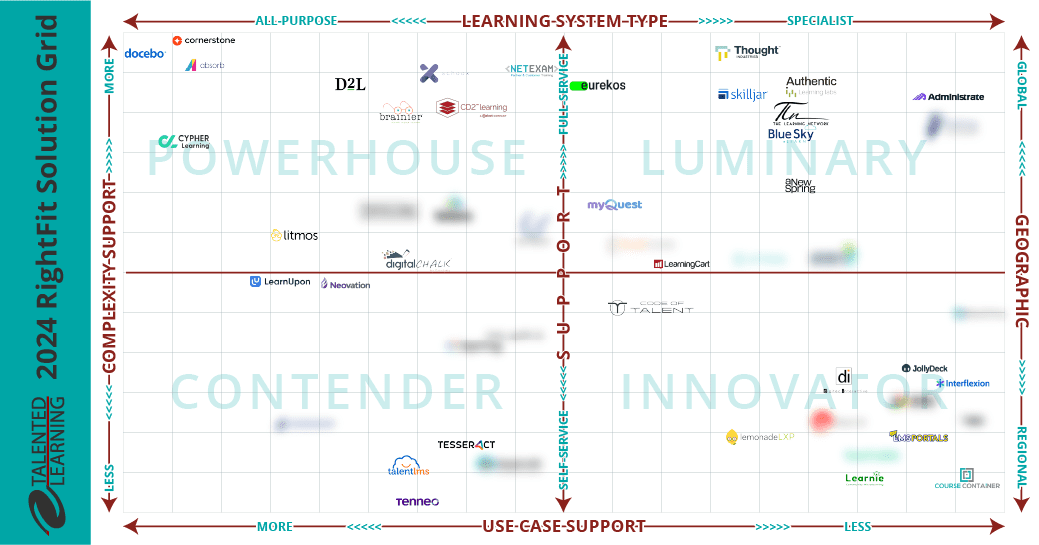
Which LMS is Best for You? New Shortlisting Tool for 2024
How can you find the best learning system for your business? Our LMS shortlisting tool can help. Learn about the 2024 RightFit Solution Grid. Free, reliable guidance based on our independent research

How to Build a Learning-Based Business: Executive Q&A Notes
Building and selling online courses may seem easy, but building a profitable learning-based business is far more complex. Find out what successful leaders say about running this kind of business

The Rewards of Community Building: Customer Ed Nugget 14
What role does community play in your customer relationships? Find out why community building is such a powerful force in customer education on this Customer Ed Nuggets episode
Benefits of Training Content Syndication: Customer Ed Nugget 13
If you educate customers online, why should you consider content syndication? Discover 10 compelling business benefits in this Customer Ed Nuggets episode

Top Marketing Skills to Master: Customer Ed Nugget 12
Successful customer education programs depend on professionals with expertise in multiple disciplines. Which marketing skills lead to the best results?





CASE STUDY DIRECTORY


FOLLOW US ON SOCIAL