

I may, in fact, be obsessed with learning technology. I spend my days anticipating, tracking, understanding and interpreting learning technology trends so I can help organizations make better buying decisions. Life in the “trend zone” is certainly exciting though often frustrating.
Sometimes a promising trend may only be a temporary distraction. Other times, nothing materializes beyond the hype – a lot of hype.
But once in a while, a trend emerges that is bigger and faster than we thought possible. Demand then comes from every corner and the learning industry is compelled to respond with varying levels of innovation.
It happened with cloud computing and the cloud LMS. It happened with smartphones with anywhere/anytime mobility and also with online social interaction as a way of daily life.
It is happening again with a tectonic shift in LMS design principles. Customer-focused organizations everywhere are making “learning experience” a top priority and for commercial training companies, and it has become a mission-critical requirement.
There is no one-size-fits-all approach.
Commercial Training Technology = Unique Challenges
Every LMS buyer faces an uphill climb. Technology and vendors are constantly changing, so each new buying cycle involves a steep learning curve. But if you’re a commercial training decision maker, your battle is the toughest. After all, your livelihood is at stake.
If you choose a weak learning platform, you’re jeopardizing revenue streams and long-term business viability. No pressure.
Think of a commercial training company as any for-profit entity that sells proprietary learning or continuing education content delivered via instructor-led training, online courses or blended learning.
Compared with corporate learning departments, commercial training providers have unique and highly specialized technology requirements. Yet many LMS vendors who serve other market segments say they are also a strong choice for commercial training because they offer a shopping cart and checkout functionality.
In truth, that level of ecommerce support, integration and compelling user experience barely scratches the surface for customer-minded commercial training companies.
In a commercial training environment, learners want the freedom to browse, buy and consume learning-related content at will. They demand a learning experience that feels as convenient, comfortable, personalized and trustworthy as popular online experiences like Amazon, Netflix, Facebook or Instagram.
Meanwhile, under the hood, commercial LMSs must be tightly integrated with a full stack of robust, reliable, complementary technologies that support end-to-end business operations.
Much of this ecosystem can’t be changed with ongoing improvements in learning technology so commercial learning solutions have a high degree of custom integrations and business workflow. In the employee LMS world, most of these capabilities are unfamiliar and unnecessary.
Commercial training companies must consider other challenges, as well:
- Selling the program is the key pillar of the business. Failure is not an option
- The market is highly competitive. Differentiation is essential. Learner experience and content are the lifeblood of brand positioning
- Some commercial training companies offer only one (or very few) content programs with a homogeneous learner audience, rather than an extensive library for dozens of employee types, making full-service LMSs overkill from a business, fiscal and learner standpoint
- Professional services are typically needed to manage LMS implementation, technology integration, customization and other business requirements
- For companies with many customer learners, traditional LMS pricing models can be cost-prohibitive and misaligned with the commercial training model
These last two points deserve a closer look.
High-End Commercial Training Companies Need LMS Professional Services
The popularity of cloud-based learning platforms and the value they provide is undeniable. But we’re seeing an interesting side effect.
Most LMS vendors no longer provide professional services expertise to help buyers customize, deploy and support their implementations. Setup and support services yes; strategic services no.
The cloud LMS model depends on delivering a well-defined solution to multiple organizations, so the platform vendor can rapidly grow its customer base.
Content marketing and targeted advertising help these vendors attract prospects to their website, where they can learn about the product and “try-before-you-buy” in self-service mode.
Although some commercial training companies may get by with self-service or very limited support, high-end training providers require active, hands-on guidance from professional services experts. These requirements span a variety of needs, such as business case development, product and project management, implementation, third-party application integration, ecommerce support, custom development and UI/UX, instructional design, content development and QA and marketing.
Who does all of that? Some vendors offer extensive professional services to develop custom learning experiences along with a proprietary, customizable LMS.
Examples include Thought Industries, Yardstick, SpongeUK, KMI Learning, Litmos/CallidusCloud, NetExam, Classroom 24/7 , YM Learning , eLogic Learning, and OnPoint Digital.
There are also specialized, strategic service providers who help buyers leverage learning platforms from other vendors or via open source.
Noteworthy examples include ExtensionEngine, GP Strategies, Kineo, MakingBetter, Maestro and RapidLD.
In addition, a new breed of “content experience” vendor provides AI driven content from around the web to users based on their profile, job role, expressed interests, content or social group membership, social recommendations and curated playlists.
These include Allego, Degreed, EdCast, Pathgather, BraveNew and ClanEd. You can purchase these solutions on a standalone basis or deploy them in conjunction with a relevant LMS to provide a highly engaging, relevant, useful learner experience. Some LMS vendors are now attempting to catch-up by integrating these capabilities into their platform.
One thing is for sure – this trend isn’t on its way out anytime soon. (Want to learn more about Custom Learning Experiences? Replay our recent webinar “Custom Learning Experiences: When No LMS Will Do“!)
Can You Afford This LMS? Audience Size Matters
Simply put, if your commercial training company serves a large audience, the cost of many learning platforms won’t make sense. That’s because pricing for an employee-oriented LMS and many cloud LMSs are often directly tied to the number of users.
So, how large is “large”? The largest workforce-oriented implementations top a million users, but unless you’re running a Fortune 500 company, that volume is rare. In fact, at U.S. companies, the average number of employees is less than 100.
Commercial training companies face an entirely different kind of user math. Relatively small training providers can have a customer base of hundreds, thousands or even a million users.
Commercial training providers must make strategic financial decisions about what to invest in their platform, content and marketing.
If you have the greatest platform in the world but the content is terrible, that’s no better than the greatest content with no marketing to drive sales. Finding the right mix is quite tricky.
But no matter how many customers you serve, if you pay an LMS vendor annually on a per-user basis, it can get expensive fast. For example, say you have 100,000 unique new training customers each year and you must pay $1/user each month. Your costs would total $1,200,000 a year.
That’s a hefty expense before investing even one dime in marketing or content. And imagine how much content you’d need to sell just to cover that annual software cost!
Trending: Open Source/Custom Models
Hoping for a more cost-effective solution, many commercial training decision makers are turning to open source. With an open source platform, you don’t have to pay annual user fees. The software is generally free to use, but the “buyer” or a 3rd party partner is responsible for installing, configuring, hosting and maintaining the implementation.
Examples of open source LMSs that rely on third parties for sophisticated, large-scale implementations include Open edX, Moodle and Totara. These organizations support and maintain the core code and partners do the rest.
Another advantage of open source is the ability to build tighter custom learning experiences for dedicated content programs. For example, many commercial training companies sell test preparation content that helps students prepare for the SAT, MCAT or LSAT and professional certifications like CFA or PMI.
Often these training companies depend on a single content line in terms of their branding, marketing, content strategy and technology. In other words, if you own a healthcare accreditation test prep company, you typically don’t serve lawyers who are studying for the bar exam.
Can You Afford This LMS? An Open Source Example
So let’s look again at our previous LMS cost scenario, but this time through an open source lens. With 100,000 unique training customers each year, the open source cost could be $200,000 to install, create a highly tailored custom experience, host, integrate and maintain annually, but you wouldn’t pay other expenses.
That means you would save a whopping $1,000,000 in year 1! You could invest those funds in improving your content and user experience, expanding your marketing or addressing other business priorities. The right mix of platform, content and marketing gets much easier with an open source platform.
Conclusion
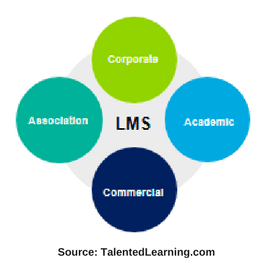 Over the past 10 years, the LMS market has swollen to more than 700 solutions (depending upon how broadly you define the term “LMS”). These solutions can generally be divided into four categories, based on the type of organization they support: corporate, association, academic and commercial training companies.
Of course, there is overlap among these categories –they all support learners, content and the relationship between the two. This overlap is what causes confusion because it leads buyers to assume that all LMSs are essentially the same. However, that would be an oversimplification because each category requires distinctive functionality.
Commercial training is the most unique category. The business and budget challenges, customer expectations, specialized functionality and services that training companies require cannot be addressed by most LMS vendors.
This is why custom/open source solutions are gaining traction among commercial training companies. Custom learning experiences are a particularly attractive alternative because they are cost-effective, and they make it possible to deploy only the features your customers will value.
The level of customization can be very detailed – diminishing or even eliminating lines between website, content, social and LMS environments. Often, learners don’t even recognize that an LMS is powering their learning experience. And in a world that increasingly puts learning experience first, that’s a step in the right direction.
Thanks for reading!
Want to learn more? Replay this on-demand webinar:
How to Build Successful Learning Experiences: Lessons From Non-Profits and Associations
Every association and non-profit organization is unique. Yet all share common goals – to engage, retain, inform and influence constituents. What exactly does it take to engage learners, support your brand and advance your mission?
Join John Leh, CEO and Lead Analyst at Talented Learning as he hosts a panel discussion with experts who have developed successful online education programs based on highly customized learning platforms:
- Stephen Flatman, VP Examinations, AICPA
- Seewan Eng, Sr. Director of Technology, New Teacher Center
- Edward Daciuk, Principal Learning Strategist, ExtensionEngine
You’ll learn:
- How to build a business case for moving in-person education online
- What it takes to engage learners in an online environment
- How to differentiate your organization through online learning
- When to consider a custom platform that supports high-end learning experiences
- Lessons learned in achieving internal buy-in, project momentum and organizational alignment.
Need Proven LMS Selection Guidance?
Looking for a learning platform that truly fits your organization’s needs? We’re here to help! Submit the form below to schedule a free preliminary consultation at your convenience.
Share This Post
About the Author: John Leh

Related Posts

How Does the LMS Selection Process Work? This Case Illustrates
The LMS selection process isn't always easy or straightforward. To understand what works, check this slice of life from John Leh's life as LMS buying consultant

LMS Technology Trends: Why Focus Is The Next Big Thing
Among LMS technology trends to watch, I think there will be more innovation in mobile, social, badges and certification, as well as capabilities that attract new users and facilitate training content commerce.

Channel Learning and Business Success: Can Your LMS Connect the Dots?
One of the best things about being a learning technology analyst is that I get to meet so many smart, passionate people who are pushing the boundaries of the LMS and business success as we know it. Every day [...]

The Rise of LMS Specialists: A Tour of Learning Tech Innovation
Organizations can sell proprietary premium content to their users, and also to any organization in the Knoitall ecosystem.

Association LMS Buying Companion
Selling accredited educational content to members and managing their other learning activities generates non-dues revenue -- which is increasingly important for association success.

LMS Demo Dos and Don’ts
If you have a room full of administrators, a more in-depth click, click, click approach works great, but that approach is shunned by most executive audiences who are more influenced by the bigger picture.

4 Corporate LMS Flavors: Which Do You Choose?
Extended enterprise learning is defined as any type of education a corporation provides to external audiences – including customers, prospects, channel partners such as dealers, franchisees, distributors and others.

10 Tips to Boost Sales: For LMS Vendors
Inexplicably, vendors make the most prose mistakes in these two areas of their proposals, yet these are the sections that every executive spends the most time reviewing.

LMS Integration: The Learning Ecosystem
Google Analytics tracks a visitor’s access device, browser, previous website, pages visited, time spent on the page, next site visited, language, IP, precise geographic location, age and much more.



CASE STUDY DIRECTORY


FOLLOW US ON SOCIAL