

Making someone do something is different than making someone want to do something. That difference is obvious when you compare the realities of internal employee learners with external learners such as customers and channel partners.
Recently, I attended a webinar by a prominent talent management industry analyst on a classic topic — integrated talent, performance and learning management. I saw the same tired slides, depicting the lifecycle of an employee from recruiting through off-boarding. I heard all the same integrated performance management benefits I’ve heard for years since all the big-boy HCM players bought learning and performance tech companies.
Boring as all get out.
But what struck me most was the presenter’s use of the word “compel.“ Not just once, but multiple times. “Compel” in the sense of making your employees do something. The tone of the presentation completely disregarded any empathy or thought about the individual who must be “compelled.”
This line of thinking made my stomach hurt. I groaned silently for 30 seconds every 30 seconds until the hour-long session wrapped up. I will never get that time back.
Which learning system is best for you? Check the newest RightFit Solution Grid, based on our team’s rigorous independent research. Learn more and get your free copy!
Why must we “compel” learners?
My problem is the speaker’s choice of the word “compel.” Our entire talent management industry is focused on forcing users to do things. Very little is voluntary about using any part of a talent management system. The message is clear, but nowhere close to motivational:
If you like your job and want to keep it, do what we say you must do. “Compel” has always been the customary approach for big HCM suites. And now, that approach apparently extends to learning.
I have a theory on why that’s the case. Integrated human capital systems cost a bundle. They’re sold on a thin, tough-to-measure business case, and productivity must be measurably improved to offset that hefty cost.
HR organizations are compelled to show a return on investment, while users are compelled to do what they’re told. Maybe this is how it will always be for employee learners. But I think the LMS industry sold its soul a bit, when selling out to global HR systems companies.
What distinguishes external learners from others
This is one of the main reasons I focus exclusively on extended enterprise learning solutions. At the beginning of my career in 1997, I was an instructional technologist. I lucked into some cool extended enterprise CBT projects and enjoyed the stark difference of approach and feel. Ever since those early days, I’ve been involved with extended enterprise projects focused on learning content and LMS platforms.
Extended enterprise learning systems cover a spectrum of solutions — corporate channel and customer learning, association learning, commercial training and academic initiatives. In all of these scenarios, users are mostly voluntary.
You can’t “compel” non-employees to come to your site, or compel them to buy and consume learning content, or compel them to return. The only way they will come, learn, buy, share and return is if you create a user experience that they find relevant, meaningful and useful for their particular interests and needs.
Celebrate the best in learning tech innovation! See our latest annual LMS Award recpients, featuring the top 10 solutions in 6 categories. See all the winners…
How LMS platforms can serve the needs of external learners
There are stark differences in the motivations that drive employee learners vs. external learners. That’s why they deserve different LMS functionality than employees:
1. External learners interact with an LMS when they recognize it is worth their time, effort and money. Internal learners interact when training is due, usually driven by compliance deadlines.
2. External learners frequently purchase content as individuals or through an organization they represent. Internal learners consume assigned content.
3. External learners typically find, purchase and interact with content from multiple sources. Internal learners can go anywhere they want, as long as it is inside their employer’s LMS.
4. When external learners enter an LMS, they are unknown users. Internal learners are known and recognized as employees by their employer’s LMS before they ever consume content.
5. External learners access an LMS from every conceivable technology platform, bandwidth speed, mobile device and global location. Internal learners are always known users, with known devices and known points of access and authentication.
6. External learners do not hate learning-related content. On the other hand, the content and LMS environments designed for employees usually are worth hating.
All of the above reasons encourage external enterprise learning technology vendors to focus on attracting and retaining users. Every part of the experience needs to be fun, modern and exciting — from access and the quality of the content to interaction design and ongoing engagement.
It needs to be more inviting like Facebook, Twitter, Amazon or eBay. And it needs to feel less like a traditional LMS or integrated talent management suite.
Understanding external learners is key
Tools that are virtually unknown in internal employee solutions (such as marketing automation, social media integration, gamification, mobile apps and interfaces, ecommerce, taxation support, search engine optimization, marketing and advertising) are key concerns and competencies in the external learning environment.
To succeed in extended enterprise learning, you must have a passion for connecting people with the business of lifelong learning. It brings out the passion and commitment in your audience.
If you don’t commit to that mission, you’re likely to fall behind. Eventually, your users will vote you out and go elsewhere. This applies both to vendors and extended enterprise program providers.
This is the new face of extended enterprise learning in 2014. It’s one part learning, one part marketing, one part technology — and whole lot of fun. Looking forward to where this leads us in the future.
Thanks for reading!
Need an LMS for External Learners? Let’s Talk…
For independent advice you can trust, schedule a free 30-minute phone consult with me, John Leh…
*NOTE TO SALESPEOPLE: Want to sell us something? Please contact us through standard channels. Thanks.
Share This Post
About the Author: John Leh

Related Posts

Introducing the LMS Almanac: Corporate Edition 2016
The LMS Almanac defines corporate LMS market trends, types of corporate LMSs, business uses, feature and functions, hosting models, license models, service and support models, return on investment and provides real-life examples of all.

Public LMS Pricing: Proof You Can Overpay
It is foolish to pay more than you have to and get nothing in return but it is impossible to know if you are overpaying if you first don't define your LMS requirements.

Shrinking LMS Implementation Fees Drive Market Expansion
Making sure your LMS selection team is on the same page in regards to implementation/configuration needs will allow a buying organization to quickly disqualify many vendor options without the labor of investing a ton of time.

LMS License Models: What in the World is Going On?
Associations, training companies, corporate channel, customer and other extended enterprise buyers can create any number – hundreds of thousands even – of active ongoing accounts but a buying organization only pays for active usage.
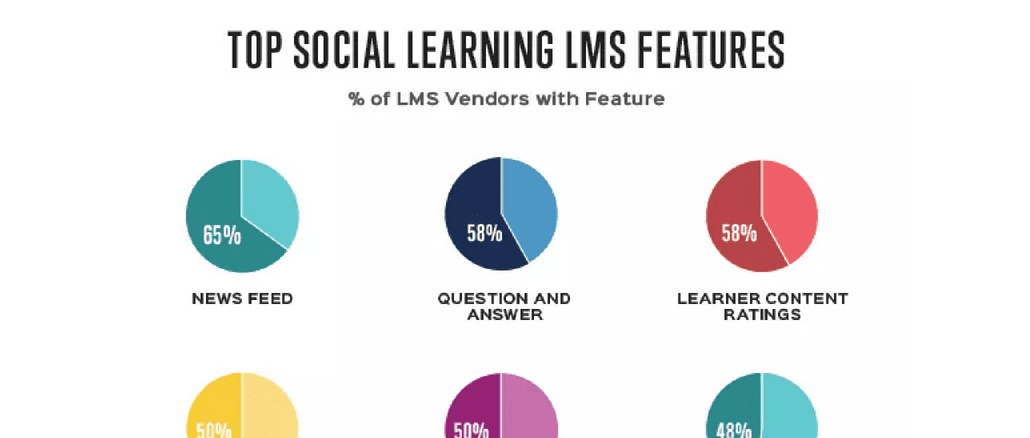
Top Social Learning LMS Features
Common logic was flawed -- assuming training professionals and subject matter experts (SMEs) would regularly visit these social "spaces" and interact, keeping content fresh and learner engagement high.

2016 LMS Market Trends, Observations and Predictions
The behemoth TM providers such as Oracle or SuccessFactors devalued the LMS when they incorporated their LMSs into broader HR software suites and took their foot off the innovation accelerator.

Talented Learning: Greatest Hits of 2015
I concluded that it will take too long to teach 600+ LMS vendors the new anti-acronym trick and the easiest path would be to create a living, non-techie dictionary that decodes common acronyms for LMS buyers.

Mobile LMS: The Facts
At Talented Learning, an independent learning tech market research and consulting firm, we recently compiled an obnoxious 85 question survey detailing over 450 points of LMS business, market and functional data. We collected statistically significant [...]

2015 Talented Learning LMS Vendor Award Recipients
Learning management systems didn’t die. They evolved, and today we recognize them. Brief LMS History Corporate LMSs were invented almost 30 years ago to manage and report on the training and compliance of their employees [...]




CASE STUDY DIRECTORY


FOLLOW US ON SOCIAL