
Learning management system RFPs have a reputation for being difficult, but it will be much easier now that you have well-defined requirements. The goal of a request for proposal (RFP) is to clearly describe your use cases, requirements, and learning content to be deployed, so vendors understand what you really want and need from a business, features, functionality, technology, services, support, and budget standpoint.
The LMS RFP is also important for your evaluation process because it helps you compare and rank proposals side-by-side. A process-based approach to requesting, receiving, and evaluating proposals eliminates ambiguity and provides a written record of vendor responses and future assumptions. A formal RFP is also the only way to compare vendor pricing using the same criteria.
Don’t Skip the Learning Management System RFP
One of the easiest ways to pay too much for the wrong solution is to skip the RFP step in the buying process. It’s easy to ask a vendor for a proposal and receive one. However, it’s not easy to determine whether the learning platform in that proposal will provide what you need, or if it’s better or worse than other competitive solutions.
At Talented Learning, we’ve seen what happens when companies skip the RFP:
- Although a vendor says they have a particular feature, you may not realize its limitations for your use case until after the contract is finalized.
- A bidder says they provide all the implementation and configuration services your organization will need. But during the implementation process, you discover they didn’t account for something, and this requires a change order. Now you must either go without or ask for more budget.
- A potential vendor proposes modules that include functionality you don’t need, which unnecessarily raises the proposal price.
- Pricing tiers proposed by a vendor don’t align with your use case, business model, or training and education goals.
- There are no specific criteria for comparing LMSs on key elements, leaving you guessing which solution will actually best for your organization.
Our advice? You can’t afford to skip the RFP!
Do All Buyers Need an LMS RFP?
There are self-service LMS solutions with free trials and published online pricing and functionality, but no sales or implementation services. Those solutions are for small businesses and first-time buyers with simple use case scenarios and nominal budgets. Generally, at this level, RFPs are overkill.
These solutions serve a purpose. But if your organization will easily outgrow them, you’ll need to use an RFP to successfully find a more robust learning platform.
A Great LMS RFP in 7 Parts
At this point, you may be tempted to create a relatively generic RFP and send it to 10 or 12 vendors to see what sticks. However, RFPs without much detail will result in vague proposals. The responses will be light on specifics and create more questions than answers, which requires more time and follow-up with each vendor.
Instead, we recommend writing a complete LMS RFP that clearly and concisely describes exactly what your learners and your organization need, from deploying the platform to growing your online learning program. A good goal is to solicit proposals from 3 to 5 qualified vendors whose platforms appear to closely fit your requirements.
The RFP should include the key evaluation criteria your organization will use to select a learning platform, and the objectives you want to accomplish with the system. It should be detailed enough so that evaluating and rating proposals is easy.
Your LMS RFP should include these essential elements:
- Executive Summary – Vendors should describe the highlights of the learning solution they propose, and how it will meet or exceed your requirements.
- Vendor Profile Requirements – Ask questions about the supplier’s company, contact information, business structure, experience, and key differentiators.
- Critical Use Case Functionality Requirements – Describe the goals your organization wants to accomplish with this LMS, including the main types of users for your learning platform, what you want them to accomplish, how, and why.
- Professional Service Requirements – What type and scope of implementation, integration, and support services do you need to be successful?
- Technical Requirements – Verify deployment, integration, accessibility, mobile capability, security, scalability, and other critical infrastructure needs.
- Business Requirements – The scope should also describe your past usage statistics and outline your organization’s future usage predictions, license model preference, and pricing parameters.
- References – Ask the vendor to provide references from current clients who are similar in size and type to your organization and use the platform you’re considering. Obtaining three references is a good goal.
Are you in the proposal phase, or should be but don’t know where to start? Book a complimentary LMS consult with John Leh to get oriented quickly.
Fiercely Independent LMS Vendor Research
Save time, get informed, and research vendors in peace with our independent LMS intelligence:
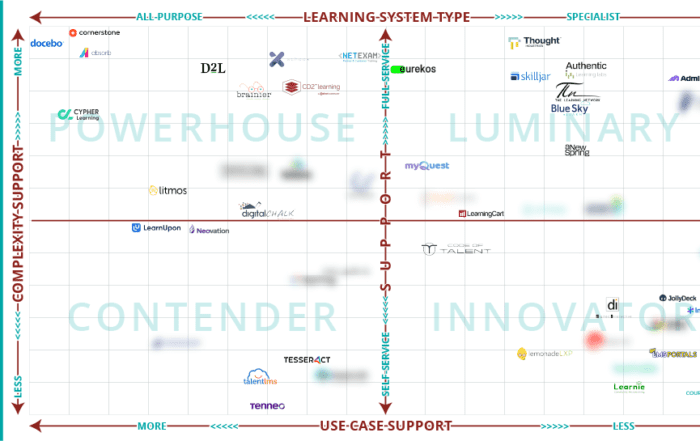
- Annual RightFit Grid – Narrow your vendor options with our free shortlisting tool
- LMS Vendor Directory – Research leading solutions and see demos, reviews, thought leadership content, and more
- Case Study Directory – Discover real-world LMS examples and success stories
- LMS Award Winners – See the best LMSs for every use case
- Hot Take LMS Reviews – Find out what John Leh thinks about 90+ leading LMS solutions
LMS Buyer Services
Turbocharge your selection process with free and premium services for LMS buyers:
- Free LMS Consult – Get going fast with expert, independent guidance from John Leh
- Submit Your RFP Consult – Let John review your RFP and provide feedback
- LMS Recommendation Service – Quickly and accurately identify your best LMS options
- Full-Service LMS Selection – Rely on John’s expertise to guide you, from business case to contracts
- Custom Consulting – Strategic help and guidance, when and how you need it
LMS Consult with John Leh
Are you in the market for your first LMS or considering replacing your current learning system? Overwhelmed by vendor choices that look similar? Not sure where to start? Schedule a complimentary initial consultation with Lead Analyst, John Leh, to discuss your learning system goals and start moving in the right direction.