

EDITOR’S NOTE: Because extended enterprise learning involves multiple disciplines, we sometimes ask other experts to share their insights with our readers. Today we feature insights about the relationship between digital transformation and customer experience from Daniel Newman, Principal Analyst at Futurum Research and CEO of Broadsuite Media Group. Daniel is an author, speaker, blogger and educator who works with leading technology brands to help businesses around the world embrace the benefits of digital transformation.
Some organizations assume that digital transformation is about efficiency – saving time and money, beating competitors to market or snagging customers with fancy apps. They’re wrong. As I’ve often said, digital transformation is about one thing – creating business value by improving customer experience. Fortunately, many companies are starting to realize that this is a smart strategy. Here’s what stellar customer experience management looks like as digital transformation heads toward 2020:
5 Ways to Elevate Customer Experience Through Digital Transformation
1) Recognize that customer experience is everyone’s job
Think back to the last time you had a fulfilling customer experience. Can you even remember? Too many customers still struggle with a jumble of illogical phone trees, frustrating chatbots, glitchy apps and disorganized online documentation. Customers don’t want more – they want better.
So, what if you decided to dig deep and exceed expectations? What if you were relentless about transforming today’s fragmented customer experience to a seamless web-to-mobile digital experience that actually works? No doubt, you’d rocket to the top of your industry.
For organizations to achieve their goals, every team member has to be committed. Providing an outstanding customer experience requires the same level of commitment. That’s how inextricably linked your business goals and customer experience need to be.
Indeed, customer experience is such an important aspect of differentiation that it can no longer be siloed inside your marketing or sales functions. It needs to be a full-scale, top-down/bottom-up, across-the-board objective for every person in your organization. The secret is in creating a culture that empowers all employees to fulfill that mission.
One company that excels at this is Nordstrom. The mobile app and online presence are easy to navigate, and in recent years, I’ve enjoyed being able to buy something online and pick it up in the store on the same day. Plus, when I encounter an issue with a purchase or I can’t find something I want, employees – both in-store and online – consistently go above and beyond to help.
With its customer-centered culture at the core of its digital transformation, Nordstrom continues to set the standard for customer experience excellence.
2) Let go of how you think your company should operate
If you say that customers are a priority, but you don’t actually accept customer feedback, isn’t that like – lying? After all, as the saying goes, the customer is always right. So the smartest way to improve is to know what customers want, even before they tell you.
That’s why companies need to abandon preconceived notions about customers, and instead become experts at learning about customers’ true needs, preferences and behaviors.
Research shows that 66% of CEOs plan to change their business model in the next three years. Are you willing to do that? Leaders today need to practice a type of healthy detachment, trusting that customer expectations and customer experience technology will work together to inform the company’s direction.
For instance, consider an example from Netflix. In January, the streaming video service provider announced that it was discontinuing the popular sitcom Friends. But thanks to an immediate uproar from customers and fans, Netflix quickly changed its mind and invested heavily to keep Friends in its programming line-up.
This may seem like a minor incident to people who don’t yet subscribe to streaming media services. However, it’s a great example of listening to your customers – and giving them what they want.
Of course, the whole fiasco might have been avoided if Netflix had been more proactive in assessing customer preferences. But better late than never.
3) Automate – again and again
Digital transformation isn’t a one-and-done project. Think about it. You know how difficult it is to be friendly, happy, and service-focused when you’re burned-out and stressed-out? That’s probably how your front-line employees feel.
That’s why you should think about how to free-up their cognitive load for more business-critical activities by introducing robotic process automation whenever possible.
What kind of benefit can you expect? One bank found that 85 bots could do the same work as 200 employees, for only 30% of the cost.
Those numbers are impressive, but here’s what they don’t show: The increase in time available to better-serve customers when employees no longer had to perform mind-numbing, redundant procedures.
Automation isn’t just about saving time or money. It’s also about adding value by increasing the quantity and quality human time available to strengthen customer relationships.
4) Take care of customer data as if it’s your own
What’s the fastest way to lose customers? Hurt them. Compromise their personal information. Allow their bank or credit card data to be hacked and hoarded. It’s not pretty. But it’s true.
This point doesn’t need a lengthy explanation. We’ve all seen high-profile examples of companies that tanked when they failed to protect customer data. And digital initiatives are the primary way you can put customer data at risk.
There are longer any more excuses for overlooking this cornerstone of customer experience management. Every digital transformation roadmap requires a rock-solid commitment to protect customer data privacy and security.
And if a breach happens, you need to be transparent and own your responsibility. Organizations can no longer afford to wait for months while customer trust evaporates. When faced with a scandal or crisis, it pays to be more like Tylenol, than Toyota.
5) Align your efforts
With digital transformation, there are so many forces at work that, even with automation, it can feel incredibly overwhelming. That’s why so many companies are also moving toward digital experience management tools to keep their data and efforts organized.
Digital experience management can help handle tasks like personalization, language translation, content management across channels, analytics and even ROI. I’d go so far as to say it will become a necessity for companies that are leading the digital transformation pack this year.
Next Steps
These customer experience priorities may seem overwhelming. After all, digital transformation touches so many corners of an organization. And now you’re being challenged to make it happen faster and easier – while customers play an active role in the process.
It’s a lot to take in, let alone manage. But there’s also some good news. First, most companies aren’t winning on this front yet. That means you probably have some wiggle room – not just to improve customer experience, but to differentiate your company from your competitors.
Second, when we look at digital transformation through the lens of customer experience, everything becomes much clearer. Tech acquisitions, product development, staffing decisions and journey mapping – all are informed by customer imperatives.
This sharper perspective, alone, can improve your organization’s efficiencies, costs and overall reputation. And along the way, customer experience will benefit, too.
EDITOR’S NOTE: This post has been adapted, with permission, from a post published on the Futurum blog.

GET PART 1 FREE NOW!
NEW 2024 RESEARCH REPORT
Need Customer LMS Insights You Can Trust?
All customer learning management systems aren’t created equal. Get our in-depth analysis and compare the best customer education systems on the market today. And now, get Part 1 FREE!
LEARN MORE >>
Need Proven LMS Selection Guidance?
Looking for a learning platform that truly fits your organization’s needs? We’re here to help! Submit the form below to schedule a free preliminary consultation at your convenience.
Share This Post
About the Author: Daniel Newman

Related Posts

Shrinking LMS Implementation Fees Drive Market Expansion
Making sure your LMS selection team is on the same page in regards to implementation/configuration needs will allow a buying organization to quickly disqualify many vendor options without the labor of investing a ton of time.

LMS License Models: What in the World is Going On?
Associations, training companies, corporate channel, customer and other extended enterprise buyers can create any number – hundreds of thousands even – of active ongoing accounts but a buying organization only pays for active usage.
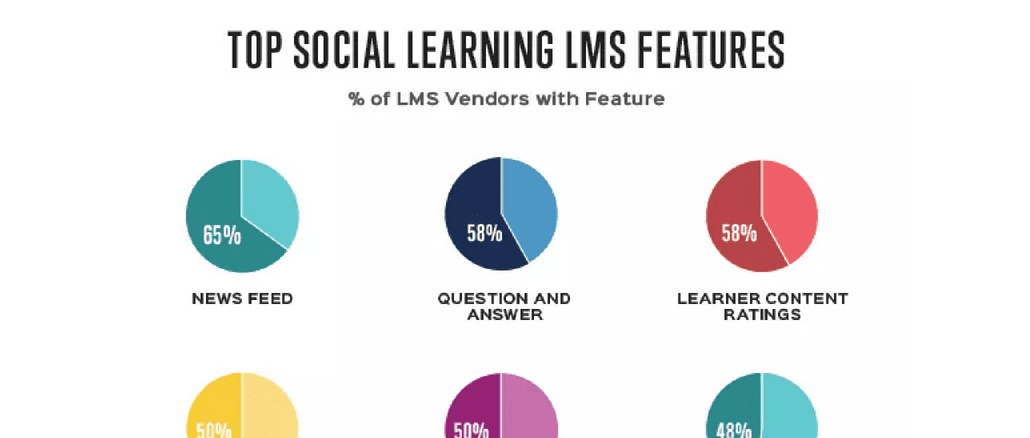
Top Social Learning LMS Features
Common logic was flawed -- assuming training professionals and subject matter experts (SMEs) would regularly visit these social "spaces" and interact, keeping content fresh and learner engagement high.

2016 LMS Market Trends, Observations and Predictions
The behemoth TM providers such as Oracle or SuccessFactors devalued the LMS when they incorporated their LMSs into broader HR software suites and took their foot off the innovation accelerator.

Talented Learning: Greatest Hits of 2015
I concluded that it will take too long to teach 600+ LMS vendors the new anti-acronym trick and the easiest path would be to create a living, non-techie dictionary that decodes common acronyms for LMS buyers.

Mobile LMS: The Facts
At Talented Learning, an independent learning tech market research and consulting firm, we recently compiled an obnoxious 85 question survey detailing over 450 points of LMS business, market and functional data. We collected statistically significant [...]

2015 Talented Learning LMS Vendor Award Recipients
Learning management systems didn’t die. They evolved, and today we recognize them. Brief LMS History Corporate LMSs were invented almost 30 years ago to manage and report on the training and compliance of their employees [...]

Customer Training: 5 Reasons to Put Them “In the Know”
Consider creating training modules which are, in effect, focus group vehicles. Introduce your customers to the product ideas you are considering through online training, and leverage embedded surveys, quizzes, social media, and mobile enablement technologies to have conversations with your customers.

LMS eCommerce: B2C and B2B Feature Sets
My best recommendation is to fully develop your business model, LMS use case scenarios and resulting requirements before engaging LMS vendors so you can find the best-qualified options to drive your online learning business.





CASE STUDY DIRECTORY


FOLLOW US ON SOCIAL