

Are you an HR or L&D professional trying to figure out how to expand your training programs to customers, channel partners or others outside of your organization’s walls? Are you asking yourself, “Where should I start? What should I know before I begin? And how will I know if I’m heading in the right direction?”
As a specialist in extended enterprise learning technologies, I get it. I hear those questions all the time. So let me try to make the path easier for you to navigate.
Extended Enterprise Learning: We’re Not In Kansas Anymore
Imagine for a moment that we’re Australian tourists who just landed in Boston for a week. Or let’s say we’re Americans hiking together in the Scottish Highlands. When locals speak in their dialect, we recognize the language as English, yet we still don’t have a clue what they mean.
Words swirl around in a vaguely familiar cloud, yet when we try to join the conversation, the exchange becomes stilted and unnatural. It’s an odd sensation. That’s usually how HR and training professionals react when stepping into the realm of extended enterprise learning.
In this case, Google Translate won’t be able to help you get your bearings. So I’ll start by defining the core concept. Think of “extended enterprise learning” as any training effort targeted at non-employee “external” audiences — customers, prospects, channel partners and others outside of your organization’s walls, but within your business value chain.
Many HR and L&D professionals are proficient at speaking native “organizational learning” language. They are fluent in strategies and technologies related to employee training, performance and development. However, they struggle to apply their expertise to external audience needs. And when they try to understand stakeholders from business units, sales or customer service departments it’s like trying to speak a foreign language altogether.
Here’s the most important distinction to keep in mind: Departments that care about educating external audiences are not investing in these programs because compliance rules require it but because these learning programs lead to a direct, measurable business impact.
Profit-minded business functions like sales, marketing and customer service rely on learning as a way to sell more products and services, extend revenue-generating relationships, boost business productivity and increase profitability. What’s more, they can prove it.
Here’s another important distinction: Because extended enterprise learners pursue training voluntarily, you’ll need appropriate psychology to attract, engage and support them. Voluntary learners can’t be coerced into completing a course. They need relevant, meaningful incentives to read your promotions, to visit your learning portal, to purchase and complete content — and then to return for more, again and again.
So, how do you make that work? Let’s get to it.
Extended Enterprise Learning: Worth Going the Extra Mile
Fueled by a surge of cloud-based innovation from hundreds of new learning technology vendors, extended enterprise learning is without a doubt the hottest learning management system trend in 2017. And although extended enterprise learning is much different (or rather broader and more complex) than employee training, there’s no reason why learning leaders should hesitate to move forward.
Here’s the good news. I’ve been on the front lines of many customer and partner LMS implementations and I can assure you, extended enterprise programs don’t necessarily require a huge upfront investment.
In fact, your organization may be able to leverage the same learning platform you use now for employee training. Often, it’s smart to start small, prove that the program achieves the desired outcome, and then build on that success over time.
To get started, you need only three elements:
1) Appropriate content
2) An extended enterprise LMS, and
3) A measurable business case that justifies this business investment
Let’s take a quick look at each of these components.
Extended Enterprise LMS Basics
As the backbone of customer and partner learning programs, an extended enterprise LMS is designed to serve multiple audiences – differently. The LMS must organize and manage learning content (in multiple formats), organize and track information about various learners, and manage the relationships between learners, learning content and your organization.
It also should enable your organization to track the status and progress of every training participant so you can measure outcomes related to specific business objectives.
Together with business units, you’ll need to define content goals and scope. You’ll also need to determine how to market the content through the LMS and other channels, how long each content element should be available to your audience, how to measure learning effectiveness, and how to review and revise content, over time.
But above all, to fund the content and the LMS, you’ll need to develop a measurable business case. This is essential because it formalizes the program blueprint and rationale in the language of executives with profit/loss responsibility.
When framing your case, you’ll want to focus on why and how the organization will benefit from this investment, including specific performance indicators and anticipated outcomes – ideally supported by results from similar/past programs. The more thoughtful and specific you are in providing key metrics, the more likely you’ll receive approval to move forward with an initial budget for a proof-of-concept or pilot program.
How to Launch an Extended Enterprise Learning Program Without Losing Your Way
So, how do you put these three learning program elements into motion? What technology capabilities do you need? How will you know if your business case speaks the language of business decision-makers? Where does the budget come from? How do you measure success?
Although I can’t answer all of those questions fully in a single blog post, I can point you in the right direction with five steps for successful outcomes:
Step 1: Conduct an LMS Audit
You’ll want to answer multiple questions about your existing LMS:
Does it support extended enterprise requirements? Can you manage separate content, users, business rules and functional integrations for multiple learning audiences? What is your LMS license model? How will you add users, and what will that cost? Does the platform scale efficiently with fluctuations in users and demand?
Step 2: Identify Your Extended Enterprise Audiences
Which external audiences does your organization need to serve? Learning programs may be appropriate for customers, prospects, business partners, distributors, agents, franchisees, dealers, contractors or others.
How large is each audience? How would you profile their learning needs? What is their potential to improve business performance in response to training? How can you quantify the level of improvement?
Step 3: Investigate Current Educational Efforts and Costs
Determine your organization’s current approach to educating each audience (tracked or untracked). Is your company duplicating proprietary content developed for employees? Many organizations support their extended enterprise audiences with solutions that aren’t supported by an LMS or elearning content.
This approach comes with a cost – and often that cost is substantial from the perspective of HR or L&D. If you know your extended enterprise audiences and the current level of spending required to educate them, you have key data to build a compelling business case.
Step 4: Identify Metrics That Matter
For each external audience, reverse-engineer available information to determine which metrics are the best business performance indicators. For example, do your sponsors want channel partners to sell more, sell faster or improve the quality of their service? Do sponsors want to onboard customers faster or more successfully?
Or do they want to empower prospective customers to train themselves when considering a purchase and buy your products after a successful educational experience? The scenarios are endless but your sponsors should know which business issues are most critical.
Step 5: Build the Business Case and Get the Budget
Once you have useful data, it’s essential to crunch the numbers and develop a compelling analysis. Compare the costs/benefits of your company’s current educational programs with the costs of expanding your employee LMS to support external education.
Where and how does it add value? If your organization will make more money, operate more profitably, strengthen strategic relationships and/or benefit in other measurable ways, you should have a strong case for moving forward with a pilot program.
Conclusion
Extended enterprise learning is part business, marketing, training – and a whole lot of fun. The trick to a successful launch is recognizing that extended enterprise learning is an ongoing journey. Start small with a measurable business case and prove the value of every piece of content you develop.
The best organizations have this down to a science. Their process of continuous prediction, measurement and improvement touches all facets of their program. If you carefully consider underlying business drivers and the interests of your external learning audiences it should be easy to secure a modest budget, develop a viable proof of concept and begin to expand your reach.
Thanks for reading!
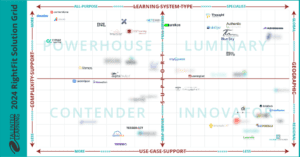
NEW FOR 2024
Which Learning Systems Are Your Best Fit?
Use our FREE RightFit Grid tool to build a shortlist based on our independent research. 50 leading learning systems mapped to common buyer requirements!
LEARN MORE AND GET YOUR FREE COPY…
Need Help Finding the Best LMS for Your Organization?
Submit the form below to request a free initial consultation call with our Lead Analyst, John Leh:
Share This Post
About the Author: John Leh

Related Posts

6 Customer Onboarding Mistakes to Avoid
Too often, software companies overpromise and underdeliver - and it shows up in the onboarding process. Here are 6 customer onboarding mistakes successful software companies avoid.

LMS Review: TalentLMS
Like most LMSs born in the last 3 years, the TalentLMS is fully mobile responsive so that any type of user can access it from smartphones, tablets and laptops without plugins or downloads and without any panning, scrolling or zooming.

Top 10 LMS Predictions of 2015
A responsive LMS “senses” the user device and automatically optimizes the text, graphics and menus to display perfectly without zooming, scrolling or downloads.

Define Your LMS Requirements Like a Pro
Don't regret your next LMS choice. If you define your LMS requirements like a pro, you're likely to find the best solution for you at the best price. Here's how...

It’s Time to Change the Channel (Your Sales Channel)
The only way to gain and keep mindshare among your channel reps is to provide them the knowledge, support and motivation to sell your products and services easier than competitive offerings.

How To Measure Customer Learning ROI
As you pursue each new program, you can predict and then demonstrate actual improvements in customer experience, loyalty, revenues and/or profitability.

Five LMS Categories: A 2014 Snapshot
They all have experienced professional services groups to help transition vendors off their current solution, migrate the historical data and content, configure the new system, train the administrators, build content and provide ongoing support.

Are You Getting Fleeced By Your LMS Vendor?
If you're spending time regularly deactivating users so you don’t have to pay incremental license fees, you are definitely paying too much for your learning platform.

Skillsoft Acquires SumTotal: Crazy or Genius?
LMS vendors were never threatened by Skillsoft’s Skillport LMS but now with the SumTotal LMS, it’s a different story.




CASE STUDY DIRECTORY


FOLLOW US ON SOCIAL