

EDITOR’S NOTE: Because enterprise learning involves multiple disciplines and perspectives, we regularly invite experts from other organizations to share their insights. Today, Intellum Product Marketing Director, Dr. Anderson Campbell, examines the strategic power of education-led growth.
What is your business growth strategy — and how well is that approach working for you? Too often, the answer looks like this unfortunate scenario:
Company X invests heavily in launching a new product, expecting to drive demand through sophisticated go-to-market strategies. However, customers churn before they recognize value from the product, and partners struggle to sell and support it. Soon, organizational productivity stalls, revenue opportunities slip away and customer retention becomes an uphill battle.
These challenges point to a common issue: a lack of education. When the right knowledge isn’t available to customers and partners at the right time, their performance suffers. Without relevant, structured education, customers get frustrated and partners aren’t able to contribute fully to business growth.
What’s the culprit behind this problem? Simple. Too many organizations treat education as an afterthought rather than a strategic lever for success.
This is where education-led growth comes in. Think of it as an engine that propels business performance by embedding education into every stage of the customer and partner journey. Whether you’re accelerating product adoption, enabling partners to drive revenue, or expanding customer relationships, education-led growth puts learning at the center of your business strategy.
Buying or selling a customer-focused learning system? Get independent insights you can trust, with our in-depth analysis of 16 top solutions. Learn about our Customer LMS Buyer’s Guide
The Business Benefits of Education-Led Growth
As recent research by Intellum reveals, this strategy is much more than just a promising theory. According to The 2025 State of Education-Led Growth Report, organizations are measurably improving business impact by integrating learning into go-to-market motions. Specifically, they target tangible benefits across four key areas:
- Business Growth: 70% of programs aim to increase revenue by nurturing prospects, accelerating sales cycles, and empowering customers and partners to succeed with their products.
- Customer Retention: 84% strive to strengthen adoption, boost renewals and foster positive brand sentiment by ensuring customers fully understand the value of a product.
- Operational Performance: 75% seek to improve internal efficiency and productivity by equipping customers and partners with the right knowledge at the right time. Effective education reduces errors, accelerates onboarding and ensures users perform at their best.
- Cost Savings: 57% want to optimize resources and reduce costs by delivering high-impact learning initiatives at scale. Well-executed external training programs streamline internal processes, reduce support costs and minimize time spent answering repeat questions.
By focusing on these outcomes and aligning educational initiatives with go-to-market goals, customer-minded companies create a cohesive, scalable framework that integrates education across the entire organization — fueling growth, efficiency and long-term success.
Find out how real-world companies are achieving more with learning systems that create business value. Get inspiration from dozens of success stories in our free LMS Case Study Directory…
What Makes Education-Led Growth Work?
Education-led-growth transforms learning into a core driver of business success through scalable, high-impact instructional experiences. It repositions learning from a support function to a growth engine that aligns with business outcomes and enhances every stage of the customer and partner lifecycle. As a result, it boosts customer acquisition, retention and business performance.
Fundamentally, education-led growth is built on seven key pillars that ensure customer learning experiences are intentional, impactful and results-oriented. These pillars include:
- Outcomes: Specify objectives in terms of measurable, meaningful business results such as revenue growth, customer retention and efficiency gains. Anchoring programs to quantifiable outcomes aligns education with organizational goals and positions it as a strategic function.
- Audience: Clarify learner personas and tailor learning experiences to meet the unique needs of customers and partners at each stage of their journey. Targeted, relevant education enhances engagement, adoption, performance and loyalty.
- Initiatives: Define the purpose and scope of each educational program — whether it’s customer onboarding, partner enablement or compliance training. This ensures every initiative meets specific audience needs and supports relevant business outcomes.
- Resources: Provide necessary tools, assets, expertise and support, including instructional design, AI-driven content creation and technical support. Sufficient resources promote scalability, sustainability and measurable impact.
- Delivery: Offer diverse learning formats — self-paced modules, live training and certifications. This makes education accessible and effective for diverse learner interests, preferences and contexts.
- Marketing: Position education as an essential aspect of your brand and business strategy by embedding it into demand generation, sales enablement and customer success initiatives. Consistently promoting education among external audiences reinforces its value and drives adoption.
- Measurement: Track data and metrics that connect education with business outcomes, such as revenue impact, customer retention and operational efficiency. Establish clear reporting roles and practices upfront to ensure continuous improvement.
Working in concert, these pillars help organizations tightly integrate education with go-to-market efforts and create a context for ongoing success.
 PREMIUM RESEARCH REPORT
Need Customer LMS Insights You Can Trust?
All customer learning management systems aren’t created equal. Make better buying decisions with our 2025 Customer LMS Buyer’s Guide. Compare the best customer education systems with our independent analysis…
LEARN MORE >>
The Business Case for Education-Led Growth
With so much upside potential, no wonder some of the world’s most successful companies champion education-led growth. To understand its impact, consider programs from software industry giants such as HubSpot, Salesforce and Zendesk.
These education-led growth pioneers continuously invest in academies and other experiences that engage and empower new and existing customers at scale. Along the way, their efforts are reinforcing relationships, boosting brand loyalty and generating incremental revenue.
The performance among these programs is impressive, to say the least. But what happens when we step back and look at a broader set of organizations?
According to Forrester research, customer education among SaaS companies moves the meter in multiple ways. For example, on average, they see an increase of:
- 11.6% in customer satisfaction
- 7.1% in retention
- 7.1% in customer lifetime value
- 6.2% in revenue
At the same time, customer support requests decrease by 16% and support costs drop by 7%. Clearly, these numbers prove that customer education adds measurable value.
The Time Is Right for Education-Led Growth
For too long, organizations viewed customer education as a support function — reactive, fragmented and undervalued. But when companies recognize its business significance, they can outpace competitors and create a sustainable advantage by embedding education with go-to-market strategies.
Now is the time to make education a priority. The cost of inaction is too high, while the rewards of doing it right are transformational. By adopting education-led growth, you can redefine your brand’s customer experience, drive more revenue and create lasting impact.
NOTE: More than two decades ago, Intellum launched one of the world’s first customer and partner education platforms. To learn about the platform’s current capabilities, visit Intellum. And for more insights about education-led growth, download the company’s new report: The 2025 State of Education-Led Growth.
Need a Customer Education LMS? Talk With an Independent Expert
What’s the best way to find the right LMS for your education-led growth strategy? Talk with an independent advisor. Schedule a free 30-minute consult with Talented Learning Lead Analyst, John Leh…
*NOTE TO SALESPEOPLE: Want to sell us something? Please contact us through standard channels. Thanks!
Share This Post
About the Author: Anderson Campbell

Related Posts
Introducing the LMS Almanac: Corporate Edition 2016
The LMS Almanac defines corporate LMS market trends, types of corporate LMSs, business uses, feature and functions, hosting models, license models, service and support models, return on investment and provides real-life examples of all.

Public LMS Pricing: Proof You Can Overpay
It is foolish to pay more than you have to and get nothing in return but it is impossible to know if you are overpaying if you first don't define your LMS requirements.

Shrinking LMS Implementation Fees Drive Market Expansion
Making sure your LMS selection team is on the same page in regards to implementation/configuration needs will allow a buying organization to quickly disqualify many vendor options without the labor of investing a ton of time.

LMS License Models: What in the World is Going On?
Associations, training companies, corporate channel, customer and other extended enterprise buyers can create any number – hundreds of thousands even – of active ongoing accounts but a buying organization only pays for active usage.
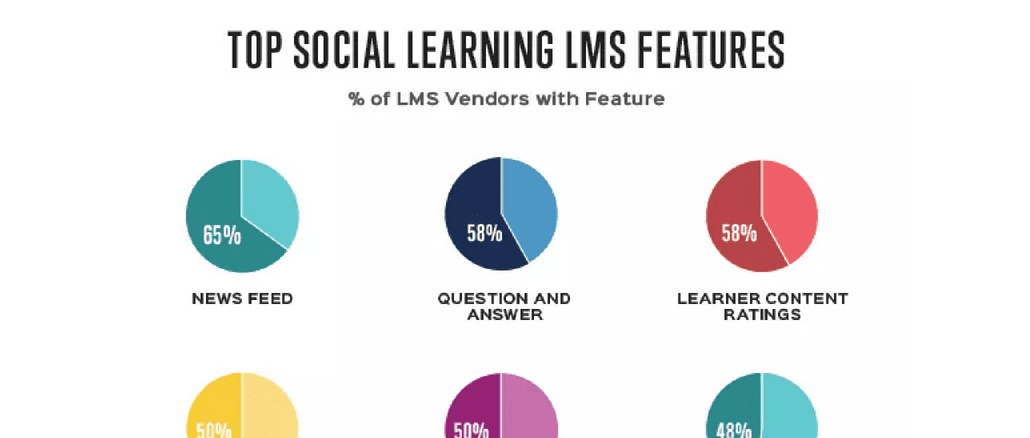
Top Social Learning LMS Features
Common logic was flawed -- assuming training professionals and subject matter experts (SMEs) would regularly visit these social "spaces" and interact, keeping content fresh and learner engagement high.

2016 LMS Market Trends, Observations and Predictions
The behemoth TM providers such as Oracle or SuccessFactors devalued the LMS when they incorporated their LMSs into broader HR software suites and took their foot off the innovation accelerator.

Talented Learning: Greatest Hits of 2015
I concluded that it will take too long to teach 600+ LMS vendors the new anti-acronym trick and the easiest path would be to create a living, non-techie dictionary that decodes common acronyms for LMS buyers.

Mobile LMS: The Facts
At Talented Learning, an independent learning tech market research and consulting firm, we recently compiled an obnoxious 85 question survey detailing over 450 points of LMS business, market and functional data. We collected statistically significant [...]
2015 Talented Learning LMS Vendor Award Recipients
Learning management systems didn’t die. They evolved, and today we recognize them. Brief LMS History Corporate LMSs were invented almost 30 years ago to manage and report on the training and compliance of their employees [...]




CASE STUDY DIRECTORY


FOLLOW US ON SOCIAL