

I love channel learning. It just makes sense and it’s completely and beautifully tied to the bottom line. Pure, unadulterated learning for the sake of money. Two of my favorite things – learning and money.
Let’s say you’re at a growing company that needs to build a sales team. You assess each candidate’s potential, hire them, train them, let them ramp up and hope they can sell. If you’re right, you’ll have salespeople who produce and your company will take an incremental step forward.
But if you’re wrong, and if you are lucky, it will take only 6-9 months to find out and $100,000 for the effort of recruiting, hiring, paying a salary and benefits for each salesperson. Multiply that by 1000 or 2000 team members, and you have a lot riding on each hire.
Plus, as many young companies have discovered, if you’re growing rapidly, you’ll inevitably outpace your ability to hire and develop an internal salesforce. That’s when a network of channel partners can step in and help you scale without losing momentum.
What is a Channel?
A corporation, no matter how large, can’t be everywhere at the same time. You can’t penetrate new markets easily and cost effectively without a sales channel.
An organization’s channel partners can include resellers, value-added resellers, dealers, franchisees, distributors, developers – any third-party sales professional that represents your brand on your behalf. The channel acts as an extension of your internal salesforce.
Channel partners sell your product, service your product and often provide additional services to support your product among end customers. A well-crafted channel strategy lets you put local experts on the street, so your products and services can be available virtually anywhere around the world. It puts you in every location your brand wants to be, but you don’t have to actually have to hire and manage each of those channel partners directly, in every location.
With channel management, it’s important to understand the difference between “captured” versus “uncaptured” partners. Captured partners resell your products and services, exclusively. On the other hand, uncaptured channel partners represent multiple companies.
For example, think of life insurance. You can buy insurance directly from Prudential. Or you can buy through SelectQuote, which represents a variety of top life insurance companies. SelectQuote specializes in recommending the best product for you from among the various providers they represent.
Regardless of whether your channel is “captured” or “uncaptured,” it’s important to educate your channel partners on a continuous basis. The consequences are obvious. Unless your channel partners have relevant knowledge, tools and motivation to sell your products, they won’t.
What is Channel Learning?
Let’s say a major insurance provider like Prudential has a partner portal where uncaptured agents like SelectQuote can access Prudential training, product updates, best practices and collaboration tools. As new products are released, content is created and distributed to SelectQuote agents, so they’re always up-to-speed and certified to represent your full product line.
Now, imagine the other three insurance companies that SelectQuote salespeople represent send only a packet of colorful paper to channel insurance agents every now and then. No ongoing engagement, training or incentitves. When SelectQuote agents are in the hot seat, selling insurance to a potential client, which brand do you think they’ll choose to recommend?
I was in sales for many years. I learned that you always sell what you know best. Competition is always stiff and selling is always tough, so your best moves is to go with your strength.
Business Reasons for Channel Learning
There are multiple reasons for investing in channel-focused learning initiatives. For example, companies often aim to:
- Increase sales and revenue
- Decrease cost of direct employee hiring
- Accelerate product time-to-market
- Penetrate new geographic markets or new markets, in general
- Increase the consistency of your message
- Increase the ability for partners to cross-sell and resell
- Increase “mindshare” among “uncaptured” channel reps
- Increase end customer satisfaction
- Reduce technical support calls
- Boost brand loyalty
- Increase channel quality of service and loyalty
Channel Learning Case Studies
- Learn how ADP improves client retention and fuels business growth using Saba Software for their virtual classroom, learning and content development projects
- Autodesk, via ExpertusONE, creates a compelling, community-based channel ecosystem to educate sales partners faster, easier and more effectively than ever
- Caspio: Case Study on Customer eLearning and Marketing published on Talented Learning.
- DocuSign testimonial video on how they use Cornerstone to train tens of thousands of clients of their solutions
- KOFAX – Learn how the software provider reduced training costs by 80% withMindflash used to support channel, customers and employees
- Hitachi Data Systems wanted to consolidate global learning needs under one learning organization to better serve their employees, partners, and customers worldwide withSaba
- Progress Software Uses Net Dimensions to Deliver L&D
- Vitera Healthcare Solutions – Delivering new client training for end-to-end clinical and financial technology solutions with eLogic Learning’s eSSential LMS
- Yammer uses Mindflash to sell courses for their partner certification
Examples of Channel Learning in the News
- Windstream (Nasdaq: WIN), a FORTUNE 500 and S&P 500 company, is a leading provider of advanced network communications, including cloud computing and managed services to businesses nationwide. “Windstream Introduces Enhanced Partner Strategy for Cloud Solutions at Channel Partners Conference,” appeared in the Wall Street Journal.
- Mimecast is a single cloud platform for all your email and information management needs. “Mimecast certifies first 100 UK partners for cloud migration” appeared on Channel EMEA.
- Here is an article from the partner point of view. An Atlanta SEO company achieved Google AdWords Partner Certification as noted in IT Business Net.
LMS Vendors Specializing in Channel Learning Solutions
- Absorb LMS
- Accord LMS
- BlueVolt LMS
- Cornerstone OnDemand
- eLogic Learning
- ExpertusONE
- Interactyx TOPYX Social LMS
- Mindflash
- NetExam LMS by Media Defined
- Net Dimensions
- Saba Learning@Work
- SilkRoad GreenLight LMS
- WBT Systems TopClass
Want more insights? Watch our on-demand webinar:
The Competitive Advantage of an Externally Facing LMS
There is tremendous diversity among the nearly 700 learning management systems available today. And when customer education is a top priority, it pays for organizations to choose an LMS designed specifically for that purpose.
What exactly are the business benefits of choosing a specialized learning management system (rather than an employee-oriented LMS) to support customer learning initiatives?
Join John Leh, Talented Learning lead analyst and CEO, and Terry Lydon, VP of Training Operations Projects at Litmos, as they explain the value of choosing an externally focused LMS. Specifically, they discuss: You’ll learn:
- How to quantify the benefits of customer learning
- Which factors set a customer LMS apart from employee-focused platforms
- What case studies reveal about the value of customer learning technology
- How to find the best LMS for your customers’ needs, and
- 5 areas of innovation unique to customer LMS solutions
Need Proven LMS Selection Guidance?
Looking for a learning platform that truly fits your organization’s needs? We’re here to help! Submit the form below to schedule a free preliminary consultation at your convenience.
Share This Post
About the Author: John Leh

Related Posts

LMS Integration: The Learning Ecosystem
Google Analytics tracks a visitor’s access device, browser, previous website, pages visited, time spent on the page, next site visited, language, IP, precise geographic location, age and much more.

LMS Implementation Pricing: Take 2
One of the biggest mistakes LMS buyers make is not defining the level of help and support they will need to successfully implement and support their LMS.

Introducing the LMS Almanac: Corporate Edition 2016
The LMS Almanac defines corporate LMS market trends, types of corporate LMSs, business uses, feature and functions, hosting models, license models, service and support models, return on investment and provides real-life examples of all.

Public LMS Pricing: Proof You Can Overpay
It is foolish to pay more than you have to and get nothing in return but it is impossible to know if you are overpaying if you first don't define your LMS requirements.

Shrinking LMS Implementation Fees Drive Market Expansion
Making sure your LMS selection team is on the same page in regards to implementation/configuration needs will allow a buying organization to quickly disqualify many vendor options without the labor of investing a ton of time.

LMS License Models: What in the World is Going On?
Associations, training companies, corporate channel, customer and other extended enterprise buyers can create any number – hundreds of thousands even – of active ongoing accounts but a buying organization only pays for active usage.
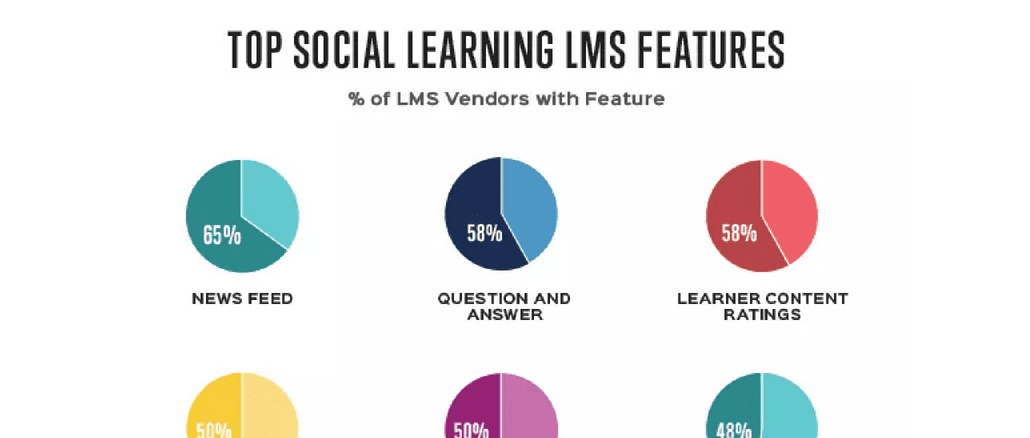
Top Social Learning LMS Features
Common logic was flawed -- assuming training professionals and subject matter experts (SMEs) would regularly visit these social "spaces" and interact, keeping content fresh and learner engagement high.

2016 LMS Market Trends, Observations and Predictions
The behemoth TM providers such as Oracle or SuccessFactors devalued the LMS when they incorporated their LMSs into broader HR software suites and took their foot off the innovation accelerator.

Talented Learning: Greatest Hits of 2015
I concluded that it will take too long to teach 600+ LMS vendors the new anti-acronym trick and the easiest path would be to create a living, non-techie dictionary that decodes common acronyms for LMS buyers.





CASE STUDY DIRECTORY


FOLLOW US ON SOCIAL