

Are you responsible for marketing educational content to customers, channel partners, or other audiences that operate outside of your organization? If so, how easy is it for you to connect with these audiences and convince them to engage in training?
If you think this process is challenging, you’re not alone. A few months ago, we asked nearly 100 learning professionals to finish the question: “Attracting new or returning external learners to buy or consume content is…”
 43% told us that above all, attraction marketing for extended enterprise learning is difficult. Another 33% said it’s time-consuming, while 8% said it’s expensive. Surprised? I’m not. As an analyst and consultant who focuses exclusively on extended enterprise learning, I hear these concerns all the time.
But here’s what really caught my eye – 8% of respondents actually find it EASY to attract and engage new and existing learners to their content! That’s encouraging news.
I hope to follow up with these people, find out more about their “secret sauce” and then share their tips with you. Meanwhile, I’d like to share suggestions from another professional who is doing an excellent job of putting attraction marketing to work for his company’s extended enterprise learning programs.
Kevin Hanegan is Chief Learning Officer at Qlik, a visual analytics software company, where he’s responsible not only for employee training but also for channel and customer education.
Kevin’s credentials are impressive. He’s a professor at the University of California in Irvine, where he teaches web design and development courses. In addition, he has written multiple books about programming languages, so he brings technology depth as well as expertise in user experience and instructional design.
Which learning system is best for you? Check the newest RightFit Solution Grid, based on our team’s rigorous independent research. Learn more and get your free copy!
Here are several useful ideas inspired by my discussions with Kevin:
Attraction Marketing Tips For Extended Enterprise Learning
1) Map Content to the Learning Journey
External learning audiences move through a process similar to the “customer buying journey” popularized by marketing professionals. Here’s the basic concept:
THE LEARNING JOURNEY
Awareness > Assessment > Application > Adoption > Advocacy
Mapping learning experiences to this multi-step process is a smart approach. But contrary to what many technology companies may think, the best time to introduce feature/function training is not at the start, but in the “application” stage.
For example, imagine your company just purchased a software tool that you’re expected to use.
Kevin says, “It wouldn’t make sense to toss you into an intensive two-day training class immediately. You wouldn’t have enough context to make that training worthwhile.”
“New users don’t need training. They need awareness. They need to understand what a product can do for them and how it adds value.”
Once you’re aware of how a new tool can help you, you should be ready to give it a test drive. After that, you’ll be ready to apply the product to a specific need.
If all goes well, you’ll gain mastery and adopt it more fully. Eventually, you may even champion this tool to others, and drive adoption in your broader professional circles.
Bottom line, this is an indoctrination process, and thoughtfully designed educational content can help customers succeed, every step of the way.
2) Choose Marketing Tactics Strategically
Free trials. Freemiums. Discounts. Coupons. Bundles. Bulk sales. The list goes on. As I’ve discussed previously, there are endless ways to gain visibility, attract attention and drive interest in training content.
But with a smorgasbord of marketing options that can quickly exhaust even the heftiest budgets, what’s the smartest way to invest your dollars?
Again, if you rely on your audience’s learning journey as a guide, your marketing priorities will become much clearer. Why does that matter so much?
Well, it’s one thing to pull learners to your content for their first learning experience. But you have only one chance to make a good first impression. If that impression is weak, learners won’t engage, they won’t return, and they certainly won’t tell anyone else how great it is.
So it pays to think carefully before you put promotional energy in front of your content. Precisely what knowledge and information will your prospects expect to have at their fingertips? Do they want a quick answer to a very specific question? Would they benefit from access to a collection of related resources they can explore over time? Or would other types of content be more effective?
Defining the “what, when, where, how, and why” of key user scenarios will inform the learning experiences you develop. Then you can craft appropriate communications to drive the right audience to the right content at the right time. After that successful experience, you can have confidence they’ll respond when you invite them back for more.
Find out how real-world companies are achieving more with learning systems that create business value. Get inspiration from dozens of success stories in our free LMS Case Study Directory…
3) Empower Multiple Voices to Spread the Word
As Kevin says, “With demand generation, content may be king, but context is equally important.” And in extended enterprise learning, there are often many voices to leverage.
Your corporate education group doesn’t have to carry the entire load. Your sales team, your channel partners, and your corporate marketing team are resources that can extend your marketing outreach.
In addition, consider empowering existing customers. If your training is effective, you can encourage those learners to tell their professional connections about it through social media and other communication channels they use.
4) Win Ambassadors By Demonstrating Value
If you want to convince your sales team and channel partners to sell training on your behalf, you have to provide a compelling value proposition. So, as you develop your marketing agenda think carefully about the metrics that matter and be sure track them over time.
In Qlik’s case, they did a comparative analysis of customers who bought training along with their product, versus those who did not.
They discovered that customers who bought training as part of the initial sale actually made their next purchase four times faster than customers who didn’t buy training. Plus, among customers who had purchased training, subsequent sales were seven times larger.
As Kevin explained, “These results make sense. Education helps drive user adoption. Customers have less shelfware and they buy more licenses, so deals are quicker and larger, overall. With meaningful metrics that explained ‘what’s in it for me,’ it was easy to get our partners and sales teams onboard.”
Conclusion
When I studied instructional design several decades ago, marketing wasn’t part of the curriculum. Experience taught me that we shouldn’t expect to pick up marketing know-how by accident. But with intentional effort, we can use marketing tools to make learning more visible, relevant and rewarding for those we serve.
So if you think it’s difficult to reach external audiences and you’re not sure what to do next, why not follow the path of successful extended enterprise learning programs?
Take a step back to verify the specific needs and behaviors of your target audiences. Look for ways to leverage your content, technology, and communications channels. Then test and iterate, based on meaningful metrics.
It may not be easy, but I guarantee, you’ll see progress.
Thanks for reading!

Which Learning Systems Are Best For You?
Use our FREE RightFit Grid to build a shortlist based on our independent research. Compare 60 top learning systems, mapped to common buyer requirements…
LEARN MORE AND GET YOUR FREE COPY NOW…
Need to Improve Extended Enterprise Learning? Let’s Talk.
Get advice you can trust from an independent expert. Schedule a free 30-minute consult with me, Talented Learning Lead Analyst, John Leh…
*NOTE TO SALESPEOPLE: Want to sell us something? Please contact us via standard channels. Thanks!
Share This Post
About the Author: John Leh

Related Posts

Shrinking LMS Implementation Fees Drive Market Expansion
Making sure your LMS selection team is on the same page in regards to implementation/configuration needs will allow a buying organization to quickly disqualify many vendor options without the labor of investing a ton of time.

LMS License Models: What in the World is Going On?
Associations, training companies, corporate channel, customer and other extended enterprise buyers can create any number – hundreds of thousands even – of active ongoing accounts but a buying organization only pays for active usage.
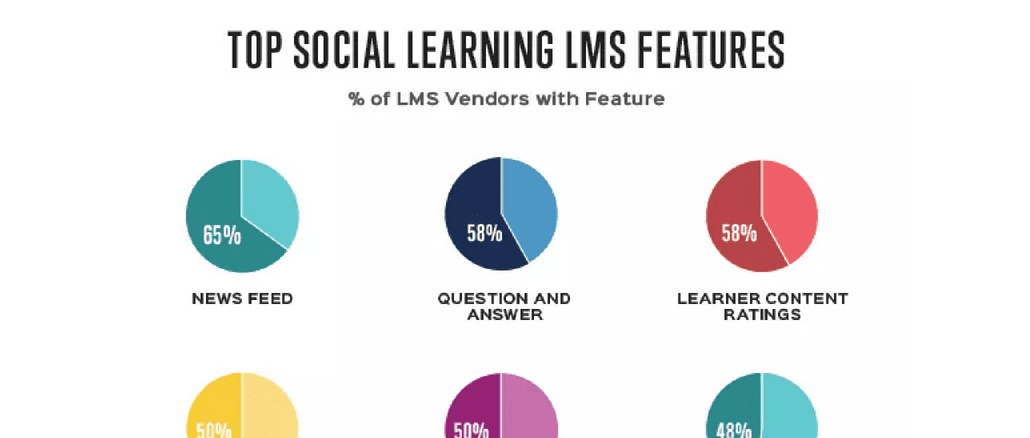
Top Social Learning LMS Features
Common logic was flawed -- assuming training professionals and subject matter experts (SMEs) would regularly visit these social "spaces" and interact, keeping content fresh and learner engagement high.

2016 LMS Market Trends, Observations and Predictions
The behemoth TM providers such as Oracle or SuccessFactors devalued the LMS when they incorporated their LMSs into broader HR software suites and took their foot off the innovation accelerator.

Talented Learning: Greatest Hits of 2015
I concluded that it will take too long to teach 600+ LMS vendors the new anti-acronym trick and the easiest path would be to create a living, non-techie dictionary that decodes common acronyms for LMS buyers.

Mobile LMS: The Facts
At Talented Learning, an independent learning tech market research and consulting firm, we recently compiled an obnoxious 85 question survey detailing over 450 points of LMS business, market and functional data. We collected statistically significant [...]

2015 Talented Learning LMS Vendor Award Recipients
Learning management systems didn’t die. They evolved, and today we recognize them. Brief LMS History Corporate LMSs were invented almost 30 years ago to manage and report on the training and compliance of their employees [...]

Customer Training: 5 Reasons to Put Them “In the Know”
Consider creating training modules which are, in effect, focus group vehicles. Introduce your customers to the product ideas you are considering through online training, and leverage embedded surveys, quizzes, social media, and mobile enablement technologies to have conversations with your customers.

LMS eCommerce: B2C and B2B Feature Sets
My best recommendation is to fully develop your business model, LMS use case scenarios and resulting requirements before engaging LMS vendors so you can find the best-qualified options to drive your online learning business.




CASE STUDY DIRECTORY


FOLLOW US ON SOCIAL