

Extended enterprise learning continues to be a thriving segment among learning management systems (LMS). However, the discussion and coverage of non-employee or extended enterprise learning seems to have stalled during the recent acquisition frenzy in the human capital management (HCM) space.
Many large LMS providers that focused on extended enterprise solutions (Plateau, Learn.com, GeoLearning, Certpoint) were acquired and integrated into broader HR or HCM suites. With the natural focus of these integrated suites being employees, the lucrative specialty of extended enterprise learning was left behind.
The big integrated suites (Infor, SAP, Oracle, Saba,and SumTotal) still have ecommerce capability and the domain management to support the extended enterprise from their LMS solutions, but they offer no new development, technology advances or thought leadership. If 95% of the suite is intended for internal employees with a centralized Chief Human Resource Officer (CHRO) purchase point, it is easy to forget users that don’t fall under the employee umbrella.
It is also difficult to have a meaningful conversation with prospects interested in extended enterprise learning if you don’t know much about the needs of these non-employee users. As a result, a high percentage of extended enterprise learning initiatives today are deployed as a stand-alone cloud LMS solutions, separate from internal talent management/HR suites. Many LMS companies who were not recently acquired (for example, Net Dimensions, eLogic Learning and Expertus) as well as hundreds of startups have tried to fill this void and still cater to multiple extended enterprise segments.
There are at least five different types of non-employee training although it could be argued there are more or less, but since this is our blog, five it is. Each of the below types have similar yet very unique sets of technical, integration, scalability, financial, service, content and functionality requirements.
5 Key Extended Enterprise Learning Segments
- Customer and Channel Learning: Larger corporations in technology, manufacturing, healthcare, financial, insurance, automotive, retail, franchise and other industries need to train their sales channel and customers. This kind of training is not their primary business, but it supports their business performance. Reducing the time to certify channel partners on a new product by days or weeks can easily translate into millions of dollars in accelerated sales. Also, a better-educated channel sells your product better and more often. Both channel and customer education ROI can be measured more easily than employee learning.
- Commercial Training: Many organizations are subject matter experts in their industry. They create content and certifications and sell related training in a variety of forms, including online courses, webinars, podcasts, mobile apps, elearning, virtual classes — all managed through an ecommerce LMS. Commercial training content providers use LMS solutions to attract customers and build an audience that keeps coming back. Very often these content providers have customers that are both organizational and individual users, requiring robust, configurable ecommerce and audience management features. In this group, learning content sales is their primary business. As an example, an expert in pest control (or insurance, sailing, auto glass replacement, etc), could create courses, programs and tools and then market them directly as continuing education or professional development for members of the pest control industry. There are many low-cost entry-level LMS solutions, and this creates low barriers to entry.
- Associations and Member-Based Organizations: Member-based organizations have been adopting learning management technology in droves in recent years. For over a century, associations generated the lion’s share of their revenue from annual membership fees, as well as trade show attendance. In the last five years, associations have tapped the huge revenue well of certification, re-certification and content revenue that far eclipses traditional membership dues. Associations have unique requirements such as integration with association management systems (AMS), sophisticated certification and accreditation requirements, as well as deep ecommerce needs. Organizations as diverse as the Red Cross, Society of Actuaries, the Project Management Institute and thousands of other associations all provide elearning content in some way to their members or volunteers through an LMS.
- Public Organizations: Public agencies of all sizes — from the largest global agencies to the smallest local organizations — need to educate their constituents. Sometimes the content is provided as a paid service, but most often it is provided as a tax-funded service to the community. Public organizations at every level have stringent purchasing, IT, legal, integration and support requirements. This market niche appeals to a smaller subset of LMS vendors with public sector expertise. Examples of public entities that require extended enterprise learning include the Centers for Medicaid and Medicare, which trains insurance providers and medical service providers nationally on how to submit claims. Also the FBI provides law enforcement education to state and local police departments.
- Academic Organizations: Higher Education institutions use LMS solutions to monitor and manage student scheduling, registration, student-teacher interaction, class management, grading and degree tracking. From the University of Phoenix to your local community college, there are few students in America not actively engaged with some type of academic LMS. This group’s requirements tend to be the most specific, requiring vendor specialists.
Watch for more information, research, case studies and news on each type of extended enterprise training in upcoming posts.
Thanks for reading!
Want more insights? Replay our on-demand webinar:
The Competitive Advantage of an Externally Focused LMS
There is tremendous diversity among the nearly 700 learning management systems available today. And when customer education is a top priority, it pays for organizations to choose an LMS designed specifically for that purpose.
What exactly are the business benefits of choosing a specialized learning management system (rather than an employee-oriented LMS) to support customer learning initiatives?
Join John Leh, Talented Learning lead analyst and CEO, and Terry Lydon, VP of Training Operations Projects at Litmos, as they explain the value of choosing an externally focused LMS. Specifically, they discuss: You’ll learn:
- How to quantify the benefits of customer learning
- Which factors set a customer LMS apart from employee-focused platforms
- What case studies reveal about the value of customer learning technology
- How to find the best LMS for your customers’ needs, and
- 5 areas of innovation unique to customer LMS solutions
Need Proven LMS Selection Guidance?
Looking for a learning platform that truly fits your organization’s needs? We’re here to help! Submit the form below to schedule a free preliminary consultation at your convenience.
Share This Post
About the Author: John Leh

Related Posts

Docebo CEO Alessio Artuffo Talks LMS Trends
What LMS trends are top-of-mind among learning tech innovators? Docebo CEO, Alessio Artuffo, talks with our Lead Analyst, John Leh

ATD24 Expo: Join Our LMS AI Innovation Tour
What's special about ATD24, the annual ATD International Conference and Expo? Find out why Lead Analyst John Leh is closely watching all the learning systems action!

Top LMS Selection Speed Bumps: Customer Ed Nugget 18
If you're a customer education leader, sooner or later you'll need to choose a learning system. How can you avoid LMS selection speed bumps? Find out in this Customer Ed Nuggets podcast

CEdMA Conference Takeaways: Customer Ed Nugget 17
What's top-of-mind among customer education professionals these days? Join Analyst John Leh and industry leader Kristine Kukich as they compare notes from the recent CEdMA Conference

Why So Many LMS Vendors?
People ask us all the time, "Why are there so many learning systems?" Here, our Lead Analyst, John Leh, explains the factors that have led to an industry with so many LMS vendors...
The Future of Customer Education: Customer Ed Nugget 16
Customer education is rapidly evolving as organizations embrace new strategies and tech. What does this mean for the future of customer education? See what experts say on this Customer Ed Nuggets episode

Education Strategy Mistakes to Avoid: Customer Ed Nugget 15
What does it take to deliver a successful customer education program? It starts with a solid education strategy. Learn how to avoid common pitfalls on this Customer Ed Nuggets episode
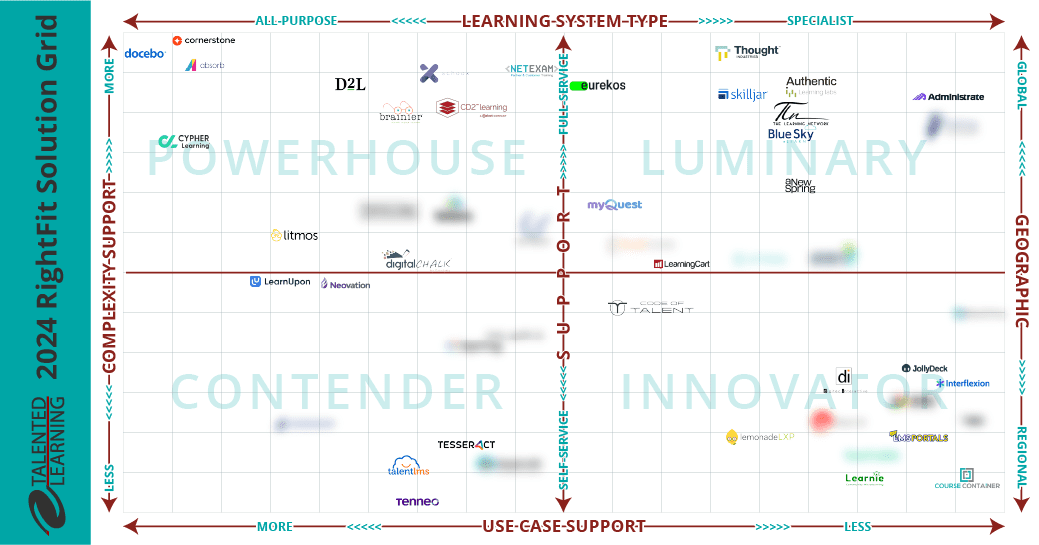
Which LMS is Best for You? New Shortlisting Tool for 2024
How can you find the best learning system for your business? Our LMS shortlisting tool can help. Learn about the 2024 RightFit Solution Grid. Free, reliable guidance based on our independent research

How to Build a Learning-Based Business: Executive Q&A Notes
Building and selling online courses may seem easy, but building a profitable learning-based business is far more complex. Find out what successful leaders say about running this kind of business





CASE STUDY DIRECTORY


FOLLOW US ON SOCIAL