

For LMS vendor eyes only…
When I was an LMS sales guy, I personally demoed or watched a solution architect demo the same two LMSs an average of three times a week for 13 years. In the last 12 months as lead analyst and an LMS selection consultant, I’ve watched another couple hundred demos from 70+ vendors. In all, that’s about 2200 LMS demos (give or take a 100) I’ve been a part of in my career. As you might suspect, I’ve learned a thing or fifteen about what makes a good demo.
Here is a most important item I learned that most LMSs vendors forget –a demo can only be considered good when you ultimately win the LMS opportunity. Second place is meaningless.
Many sales reps and solution architects take the demo step lightly because they have done the same presentation so many times that they think they have seen it all and know it all. As a result, they prep too little, make a vanilla impact with the customer and get lost in the herd of possible LMS solutions.
The LMS sales cycle is typically 12-24 months long. There are 600 LMS vendors. It is foolish to take any sales step lightly. It’s critical to achieve competitive separation at every interaction with the prospect from discovery to closing.
If it is an intro tire-kicking demo, spend an extra hour to personalize it and jump out in front. If it is the final demonstration at the end of a two-year sales cycle, you’d better spend 10 hours prepping for each hour on stage. You can be sure the next vendor will invest that kind of time to prepare, and you’ll have the honor of knowing you worked two years to earn zip.
Try these 15 tips to up your demo game and improve your win percentage:
1) Do Research Your Prospect – The LMS demonstrator (exec, rep or SA) needs to be up to speed on the prospect. At a minimum, they should know the company background, industry, main product lines, current problems they want to solve and high-level use cases. Practice working this data into your demo – everywhere. The more you can connect with the project team and their business the more value you provide in relation to your competitors.
2) Don’t Blind Demo – Don’t ever do a demo without speaking to the client first to make sure you can plan to show the important features to them. Many tire kickers will ask you to demo at a first meeting, but always push back and conduct proper discovery and research first. Even if a client says the demo doesn’t matter, it does, especially if you muck it up.
3) Do Use Industry Examples – For better or worse, LMS buyers in every industry think their challenges are unique and different. It’s prudent to embrace that reality and use it to your advantage. If you are speaking to a pharmaceutical company use pharma examples of course names, reports, business needs and case studies. Even if you don’t have time to do a full-blown tailored demo, you can always verbally give examples that are relevant to their business and industry.
4) Don’t Justify a Hole –If you don’t have a feature when asked just admit it and move on. Nobody has everything. The worst thing you can do is start a big explanation on why you don’t have it, how you used to have it but nobody used it, apologizing for not having it and worse yet telling them why they don’t need it but it is on the roadmap. I can hear a cockamamie hole-covering answer a mile away and so can prospects and it turns us all off.
5) Do Give a Tailored 1st Demo – Even if the purpose of the demo is pre-buying research, do some level of personalization and customization of the prospect’s business and problem. Preparing is caring. It shows you did homework and separates you from the hundreds of ho-hum vendors. I found that a tailored first demo put me in winning contention years before the purchase happened and was a solid investment of time.
6) Don’t Interrupt a Question– Seriously, shut up until the prospect’s question is over. Many LMS buyers are not sure of the LMS vernacular and struggle with the right way to ask a question. Do not assume you know what the rest of the question is going to be because you’ve done this a hundred times before – even if you do. It ticks people off, makes you sound like a know-it-all, and is generally rude.
7) Do Avoid LMS Jargon – You live your life in the LMS world, buyers only do this part time. Lay off the xAPI, Tin Can, Scorm, AICC, CMI-5, PENS, ILT, CDN, DRP, CBT, WBT, SSO, LDAP, AD, ERP, HRIS speak or you’ll talk yourself right out of the opportunity. If you try, you can relay all the concepts without using acronyms. Only a portion of the audience in LMS demos know the jargon and it’s usually never the signer or business owner.
8) Do Minimize In-Demo Discovery – A good lawyer only asks a witness a question when they already know the answer. LMS demoers should do the same. Ask the relevant questions in advance to prepare the tightest most impactful demo. If you are asking questions like “Do you plan to use the system for instructor led learning” during the demo, you didn’t prep enough and definitely are not achieving any differentiation.
9) Do Mix It Up – Don’t give the same demo to every prospect. Considering the upside of competitive separation, you should enter each demo with the mindset of making it a bit better than your last. If you do it the same way every time, the demo gets old and boring, your jokes become stale and it is obvious you didn’t prep. At the end of the day, LMS buyers want a partner who really wants them, not just some vendor going through the motions.
10) Don’t Say “Does that Make Sense” – This goes for real life also. I know you are trying to be helpful and interactive but it just comes off as condescending especially when it isn’t a difficult or unknown concept. Find another way to say it like “Any questions?” “Thoughts?” “Was that a helpful answer?” In some circles, if you say it more than once in a demonstration, you may start a melee.
11) Do Limit use of “Good or Great Question” – This is an acceptable comment for an overly insightful question in a demo, not a general response to every question. Using it too much makes you sound like a sales guy vs. a genuine problem solver. I’m nitpicking but it bugs me.
12) Do Tell Stories Often – I don’t think salespeople or demonstrators can learn too many of their client stories. I attribute a lot of my sales success to learning hundreds of LMS stories across a dozen industries and using those stories to build credibility. It shows that you and your company understand their business problem and how your organization has solved it before. The trick is to integrate relevant stories right into product demo flow as you are demonstrating use cases and showing features. When you see an experienced sales or solution architect do this in real time, it makes your heart quiver.
13) Do Recognize That It’s OK to Simply Say “Yes” – If someone asks you a direct question, answer briefly and directly. So many times, demo guides will enter into a belabored demonstration type answer to a question that could be answered with “yes.” This strategy causes you to run out of time to show things that you needed to show to differentiate. For example, if someone asks if you support SCORM say “yes” and don’t show them the upload process and configurability options unless asked.
14) Do Ask Clarifying Questions – If you get a question that you can answer or interpret in multiple ways, ask them a clarifying question before answering. Don’t answer “if you mean this, then blah, blah, blah, blah or if you meant that, then blah, blah, blah, blah.” 50% of your answer is a waste of precious time.
15) Do Actually Follow-Up – A common strategy when an LMS presenter doesn’t know the right answer (or pretends not to know the right answer) in a demo is to say they will follow-up after the presentation and conveniently forget. If you say you will follow-up, you better do it. Just by the nature of not knowing an answer about your product, a LMS buyer is going to assume you don’t have it. Not following up reinforces that belief.
Conclusion
Winning an LMS opportunity is a matter of inches not miles. Competition is stiff and extremely qualified. LMS demos are one of the few times in the sales cycle you will get to meet the whole selection team, send your message and have the opportunity to differentiate. You win or lose deals with the LMS demo – even early sales cycle demos. The very best thing you can do right now is to double your prep time on every demo and put in a plan and practice of continual improvement. Nobody is as good at delivering LMS demos as they think they are. But unless you are winning 100% of your opportunities, there is always room for improvement. Keep leveling up.
Thanks for reading!
Learning Systems Vendors: Want to Benchmark Your Team’s LMS Demo Skills?
A big challenge about demos for LMS vendors: It’s hard to benchmark your team against the industry because a competitor is not going to willingly show you how they demo and differentiate. But because we’re LMS analysts and selection consultants, we see hundreds of demos a year, and we know how to deliver a winning presentation. Among our Services for LMS Sellers, we conduct demonstration audit and benchmarking exercises with your team and provide recommendations and best practice consulting.
Reach out to us at Talented@TalentedLearning.com to schedule a time to speak about your team’s demo skills. It’s not too late to get better, and get better results!
Share This Post
About the Author: John Leh

Related Posts

LMS Integration: The Learning Ecosystem
Google Analytics tracks a visitor’s access device, browser, previous website, pages visited, time spent on the page, next site visited, language, IP, precise geographic location, age and much more.

LMS Implementation Pricing: Take 2
One of the biggest mistakes LMS buyers make is not defining the level of help and support they will need to successfully implement and support their LMS.

Introducing the LMS Almanac: Corporate Edition 2016
The LMS Almanac defines corporate LMS market trends, types of corporate LMSs, business uses, feature and functions, hosting models, license models, service and support models, return on investment and provides real-life examples of all.

Public LMS Pricing: Proof You Can Overpay
It is foolish to pay more than you have to and get nothing in return but it is impossible to know if you are overpaying if you first don't define your LMS requirements.

Shrinking LMS Implementation Fees Drive Market Expansion
Making sure your LMS selection team is on the same page in regards to implementation/configuration needs will allow a buying organization to quickly disqualify many vendor options without the labor of investing a ton of time.

LMS License Models: What in the World is Going On?
Associations, training companies, corporate channel, customer and other extended enterprise buyers can create any number – hundreds of thousands even – of active ongoing accounts but a buying organization only pays for active usage.
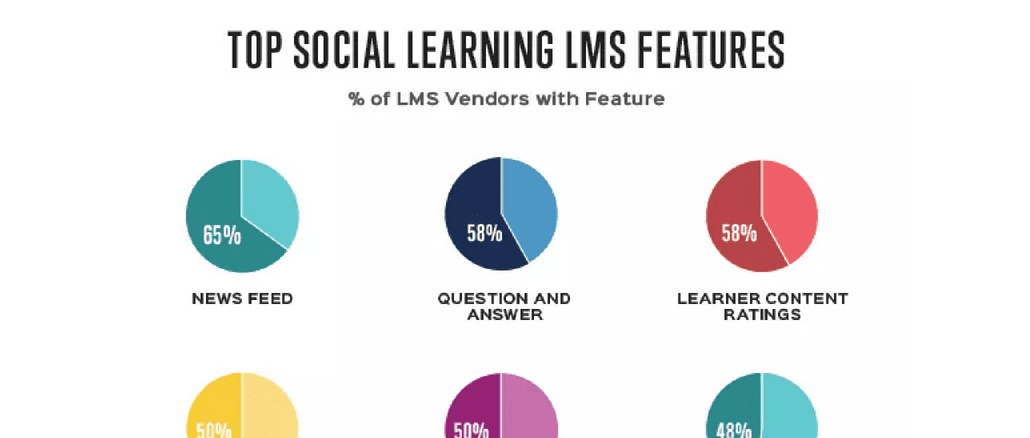
Top Social Learning LMS Features
Common logic was flawed -- assuming training professionals and subject matter experts (SMEs) would regularly visit these social "spaces" and interact, keeping content fresh and learner engagement high.

2016 LMS Market Trends, Observations and Predictions
The behemoth TM providers such as Oracle or SuccessFactors devalued the LMS when they incorporated their LMSs into broader HR software suites and took their foot off the innovation accelerator.

Talented Learning: Greatest Hits of 2015
I concluded that it will take too long to teach 600+ LMS vendors the new anti-acronym trick and the easiest path would be to create a living, non-techie dictionary that decodes common acronyms for LMS buyers.





CASE STUDY DIRECTORY


FOLLOW US ON SOCIAL