
You have built your LMS business case and defined your LMS requirements. Now you are ready to evaluate LMS vendors. This is where most LMS selection processes start to break down. There are over 1000 viable LMS vendor solutions. Where do you start?
Too many organizations try to evaluate too many LMS vendors. Others default to familiar names or popular platforms. Both approaches lead to rushed decisions, limited evaluation, and long-term regret. A disciplined LMS vendor shortlisting process ensures you focus only on the solutions that truly fit your needs.
Too Many LMS Vendors, Not Enough Time
The LMS market includes hundreds of vendors with overlapping capabilities. Each one presents well. Each claims flexibility. Each appears to meet your needs at a high level.
But not all LMS vendors are built for your use case.
Trying to evaluate a large number of vendors consumes time without improving your decision. As timelines tighten, evaluation becomes rushed and compromises are made.
This step is not about reviewing every LMS vendor. It is about identifying a qualified LMS vendor shortlist that deserves deeper evaluation.
What Is an LMS Vendor Shortlist?
An LMS vendor shortlist is a focused group of learning management system vendors that meet your defined requirements and are selected for detailed evaluation.
This In most cases, this means identifying 4 to 5 LMS vendors that tightly align with your use case, technical environment, service expectations, and budget.
The purpose of an LMS vendor shortlist is not to explore the entire market. It is to concentrate your time on the right options and run a disciplined selection process.
How to Build an LMS Vendor Shortlist
Building a strong LMS vendor shortlist starts with defining your comprehensive LMS requirements and using as a template to identify qualified solutions and eliminate non-qualified vendors quickly and confidently.
Evaluate LMS vendors based on the factors that truly differentiate them:
- Use case specialization and audience support
- Functional capabilities and workflow alignment
- Technical fit including integrations and security
- Service model and implementation support
- Licensing structure and cost alignment
- Vendor experience and track record
The goal is to move quickly from broad research to a small, qualified LMS vendor shortlist.
Talented Learnings LMS Vendor Shortlisting Resources
We provide a ton of free resources and tools to help organizations sort through a complicated marketplace and identify qualified solutions for their unique needs including:
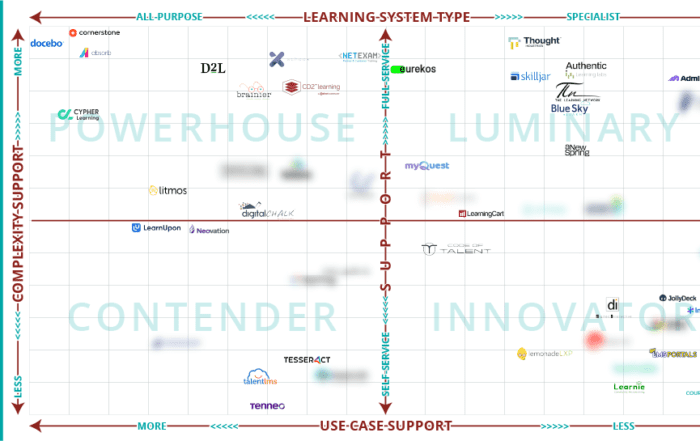
- Learning Systems RightFit Grid – Narrow your vendor options with our free LMS shortlisting tool
- LMS Vendor Directory – Research leading solutions and see demos, reviews, thought leadership and more
- Vendor Reviews – Find out what John Leh thinks about 90+ leading LMS solutions
- Demonstrations — In-depth demos given directly to John Leh
- Case Study Directory – Discover real-world LMS examples and success stories
- Award Winners – See the annual best LMSs for most popular LMS use cases.
Find your best qualified LMS vendor shortlist with independent, expert guidance from John Leh:
- LMS Shortlist Recommendation Service – Quickly and accurately identify your best LMS options
- 90-Day LMS Selection Accelerator– Let John guide your process, from business case to contracts
- Free LMS Consult – Get going fast with expert, independent guidance from John Leh
Why LMS Vendor Shortlisting Pays Off
A disciplined LMS vendor shortlisting process changes the entire selection experience.
- You spend time evaluating the right solutions instead of exploring the entire market
- Vendors engage more seriously because they are qualified
- Your evaluation becomes deeper and more structured
- You reduce the risk of choosing the wrong platform
- You move faster without sacrificing decision quality
Your Next Step
Once your LMS vendor shortlist is defined, the next step is to structure your evaluation through a formal RFP and proposal process.
This ensures consistency, clarity, and alignment as you compare vendors and move toward final selection.
Complimentary Consultation with John Leh
Book a call with John Leh to discuss your goals and build a qualified LMS vendor shortlist with confidence.